Buyers of thick, tall loaves
If the top of your usual slice protrudes from a toaster, slot depth matters alongside width. Breville UK publishes both measurements for its VTT981, giving you dimensions to compare with your loaf.


Check whether the slots fit your usual bread before choosing a two- or four-slice toaster. For bread that is both thick and tall, Breville UK specifies 4 cm-wide, 15 cm-deep slots for the two-slice VTT981; an extra-wide claim without measurements calls for a closer fit check. Choose four-slice capacity when you need several slices together, or long slots when the shape of your bread calls for them—neither feature alone establishes thickness clearance.
If the top of your usual slice protrudes from a toaster, slot depth matters alongside width. Breville UK publishes both measurements for its VTT981, giving you dimensions to compare with your loaf.
If an afternoon break usually means one or two slices, a two-slice model meets that batch size. Check its slot fit before giving weight to additional capacity or controls.
When several thick slices need to be ready together, four-slice capacity becomes more relevant. Russell Hobbs describes wider slots on its four-slice Buckingham 20750, though capacity alone does not establish fit for a tall loaf.
For an afternoon break with thick-cut bread, start with the dimensions and shape of your usual slice, then decide how many slices you need at once.
| Concern | What to check | Who this matters to |
|---|---|---|
| Slot fit | Compare your bread’s thickness and height with usable slot width and depth. Breville UK specifies 4 cm-wide, 15 cm-deep slots for the VTT981; a long-slot description alone does not confirm width. | When my usual loaf is thick and tall, I want the whole slice inside the toaster rather than an exposed top edge; around 50% of consumers put bread fit first. |
| Batch size and space | Choose two or four slices according to how many you need together. Check the appliance dimensions if worktop space matters. | If several people want toast at once, I would rather make multiple slices in one batch without taking up more worktop space than I need; around 30% of consumers prioritise this balance. |
| Controls and care | Look for browning adjustment and retrieval features you will use, then check how to remove crumbs safely. These features do not replace a suitable slot. | I want to adjust browning and remove small items without reaching into the slots; for around 20% of consumers, controls and routine care are the primary concern. |
Length and thickness are separate fit questions. Morphy Richards describes extra-long slots on its Signature four-slice toaster for artisan-shaped bread, but that description does not establish the width available for a thick slice.
Compare your regular slice with published width and depth measurements where available, or ask the manufacturer about usable clearance before buying.
Four-slice capacity helps when several people want toast together, but it does not show whether a particularly thick slice will enter the slot or a tall slice will sit fully inside it.
Confirm the slot design for your bread first; then choose two or four slices according to your usual batch.
Reaching into a toaster while it is plugged in creates an electrical hazard. Electrical Safety First advises unplugging it before removing stuck toast.
Once unplugged, use wooden tongs for stuck toast. Empty the crumb tray regularly, and do not put water or cleaner inside the toaster.
A shared brand or appearance is not enough to establish that a product listing has the slot layout or features you intended to buy.
Check the complete model number, stated slot design, electrical specification and warranty terms on the product-detail page.
The Edge VTT981 is a two-slice option for buyers checking the fit of thick, tall bread.
The Textures 21640 addresses two-slice thick-bread use, while the Buckingham 20750 offers four-slice capacity with wider slots.
The Signature four-slice model is relevant when bread is long or artisan-shaped.
These options include a two-slice wide-slot toaster and four-slice wide- or long-slot designs for thick bread. Compare the usable slot clearance with your usual loaf before choosing a model.
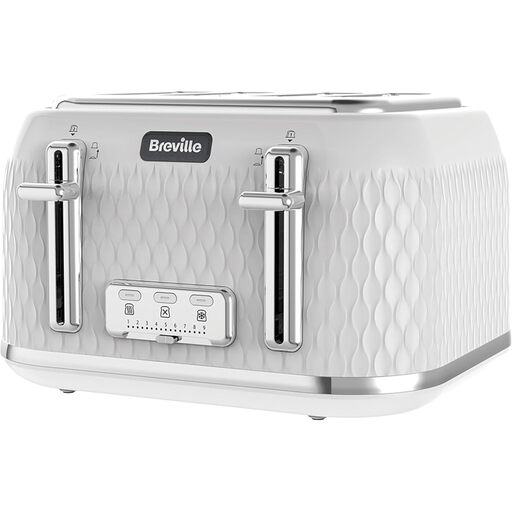 No image available
Consider this four-slice model when several people want thick bread toasted together. Its title specifies wide slots and high lift; check the usable slot width and depth against your loaf.
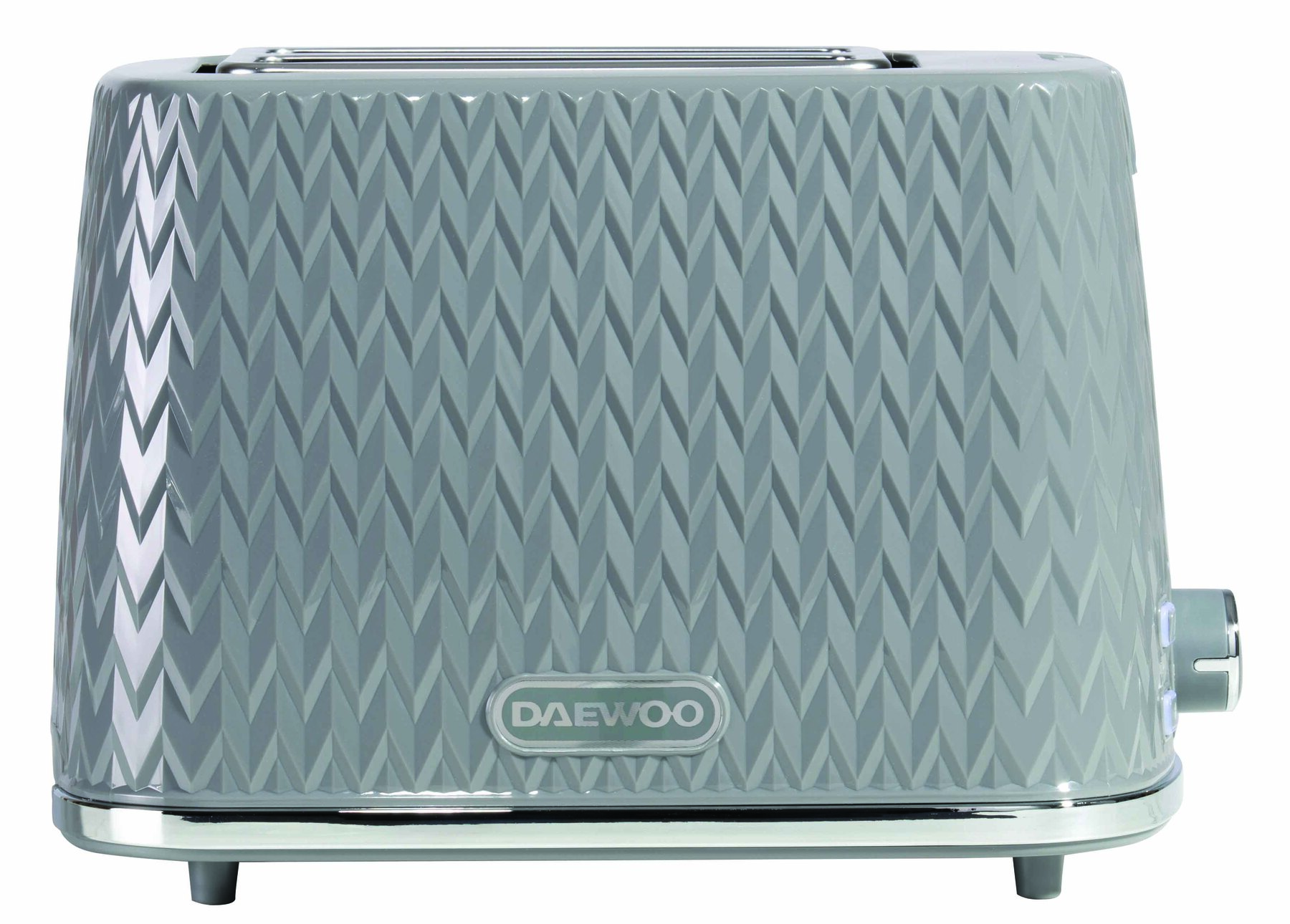 No image available
The two-slice format suits an afternoon break involving one or two slices. The product title specifies wide slots; check their usable width and depth before relying on them for your thick-cut bread.
 No image available
Consider its long-slot layout if your slices are long as well as thick and you need four-slice capacity. The title also specifies extra-wide slots, five bread types and a 1450 W rating; compare the usable width and depth with your bread.
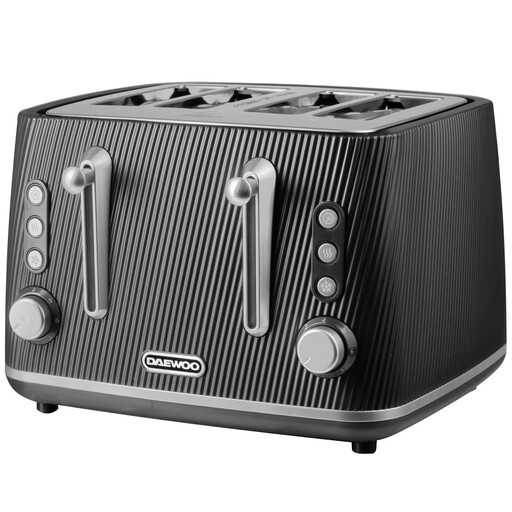 No image available
The four-slice format is relevant when several thick slices are needed together. Its title specifies wide slots, but you should check their usable width and depth for your regular loaf.
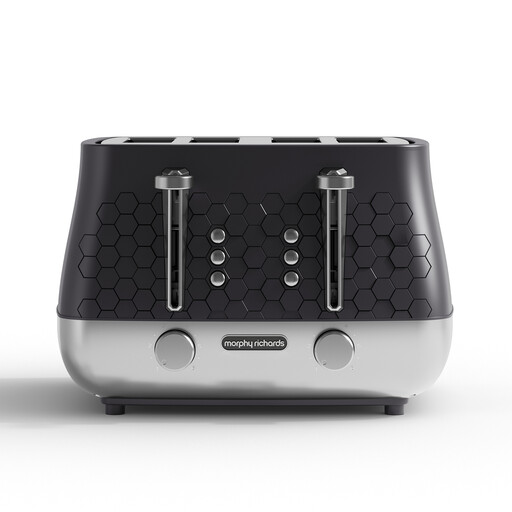 No image available
Consider this four-slice model for making several slices in one batch. The product title specifies wide slots; confirm usable width and depth against your thick-cut bread before buying.
Compare the width, height and shape of your usual slice with the toaster’s usable slot dimensions. Breville UK Support specifies 4 cm-wide, 15 cm-deep slots for the VTT981; descriptions such as extra-wide or long do not, on their own, give both measurements. Do not force bread into a slot.
A two-slice toaster is sufficient when you usually make one or two slices at a time, provided your bread fits. Choose four-slice capacity if several people need toast together; the extra capacity does not establish that thick or tall slices will fit.
Adjustable browning lets you choose a setting for your bread, while a mid-cycle check can help you assess its colour before the cycle ends. Breville UK lists variable browning and Lift & Look on the VTT981, but controls cannot compensate for a slice that does not fit the slot.
Unplug the toaster before trying to remove it. Electrical Safety First advises using wooden tongs for stuck toast; keep water and cleaner out of the appliance and empty its crumb tray regularly.