
24/7 Customer Support

Free returns

Same-day & Next-day Delivery

Quality Guaranteed

Unlock Your Welcome Offers: FREE Delivery | Up to 80% OFF | Free 30-day JoyPlus trial
Download the APP
Finding Tiger Tiger Asian food products online can make weekly meal planning easier, but the range includes very different products: canned vegetables, tropical fruit, Asian snacks, cooking ingredients, luncheon meat and even beer. The right choice depends on how you plan to use it, not simply on the most attractive packaging or the largest tin.
Whether you are stocking a student kitchen, preparing family meals or buying Asian grocery products for a restaurant, check the details below before adding items to your basket.
A 567g tin does not necessarily contain 567g of vegetables or fruit. Some of the stated weight includes water or syrup. This matters when comparing value between canned Asian vegetables, bamboo shoots, mushrooms and canned tropical fruit.
Look for:
For example, Tiger Tiger Whole Kernel Sweet Corn contains sweet corn, water and salt, while mango slices and pineapple pieces are packed with syrup ingredients. The larger can may not always be the most economical option if you only need one or two servings.
Some products can be eaten after draining, while others are intended to be heated or cooked thoroughly. Beansprouts, water chestnuts and sweetcorn can be added to salads or cold dishes after suitable preparation, whereas canned stir-fry vegetables are labelled for cooking and should be heated until piping hot.
Read the usage instructions rather than relying on the front label. This is particularly important when buying mixed Asian ingredients for quick weeknight dishes.
A product described as a convenient Asian pantry staple is not automatically suitable for every diet. Tiger Tiger Beansprouts in Water contains sulphites, and Tiger Tiger Canned Stir-Fry Vegetables contains soya and wheat. Popping Candy Biscuits Sticks contain wheat, milk and soya, with possible traces of nuts, peanuts and eggs.
Always check the current packaging, especially if you have an allergy, coeliac disease or a specific dietary requirement. “No known allergens” does not replace checking the ingredient list and may-contain statement.
For canned mushrooms, bamboo shoots, baby corn and water chestnuts, compare the ingredient list and preparation instructions. Water-packed products generally work well in savoury cooking, while fruit in light syrup is ready for desserts, smoothies and fruit salads.
Useful examples include:
Drain and rinse canned vegetables where appropriate. This can remove some of the packing liquid and help you control the final seasoning.
Nutrition panels help you compare products objectively. Some canned vegetables contain very little energy but may still contribute salt, particularly when preserved in brine or seasoned sauce. Fruit in syrup can contain added sugar, so draining the syrup may be useful when adjusting a recipe.
The product information lists Tiger Tiger Canned Stir-Fry Vegetables at 11.1g salt per 100g, making label checking especially important for this particular item. By contrast, Tiger Tiger Whole Kernel Sweet Corn lists 0.40g salt per 100g drained.
For sweet products, compare the carbohydrate and sugar figures per 100g, rather than judging sweetness from descriptions such as “light syrup” or “tropical”.
Unopened cans should generally be kept in a cool, dry place, away from heat and direct sunlight. Once opened:
The recommended periods vary. Some canned mushrooms and vegetables advise use within two to three days, while the pineapple information allows up to five days. The packaging supplied with your order should take priority.
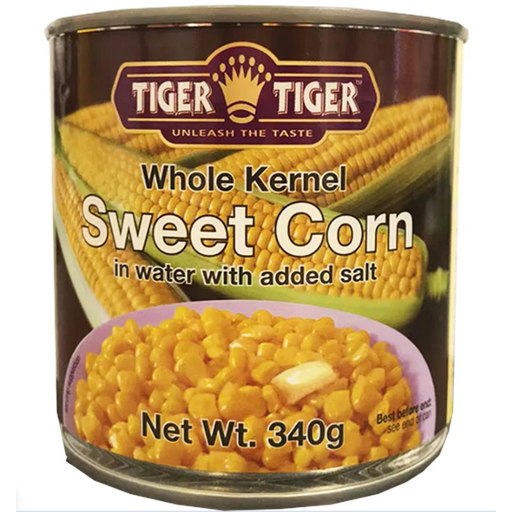
Why This Fits Their Persona: A straightforward cupboard ingredient for students, first-time cooks and smaller households. It can be drained and served cold or heated as a side dish.
The ingredient list clearly identifies sweet corn at 84%, with nutrition shown per 100g drained.
Ready to eat; suitable for salads, soups, casseroles and side dishes; free from the 14 major allergens according to the supplied product information.
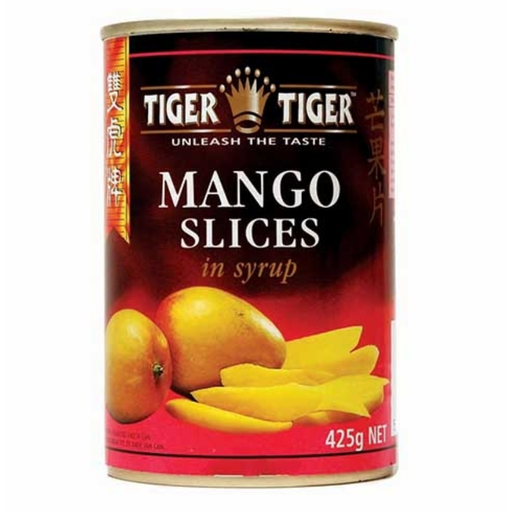
Why This Fits Their Persona: A convenient option for shoppers who want portioned tropical fruit for desserts, yoghurt, smoothies or mango sticky rice.
The label states mango at 54% and identifies sugar and citric acid, so the syrup is not hidden in vague wording.
Ready to serve; produced in Thailand; vegetarian-friendly and listed with no known allergens.
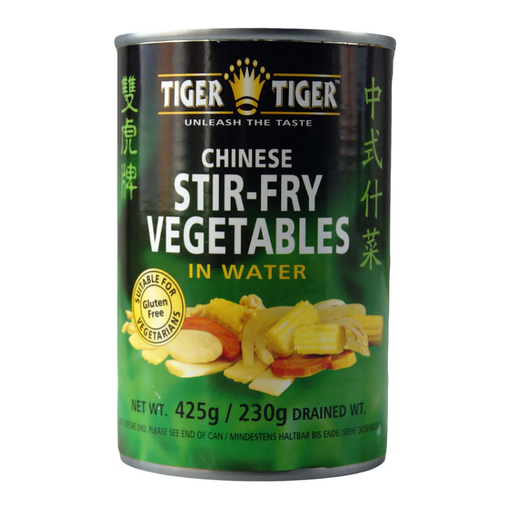
Why This Fits Their Persona: Designed for busy families, meal-preppers and cooks who want a faster route to Chinese-style stir-fries.
The instructions state to drain and stir-fry for 3–5 minutes, while the allergen information identifies soya and wheat.
Pre-prepared mixed vegetables; suitable for pairing with meat, seafood or tofu; 425g can size.
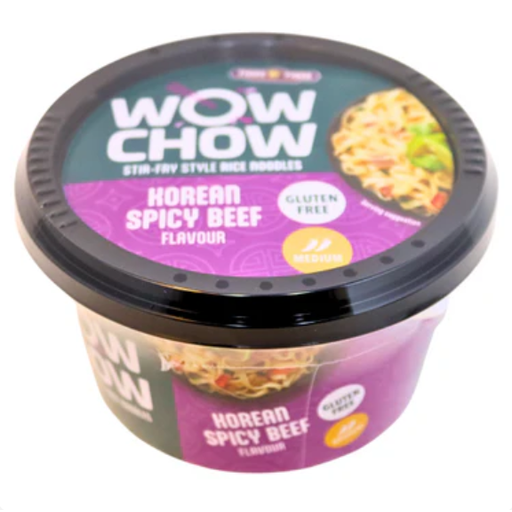
Why This Fits Their Persona: A compact cupboard option for students, office lunches and late-night meals when preparation time is limited.
The preparation method is clear: add boiling water, cover for 4–5 minutes and stir. The listing also flags wheat, soya and high sodium.
76g bowl format; includes wheat noodles, dried vegetables and seasoning; made in South Korea.
We have compiled a complete, real-time list of products that fully satisfy these strict selection criteria and UK safety regulations.
Build a flexible cupboard by combining ingredients with different textures and uses:
It depends on the product. Water chestnuts, sweetcorn and beansprouts are listed as ready to eat after draining, although rinsing is often recommended. Canned stir-fry vegetables and straw mushrooms are intended for use in cooked dishes; follow the instructions on the individual packaging.
The recommended period varies by product, commonly between two and five days. Transfer leftovers to a covered, non-metallic container and refrigerate promptly. Check the label for the exact guidance supplied with your product.
Some products are suitable for vegan or vegetarian diets, including certain water chestnuts, baby corn and fruit products. However, suitability is product-specific. Beansprouts contain sulphites, mixed stir-fry vegetables contain soya and wheat, and snack products may contain milk, gluten or traces of nuts. Check the full ingredient and allergen statement before ordering.