Small-BBQ dessert planners
If you are serving custard with fruit, cake or sponge, a ready-to-serve 400g tin is a starting point when a larger opened pack may go unused. Check its storage instructions before deciding how much to buy.


Choose a ready-to-serve 400g tin if you want custard for a small BBQ dessert spread without opening more than you expect to use. A larger ready-to-serve pack makes more sense when you have enough servings planned to use it within the pack’s chilled-storage period; custard powder is an alternative if you can prepare it. For guests with ingredient or allergen requirements, check the current pack rather than relying on the product name.
If you are serving custard with fruit, cake or sponge, a ready-to-serve 400g tin is a starting point when a larger opened pack may go unused. Check its storage instructions before deciding how much to buy.
Think about the amount your guests are likely to eat, not just the size of the unopened pack. A larger format is useful only if you can serve or use the remainder within its stated storage period.
If fat content, vegetarian suitability or milk allergens matter to a guest, compare the particular variants and read the current ingredient and allergen information. A claim about one variant does not apply to every custard in the range.
For a summer BBQ dessert spread, settle the amount you can use, any guests’ ingredient requirements and whether you have time to prepare custard before choosing a format.
| Concern | What to check | Who this matters to |
|---|---|---|
| Usable pack size | Estimate the servings needed, then check the pack weight and opened-storage instructions. | If I am serving a small group, I want enough custard without leaving most of a pack unused. About 42% of consumers would put usable quantity and avoiding leftovers first. |
| Ingredients and dietary details | Read the current allergen and ingredient panel; compare nutrition per 100g for the particular variants that interest you. | When a guest has a milk allergy or another ingredient requirement, I need to check the actual pack before serving. About 25% of consumers would make dietary details their primary concern. |
| Serving and preparation | Check whether the product is ready to serve or needs preparation, and follow its directions for serving and storing opened contents. | If dessert timing might change during the BBQ, I want to know whether the custard can be served without cooking it. About 33% of consumers would prioritise serving convenience. |
A larger pack may leave custard to store after the BBQ. The examined Ambrosia products specify refrigeration and use within three days of opening, while M&S Silky Smooth Custard specifies two days.
Choose an amount that fits the desserts you have planned, and follow the storage directions on the particular pack.
Bird's Original Custard Powder 350g needs preparation; the nutrition in the Tesco listing is for custard prepared with semi-skimmed milk, not the dry powder alone.
Choose powder only if its preparation suits your plans, and check the instructions and ingredients you will use.
Preparation also calls for milk and sugar.
The examined Ambrosia lower-fat custard is listed as suitable for vegetarians but contains milk-derived ingredients.
For a guest with an allergy, check the current ingredient list and allergen declaration before serving.
Ambrosia has ready-to-serve Devon custard in standard and lower-fat 400g versions, as well as larger packs.
Tesco Ready To Serve Custard 400G is an own-label tinned option for shoppers seeking a ready-to-serve quantity.
M&S Silky Smooth Custard is a 400g food-cupboard option whose listed ingredients include whole milk, skimmed milk and cream.
Bird's Original Custard Powder 350g is a make-from-powder alternative, not a ready-to-serve tin.
These options include 400g ready-to-serve custards and larger ready-to-serve packs. Choose an amount you expect to use, then check the particular product’s ingredients and opened-storage instructions.
 Image unavailable
A ready-to-serve 400g option if you want to compare the lower-fat variant for a small dessert spread. The listing states less than 3% fat and 78 kcal per 100g. It contains milk; check the current pack and refrigerate opened contents as directed.
 Image unavailable
A ready-to-serve 400g custard for a small dessert spread; the listing says it can be served hot or cold. It contains milk. After opening, transfer any remainder from the can, refrigerate it and follow the pack’s instructions for when to use it.
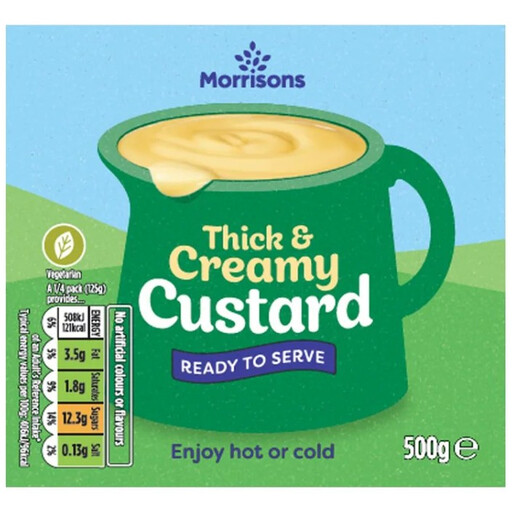 Image unavailable
Consider this 500g ready-to-serve pack if you expect to use more than a 400g tin. Check its milk allergen information and plan to refrigerate any remainder after opening; the Joybuy product information says to consume it within three days.
 Image unavailable
A 1kg ready-to-serve option when a larger dessert spread can use the opened pack promptly. It contains milk. Refrigerate any remainder and follow the product’s instructions for using it after opening.
Choose a 400g tin when it is likely to cover the desserts you are serving without leaving much opened custard. A larger pack is more practical when you have enough servings or planned follow-up use to finish it within its stated chilled-storage period.
The examined Ambrosia standard and lower-fat custard listings say those products can be served hot or cold. Check the directions on the particular pack before serving or heating it.
Follow the instructions on your pack rather than applying one product’s timeframe to another. The examined Ambrosia products call for refrigeration and use within three days of opening; M&S Silky Smooth Custard says to refrigerate and eat it within two days.
Vegetarian suitability does not establish milk-allergy suitability. The examined Ambrosia custards contain milk-derived ingredients, and Bird's powder is marked as possibly containing milk. Check the current pack’s ingredient and allergen information for the product you intend to serve.