Quick cake-serving bakers
If the cake is already baked, ready-to-serve custard avoids making a sauce from powder. Ambrosia describes its Devon Custard as suitable for heating and serving with cake or crumble.


Keep ready-to-serve tinned custard in the cupboard if you want to warm it gently or serve it cold with a finished cake. Choose custard powder when you need to adjust the milk quantity or sweetness, allowing time to prepare it. Neither route should be assumed suitable for baking inside a cake unless your recipe or the product instructions specify that use.
If the cake is already baked, ready-to-serve custard avoids making a sauce from powder. Ambrosia describes its Devon Custard as suitable for heating and serving with cake or crumble.
If a trifle layer or cake accompaniment calls for a particular consistency, Bird's Original Custard Powder lets you vary the milk quantity and sugar during preparation.
If you still want a ready-to-serve can, compare nutrition information on the exact variant. Ambrosia states that its Light Devon Custard has 30% less sugar and fat than its standard Devon Custard; that comparison does not describe every low-fat-labelled can.
Decide whether the custard is for serving with a finished cake or for a recipe that needs preparation and an adjustable consistency.
| Concern | What to check | Who this matters to |
|---|---|---|
| Ready-to-serve convenience | Check that the can is ready to serve and follow its heating directions. Ambrosia lists three portions for its 400g Devon Custard can. | When my sponge is already baked, I want custard I can serve without mixing a batch. About 42% of consumers put that ready-to-serve convenience first. |
| Recipe control | For Bird's powder, check the preparation instructions and have the required ingredients ready; its milk quantity and sugar can be varied. | If I need a particular thickness for a cake dessert or trifle layer, I would rather make the custard myself. About 33% of consumers make that control their primary concern. |
| Sugar and fat information | Compare the current per-100g nutrition labels on the exact cans, including the stated comparison behind any light claim. | I still want the ease of a can, but sugar and fat information will decide which variant I pick. That is the main concern for about 25% of consumers. |
Directions for warming ready-to-serve custard and pouring it over cake do not establish how it will behave as an oven-baked filling.
For a filling, follow a recipe or product instruction that specifies the type of custard to use.
Ambrosia's cited canned-custard directions require leftovers to be removed from the can, refrigerated and consumed within 3 days.
Choose a pack size you expect to use and follow the storage directions on the exact can.
Leftover custard may go to waste if it is not used within the stated refrigerated period.
The cited Ambrosia Light custard contains milk ingredients, while Bird's Original Custard Powder may contain milk and is normally prepared with milk.
Check the current allergen statement and every ingredient used to make the custard.
Its Devon, Light Devon and Deluxe canned custards offer ready-to-serve options for a finished cake dessert.
Original Custard Powder is a make-up alternative, not a ready-to-serve tin.
Tesco lists a 400g ready-to-serve own-label custard among its tinned options.
Its listed ready-to-eat custard includes 500g and 1kg packs.
Its Madagascan Vanilla Luxury Custard is a chilled serving option rather than an ambient cupboard staple.
These selections cover ready-to-serve cans for serving with dessert and a custard powder for recipes where you want to adjust the preparation.
 Image unavailable
Consider this ready-to-serve can for custard with a finished cake. Ambrosia describes gentle heating and serving with cake; the can contains milk, and leftovers require refrigeration after opening. For a filling baked inside a cake, follow a recipe that specifies the custard to use.
 Image unavailable
Consider this 400g ready-to-serve can if you want to compare a low-fat-labelled custard for a hot or cold dessert topping. Check its own nutrition label rather than applying claims made for Ambrosia Light Devon Custard to this SKU. It contains milk; refrigerate leftovers and follow the pack directions.
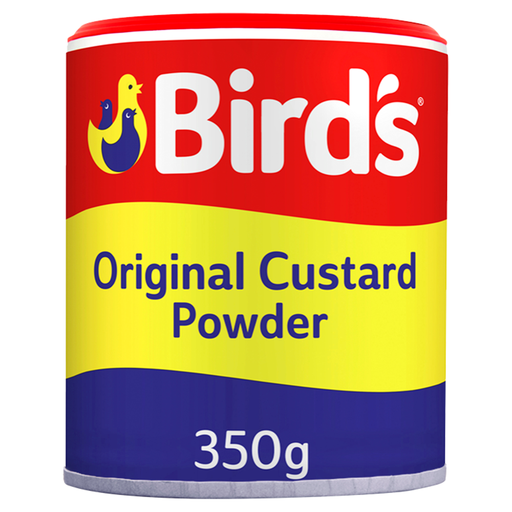 Image unavailable
Choose this powder rather than a ready-to-serve tin when making custard to a recipe-specific consistency, including a layer for a trifle with sponge cake. Bird's instructions allow you to vary the milk quantity and sugar. It needs preparation; refrigerate made-up custard and check the pack for milk allergen information.
Yes, ready-to-serve custard can accompany a finished cake: Ambrosia suggests heating its Devon Custard and serving it with cake or crumble. For custard baked inside a cake, follow a recipe or product instruction that specifies that use.
Follow the directions on your can. For Ambrosia Light Devon Custard 400g, the stated saucepan method is to transfer the custard, heat it gently, stir frequently and avoid boiling.
For the cited Ambrosia Devon and Light Devon cans, remove leftovers from the can, refrigerate them and consume within 3 days. Check the label if you buy another product or variant.
Not automatically. Bird's Original Custard Powder may contain milk, and its usual preparation uses milk. Check the current powder label and any ingredients you add if allergens affect your choice.
Not the cited M&S Madagascan Vanilla Luxury Custard. Marks & Spencer instructs buyers to keep that product at 0°C to +5°C and follow its use-by date, so it is not a substitute for an unopened ambient tin.