Certification-first single diners
You want an organic claim for the custard itself and can plan how to use a pack larger than one serving. Check the exact pack’s storage instructions before choosing it.


Choose custard labelled organic if certification is your priority, but check whether its pack size and storage instructions work for one person. A ready-to-serve tin avoids preparation yet may leave several servings after opening; a small pot reduces leftovers, while custard powder lets you prepare a chosen amount.
You want an organic claim for the custard itself and can plan how to use a pack larger than one serving. Check the exact pack’s storage instructions before choosing it.
You want a dessert-sized amount without measuring or preparing custard. A small ready-to-eat pot may fit that routine more closely than a multi-portion tin.
You are willing to prepare custard so you can choose how much to make. The preparation directions and ingredients matter more to you than opening a ready-made serving.
For one-person meals, decide which requirement comes first: an organic label, avoiding leftovers, serving without preparation or controlling the amount you make. Then check the pack against that requirement.
| Concern | What to check | Who this matters to |
|---|---|---|
| Organic status | Check the product-specific organic claim, pack size and storage instructions. GOV.UK says food labelled organic must meet the applicable organic rules. | If an organic label matters more to me than having a one-serving pack, I need to check the custard itself rather than rely on general packaging language. About 40% of consumers put organic status first. |
| Opened-pack leftovers | Check servings per pack and after-opening instructions. The Ambrosia 400g tin described by ASDA contains three portions. | For a dessert I will eat alone, I want to avoid opening more custard than I can use in time. About 30% of consumers make leftover avoidance their primary concern. |
| Immediate serving | Compare individual pack weight and whether preparation is required. Tesco lists Ambrosia ready-to-eat custard in 120g pots. | When I need custard ready to serve, I would rather open a prepared product than make it from powder. Roughly 20% of consumers prioritise that convenience. |
| Ingredients and quantity | Read the allergen panel and powder preparation directions, including which liquid to use and how much custard they make. | If I want to prepare only the amount needed, I am willing to check ingredients and follow the directions. Around 10% of consumers put that flexibility first. |
An organic claim applies to a specific product; familiar branding or descriptions such as natural do not establish its status. GOV.UK states that food labelled organic must meet the applicable organic rules.
Look for an organic claim on the custard’s own label or product description, and check whether it refers to the whole product rather than one ingredient.
The Ambrosia 400g tin listed by ASDA contains three portions. Its remaining custard needs to be removed from the can, refrigerated and used within three days after opening.
Plan the remaining servings before opening a tin, or consider a small pot or custard powder when you need a different amount.
Custard left after the stated storage period may go to waste.
Organic custard can contain milk, while an organic plant-based custard can contain soya. Those claims do not replace an allergen check.
Read the ingredients and allergen statement on the exact pack, particularly if you need to avoid milk or soya.
Ready-to-serve custard in tins and smaller ready-to-eat portions.
Custard powder for people willing to prepare the amount they need.
Own-label ready-to-serve custard alongside branded products.
Own-label ready-to-eat custard in several pack formats.
Chilled custard for shoppers who can accommodate refrigerated storage.
These options cover a ready-to-serve tin and a vanilla custard mix for preparing at home. If an organic claim is essential, check it on the exact product before choosing either format.
 Image unavailable
Consider this ready-to-serve tin if you can use more than one portion. The 400g can states three 130g portions; after opening, remove the remainder from the can, refrigerate it and use it within three days. It contains milk.
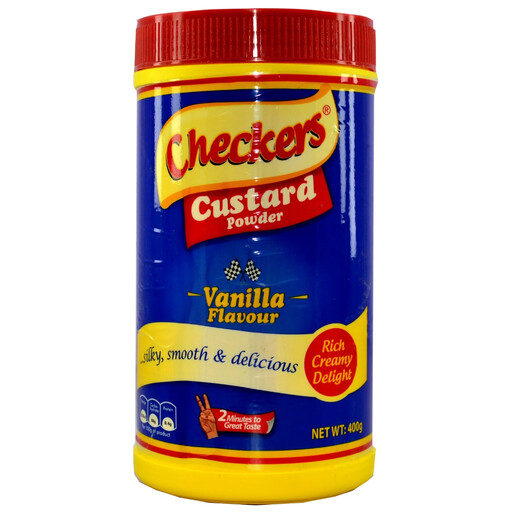 Image unavailable
Consider this custard mix if you would rather prepare custard than open a ready-made tin. Check the 400g pack’s preparation directions and yield to work out how much to make for one serving, and read its ingredient and allergen label.
Check the claim on the specific custard, not just an ingredient or a description of its packaging. GOV.UK states that food labelled organic must meet the applicable organic-production and certification rules.
Yes, if the remaining portions fit your plans. The Ambrosia 400g tin described by ASDA contains three portions; after opening, remove the remainder from the can, refrigerate it and use it within three days.
No. An organic dairy custard can contain milk, while a plant-based organic soya custard can contain soya. Read the allergen statement on the exact product you intend to buy.
A smaller ready-to-eat pot reduces the amount opened at once, while custard powder offers a make-up format. Tesco lists Ambrosia in 120g pots and Bird's Original Custard Powder; follow the powder’s directions to determine the quantity to prepare.