What matters when buying?
For a cupboard dessert alongside a higher-protein eating plan, decide which need comes first: a measurable protein contribution, quick serving or dietary fit. Then compare labels on the portion and format you intend to use.
| Concern |
What to check |
Who this matters to |
| Protein per serving |
Read protein for the portion you will eat, not just the pack size. Joybuy lists 2.8g per 100g and 3.6g per 130g portion for Ambrosia Devon Custard. |
If I want a snack to contribute a clear amount of protein, the dessert format alone does not answer that need. About 50% of consumers put measurable protein contribution first. |
| Preparation and leftovers |
Check whether it is ready to serve or needs making up, then follow the opened-pack or prepared-custard storage instructions. |
For a last-minute pudding, I want something I can serve without mixing and can finish before leftovers need using. Quick, manageable serving comes first for about 30% of consumers. |
| Allergens and dessert nutrition |
Read the exact pack’s milk declaration and compare protein, sugars, fat and energy on a consistent serving basis. |
When milk ingredients or the rest of a dessert’s label affect my choice, I need to check the particular recipe before buying. Dietary fit is the primary concern for about 20% of consumers. |
Joybuy custard selections
These selections cover ready-to-serve custard for cupboard desserts, plus a powder for shoppers happy to prepare it. Check the pack format where a tin is essential; none should be chosen solely on the assumption that custard will provide the main protein serving.
 Image unavailable
Ambrosia Devon Custard 400g
Choose this ready-to-serve can when a quick dessert topping matters more than a large protein contribution. Joybuy lists 2.8g protein per 100g and 3.6g per 130g portion. It contains milk; transfer leftovers from the can, refrigerate and consume within three days of opening.
View on Joybuy
 Image unavailable
Ambrosia Low Fat Custard 400g
This 400g low-fat variant is a ready-to-serve custard option if fat content is a separate consideration. Compare its current protein and other nutrition figures with the portion you plan to serve; “low fat” does not establish a substantial protein contribution. Check the milk declaration and opened-pack instructions.
View on Joybuy
 Image unavailable
Ambrosia Light Devon Custard 1kg
The 1kg size is worth considering when you expect to serve custard repeatedly rather than open a smaller pack for a single dessert. Check the pack’s protein per serving, milk declaration and leftover-storage instructions. If you specifically need a tin, confirm this variant’s packaging before buying.
View on Joybuy
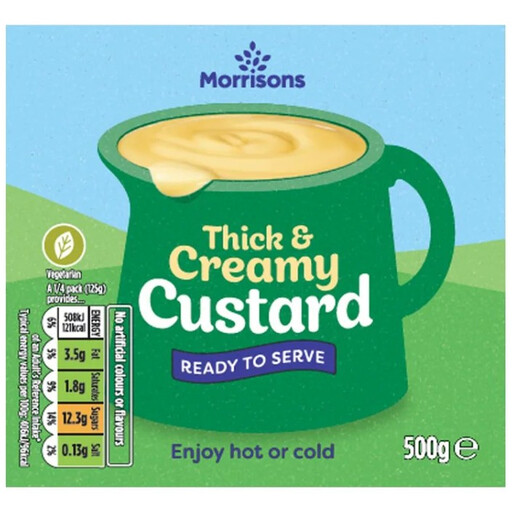 Image unavailable
Morrisons Ready To Serve Custard 500g
This 500g ready-to-serve custard suits a dessert occasion where avoiding preparation is the priority. Read the nutrition label for the amount you will serve and plan how to use any remainder. Confirm the packaging if your storecupboard choice must specifically be a tin.
View on Joybuy
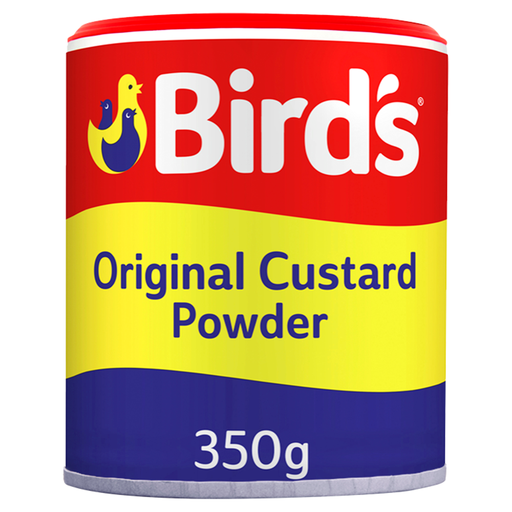 Image unavailable
Bird’s Custard Powder 350g
Choose this 350g powder if you would rather make custard as needed than keep a ready-to-serve pack. Bird’s listing says it may contain milk and directs shoppers to refrigerate the custard once prepared and treat it as fresh food. To count protein, check the nutrition of the finished serving made with your chosen ingredients.
View on Joybuy
Questions about custard and protein
Can tinned custard be my main protein serving?
Do not assume a standard tin will make a substantial contribution. Joybuy lists Ambrosia Devon Custard at 2.8g protein per 100g, or 3.6g per 130g portion; check the amount for the exact product and portion you intend to eat.
What should I do with custard left in an opened tin?
For Ambrosia Devon Custard 400g, remove the remainder from the can, refrigerate it and consume it within three days, according to the product instructions. Follow the directions on your own pack if you choose a different variant.
Is traditional tinned custard suitable if I need to avoid milk?
Ambrosia Devon Custard declares milk, so it is not a suitable choice for someone avoiding that allergen. Check every prospective product’s full ingredient and allergen statement, including precautionary wording, rather than assuming powder or another custard variant is milk-free.
Does a low-fat custard answer the protein question?
No: fat content and protein contribution are different things to check. If you are comparing a low-fat variant with another custard, read protein, fat, sugars and energy for comparable portions on both labels.


