Carers keeping dessert straightforward
Someone buying for a person who cannot easily shop or prepare meals may need custard that can be served without mixing ingredients. Ambrosia describes its ready-to-serve canned custards as suitable hot or cold.


Choose ready-to-serve custard when a recipient or carer needs a dessert that can be served with little preparation; choose the pack size by how much will be used after opening. A larger carton suits several prompt servings, while powder requires milk, sugar and heating. Choose a light version only when it fits the person’s dietary requirements, and check individual advice where nutrition or swallowing needs affect the choice.
Someone buying for a person who cannot easily shop or prepare meals may need custard that can be served without mixing ingredients. Ambrosia describes its ready-to-serve canned custards as suitable hot or cold.
A smaller pack may be easier to finish when only one or two people will eat it. Ambrosia lists three portions for its standard 400 g can; opened-pack refrigeration and use instructions still matter.
Someone choosing for a stated dietary requirement needs to read the current pack’s ingredients, allergens and nutrition information. Where appetite or swallowing is a concern, the person’s individual professional advice matters more than a light label or a familiar texture.
For a meals-on-wheels storecupboard, start with the preparation the recipient or carer can manage. Then consider how quickly an opened pack will be used and whether its ingredients fit the person’s needs.
| Concern | What to check | Who this matters to |
|---|---|---|
| Ease of serving | Check whether the custard is ready to serve and whether serving it cold is practical. | When a carer has little time or equipment, avoiding mixing and heating makes dessert simpler to serve; about 31% of consumers would put ease of serving first. |
| Pack size and leftovers | Match the pack to planned servings and follow its instructions for storing opened contents. | For a single recipient, a pack that cannot be finished in time may leave unwanted custard; matching size to likely use would be the main concern for about 25% of consumers. |
| Dietary fit and allergens | Read the current ingredients, allergen information and nutrition panel; follow individual advice where needed. | If custard must fit a dietary plan or avoid an allergen, the label matters more than the format. About 19% of consumers would make dietary fit their primary concern. |
| Control over preparation | Check whether milk, sugar and heating are practical if choosing powder. | When someone can prepare dessert and wants to adjust its sweetness or consistency, powder offers a different choice from a fixed ready-made recipe; for about 25% of consumers, that control would come first. |
Tesco instructs buyers to refrigerate its 1 kg ready-to-serve custard after opening and consume it within three days. A household serving only a little custard may not use the whole pack in that time.
Count the portions likely to be served before choosing a 1 kg carton; consider a smaller pack when demand is limited.
Unused opened custard may need to be discarded.
A reduced-fat or reduced-sugar formulation addresses a particular preference, not every recipient’s needs. NHS guidance for carers also discusses different food choices when someone is not getting enough nutrients.
Check the person’s dietary plan and the current nutrition panel. Where appetite or a medical nutrition need is involved, follow their individual professional advice.
Bird’s Original Custard Powder requires milk, sugar and heating. Once made up, Bird’s says to refrigerate the custard and treat it as fresh food.
Choose powder only when someone can prepare and store it appropriately; otherwise, consider ready-to-serve custard.
Preparation also takes time and requires milk and sugar.
Ingredients and allergen information can change. This matters particularly when custard is being served to someone with an allergy or a specified dietary requirement.
Read the physical pack’s ingredients, allergen information and storage instructions before serving.
Ready-to-serve canned custard, including standard, light and flavoured 400 g options.
Ready-to-serve custard is listed in 400 g and larger formats, including a reduced-fat option.
Custard powder for people who can prepare dessert rather than serve it straight from a pack.
Its Madagascan Vanilla Luxury Custard is a chilled option, not an ambient storecupboard substitute for a tin or unopened ambient carton.
Asda lists a ready-to-serve custard option.
These custards offer ready-to-serve choices for the storecupboard decision, including smaller Ambrosia packs, a larger light pack and a Morrisons option. Choose between them by likely use after opening and the recipient’s dietary requirements.
 No image available
For low-effort serving when a smaller pack fits the planned meals. Ambrosia lists three portions for its standard 400 g can; check the pack for milk ingredients and follow its opened-pack storage instructions.
 No image available
For someone specifically choosing a low-fat ready-to-serve custard in a 400 g pack. Check the current label for nutrition, milk ingredients, serving information and instructions for storing opened contents; a light formulation does not replace individual dietary advice.
 No image available
For a strawberry-flavoured, ready-to-serve option when a 400 g can suits the planned servings. Ambrosia instructs buyers to remove any remaining contents from the can, refrigerate them and consume them within three days of opening; check the pack for milk ingredients.
 No image available
For several planned servings when a light formulation fits the recipient’s requirements. The 1 kg pack needs to match likely use after opening; check its current label for nutrition, milk ingredients and storage instructions rather than choosing it on pack size alone.
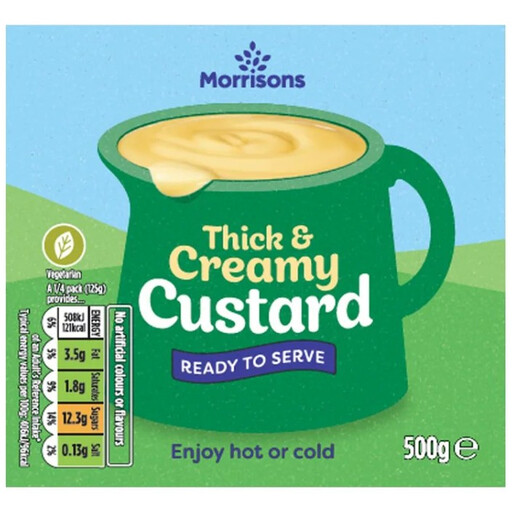 No image available
For ready-to-serve custard when a 500 g pack matches the meals planned. Check the physical pack’s format, serving information, milk ingredients and opened-pack storage instructions before relying on it for cupboard meals.
Yes, when minimal preparation is the priority and the product fits the recipient’s dietary needs. Ambrosia describes its ready-to-serve canned custard as suitable hot or cold; follow the pack’s refrigeration and use instructions once it is opened.
Choose by the servings likely to be used after opening. Ambrosia lists three portions for its standard 400 g can, while a 1 kg carton may suit repeated servings; Tesco instructs buyers to refrigerate its opened 1 kg custard and consume it within three days.
A light version is relevant when its nutrition information fits that person’s stated requirements; age alone does not settle the choice. NHS guidance for carers addresses different food needs when someone is not getting enough nutrients, so follow individual professional advice if appetite or nutrition is a concern.
Read the current physical pack before serving. The Ambrosia ready-to-serve products described here contain milk ingredients, and Bird’s Original Custard Powder may contain milk; do not assume powder avoids the allergen.
Do not assume standard custard has the texture that person needs. Follow their individual swallowing guidance and check with the clinician or speech and language therapist involved in their care before serving it.