Carers serving a shared dessert
A stated portion count helps you divide a ready-to-serve pack between two or three people. Check the heating directions and plan when any remainder will be eaten.


A ready-to-serve 400g tin is a practical starting point for a dessert shared between two or three people, but check the pack’s stated portions and how quickly leftovers must be used. If an older person has a specific nutrition goal, compare the intended serving’s energy and other nutrition values rather than choosing a light or richer recipe by name; milk allergy and prescribed swallowing requirements need separate checks before serving.
A stated portion count helps you divide a ready-to-serve pack between two or three people. Check the heating directions and plan when any remainder will be eaten.
If a care plan calls for additional energy, compare the nutrition of the portion likely to be eaten rather than assuming a larger pack or a light recipe meets that goal. Individual dietary advice takes priority over a general product comparison.
Check the current pack for allergens. Where a person has a texture-modified diet, use their assessed requirements rather than assuming that custard described as smooth is suitable.
Start with the person’s dietary and serving requirements, then choose a pack the household can use within its opened-pack instructions. The groups below reflect distinct primary reasons consumers might make this choice.
| Concern | What to check | Who this matters to |
|---|---|---|
| Energy in a small portion | Compare kcal and protein per 100g and per intended serving. Follow the person’s care plan if increasing intake is a stated goal. | When a small appetite makes larger portions difficult, I need to know what the amount actually served provides. About 33% of consumers would put energy intake first. |
| Portions and leftovers | Read the stated serving count and the exact refrigeration and use-after-opening instructions. | If a tin is shared today but some will remain, I want portions I can plan and leftovers the household can use in time. For about 27% of consumers, portioning and storage are the main concern. |
| Fit with a dietary goal | Compare energy, fat and sugars on the same per-100g basis, then check the planned portion. | A light label alone does not tell me whether the dessert fits the person’s dietary aim. About 20% of consumers would prioritise the recipe’s nutritional composition. |
| Allergens and prescribed texture | Check the current milk-allergen declaration; for a texture-modified diet, follow the assessed IDDSI requirements at the intended serving temperature. | Before serving someone with a milk allergy or a prescribed swallowing plan, I need to establish that this particular custard meets their requirements. Allergy or texture suitability comes first for about 20% of consumers. |
A lighter recipe can provide less energy as well as less fat. ASDA Groceries lists 76 kcal per 100g for ASDA Light Custard, while its listing for Ambrosia Deluxe gives 122 kcal per 100g. Neither figure establishes which is appropriate for an individual.
Compare the portion likely to be eaten with the person’s care plan, particularly if they have been advised to increase energy intake.
Tesco describes its 400g custard as two servings, while the Ambrosia 400g tin listed by ASDA Groceries states three 130g portions. Opened-pack instructions also differ.
Plan servings from the specific label and follow its directions for transferring, refrigerating and using leftovers.
A pack that cannot be finished within its stated opened life may leave custard to discard.
Appearance alone does not establish the texture needed by someone with dysphagia. The International Dysphagia Diet Standardisation Initiative says food should be assessed under intended serving conditions, including temperature, and that patient-specific recommendations are a clinician’s responsibility.
Follow the person’s assessed IDDSI requirements and ask their clinician for guidance if the custard’s suitability is unclear.
The Tesco, Ambrosia, ASDA, Sainsbury’s Stamford Street Co. and M&S ready-to-serve examples described in the retailer information declare milk.
Read the current pack’s allergen information each time, rather than relying on a previous purchase or a product description.
These product lines offer different pack and preparation choices; the brand name alone does not establish nutrition, allergen or storage details for a particular product.
Its ready-to-serve 400g tins include standard and Deluxe custard, with the stated portions and nutrition differing by recipe.
Its ready-to-serve 400g own-label custard gives a two-serving reference point for sharing.
Its range includes a Stamford Street Co. 400g tin and larger ready-to-eat custard packs.
Its own-label 400g ready-to-serve tins include regular, light and value recipes.
Its 400g custard offers another ready-to-serve option for comparing portions and ingredients.
Its custard powder and instant sachets are preparation-based alternatives, not ready-to-serve tins.
These ready-to-serve options cover a 400g tin for a smaller shared dessert, a 500g tub and a 1kg light custard for households planning more portions. Choose by the amount likely to be eaten, the recipe and the opened-pack directions—not pack size alone.
 No image available
A ready-to-serve tin to consider when sharing a smaller dessert between two or three people. The Joybuy listing states three 130g portions, 96 kcal per 100g and hot-or-cold serving. It contains milk; remove leftovers from the tin, refrigerate them and consume them within three days. A prescribed swallowing texture needs to be checked against the person’s plan.
 No image available
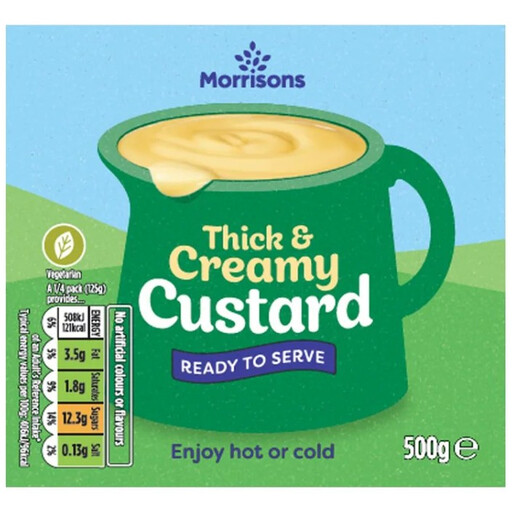
This ready-to-serve tub suits a household planning a larger shared dessert rather than a tinned option. The Joybuy listing gives nutrition per 100g and per quarter-pack and describes chilled or gently heated serving. It contains milk; refrigerate after opening and consume within three days. Check any prescribed swallowing texture before serving.
 No image available
Consider this larger, light-recipe pack when several portions are planned and its nutrition fits the person’s dietary goal. The Joybuy listing states approximately eight servings, 78 kcal and 2.0g fat per 100g. It contains milk and calls for refrigeration and consumption within three days of opening. Its lighter recipe should not be assumed to fit a plan to increase energy intake, and any prescribed swallowing texture needs checking.
It can be, but check the stated portions rather than treating 400g as a fixed serving count. Tesco describes its ready-to-serve 400g tin as two servings, while the Ambrosia tin listed by ASDA Groceries states three 130g portions; serve an amount suited to the individual.
Follow the directions on the tin you opened, including any instruction to transfer leftovers to another container. The reviewed Sainsbury’s Stamford Street Co. label says to refrigerate and use the contents within one day, M&S says within two days, and the reviewed Tesco label says within three days.
Only if the particular custard meets that person’s assessed swallowing plan. The International Dysphagia Diet Standardisation Initiative says texture testing should reflect intended serving conditions, especially temperature, and places patient-specific recommendations with the clinician. Ask the person’s clinician if suitability is unclear.
The reviewed Tesco, Ambrosia, ASDA, Sainsbury’s Stamford Street Co. and M&S examples declare milk. Check the current physical pack for the exact product before serving it to someone with a milk allergy.