No-fuss weeknight dessert planners
If you want to serve custard without making a sauce from powder, a ready-to-serve tin fits that plan. Ambrosia labels its 400g Devon Custard can as three portions and says it can be served hot or cold.


Choose a ready-to-serve 400g tin when you want custard you can serve hot or cold without making it from powder, and around three portions suit the meal. A larger ready-to-serve pack makes more sense if you can use it within its opened-pack storage period; powder requires preparation and does not offer the same pour-and-serve convenience. Check the exact pack for ingredients, allergens and storage instructions before stocking up.
If you want to serve custard without making a sauce from powder, a ready-to-serve tin fits that plan. Ambrosia labels its 400g Devon Custard can as three portions and says it can be served hot or cold.
If custard will accompany desserts across closely spaced meals, compare the quantity in several tins with a larger ready-to-serve pack. Plan for the leftovers before opening either format.
If you want a different ready-to-serve recipe, compare sugar and fat figures per 100g on the exact products you are considering. Keep the serving size and allergen statement in view alongside those figures.
For a quick dessert, decide whether the custard must be ready to serve, then choose a quantity you can use and check the exact recipe label.
| Concern | What to check | Who this matters to |
|---|---|---|
| Ready-to-serve convenience | Look for ready-to-serve wording and check whether the product can be served cold or needs heating. | After dinner, I want to add custard without preparing it from powder. About 34% of consumers put immediate serving first. |
| Pack size and leftovers | Compare the pack quantity with the portions you expect to serve, and read the opened-pack storage instructions. | If I am serving several desserts, I need enough custard without opening more than we can use promptly. For about 33% of consumers, matching quantity to use is the primary concern. |
| Recipe comparison | Compare sugar and fat per 100g on the exact standard and alternative recipes. | I still want custard ready to serve, but I want to compare the recipes before choosing. Around 20% of consumers make that label comparison their first consideration. |
| Ingredients and allergens | Read the current ingredient list and allergen statement for the specific variant. | When an ingredient determines whether I can serve the dessert, the label has to come before format or quantity. Ingredient suitability is the primary need for about 13% of consumers. |
Several tins and one larger pack offer different quantities, while opened custard needs prompt use.
Choose the format around the portions you expect to serve and check each pack’s storage instructions.
Ambrosia labels its 400g Devon Custard can as three portions. Its instructions say to remove leftovers from the can, refrigerate them and consume them within three days of opening.
Plan the remaining portions before opening the tin.
The Ambrosia standard and Light 400g cans and the Morrisons ready-to-serve custard listed here contain milk.
Check the current label of the exact flavour and recipe before serving anyone with a milk allergy.
Ambrosia’s microwave directions for its 400g cans instruct you to transfer the custard to a microwaveable container.
Decant it before microwave heating, and follow the pack directions for the heating method you choose.
Ambrosia lists standard and Light ready-to-serve 400g custard cans, as well as larger ready-to-serve formats.
Tesco lists its own ready-to-serve 400g custard alongside larger ready-to-serve options.
Sainsbury’s lists ready-to-eat custard in 500g and 1kg formats as larger ready-to-serve alternatives.
Bird’s Original Custard Powder is a ready-to-make alternative, not ready-to-serve tinned custard.
These products include 400g custard cans and larger ready-to-serve packs for planned weeknight desserts. The larger formats are alternatives to tins, not multi-tin packs.
 No image available
A ready-to-serve 400g can for a dessert where you want to compare an alternative recipe with standard custard. It can be served hot or cold. It contains milk; after opening, refrigerate the custard and consume it within three days.
 No image available
A ready-to-serve tin for a dessert where the labelled three portions fit the meal. Serve it hot or cold. It contains milk; remove any leftovers from the can, refrigerate them and consume them within three days of opening.
 No image available
A larger ready-to-serve option when you expect several portions across closely spaced meals. The listing describes approximately eight servings in a carton, not a tin. It contains milk and should be refrigerated after opening and consumed within three days.
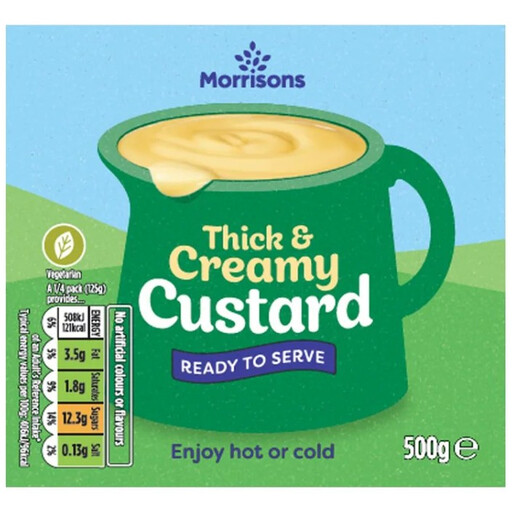 No image available
A ready-to-serve 500g alternative if you need more custard than a 400g tin provides. The product is described as a tub and can be served chilled or gently heated. It contains milk; refrigerate after opening and consume within three days.
Ambrosia Devon Custard 400g is ready to serve hot or cold, so it does not need cooking before serving. Follow the exact pack instructions if you choose to heat it.
No. Ambrosia’s directions for its standard and Light 400g cans say to transfer the custard to a microwaveable container before heating.
For Ambrosia’s standard and Light 400g cans, remove the remaining custard from the can, refrigerate it and consume it within three days of opening. Check the instructions on the exact product you buy.
The Ambrosia standard and Light products and Morrisons ready-to-serve custard listed here contain milk, so they are not suitable for someone with a milk allergy. Always check the current label of the exact product and variant.
Choose by the portions you expect to use, not pack size alone. A larger ready-to-serve pack can suit several closely spaced desserts, but it may not be a tin; check its format and opened-pack storage instructions before choosing it over 400g cans.