What matters when choosing
For a family lunch, decide how much custard you will serve before choosing between a modest tin and a larger pack. Then compare the nutrition figures and the preparation each format requires.
| Concern |
What to check |
Who this matters to |
| Sugars, fat and energy |
Compare the same nutrients per 100g, then account for the portion you intend to serve. A light label does not replace checking sugars separately. |
If I am choosing custard for a lunch dessert, I want to know what is in the amount each person will actually eat. About 42% of consumers put nutrition comparison first. |
| Portions and leftovers |
Check net weight, stated servings and the instructions for storing custard after opening; a larger pack may not be a tin. |
When several people are sharing, I need enough custard without opening more than we can use in time. For about 33% of consumers, pack practicality is the main concern. |
| Serving effort |
Check whether the custard is ready to eat or needs milk, sugar and heating. Follow the product's directions if serving it warm. |
If lunch needs a dessert with little preparation, I would favour a ready-to-eat format over making custard from powder. Convenience comes first for about 25% of consumers. |
Joybuy custard selections
These selections include ready-to-eat 400g custards for modest servings and 500g or 1kg packs to consider when more custard is needed. Compare the actual portions and packaging before treating a larger pack as a family-sized tin.
 No image available
Ambrosia Light Devon Custard 1kg
Consider this ready-to-eat 1kg pack if several people will share the custard and the household can use an opened pack within its storage instructions. Check the stated serving size and current nutrition label before deciding how much to serve.
View on Joybuy
 No image available
Ambrosia Low Fat Custard 400g
A ready-to-eat 400g option when a modest amount suits lunch and comparing sugars matters to you. Joybuy lists 7.4g sugars per 100g for this product; check how that relates to your planned serving and how many people will share the can.
View on Joybuy
 No image available
Ambrosia Devon Custard 400g
This ready-to-eat 400g can is worth considering if three modest servings suit the meal. Joybuy states a 130g portion and lists 10.6g sugars per 100g; compare those figures with the portion you intend to serve.
View on Joybuy
 No image available
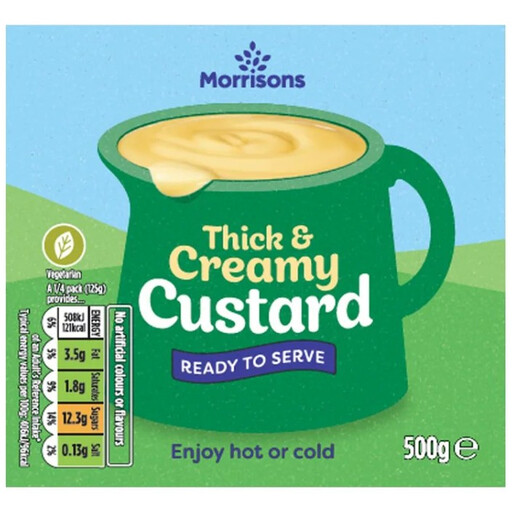
Morrisons Ready To Serve Custard 500g
The 500g ready-to-serve pack gives you more custard than a 400g option without requiring a batch made from powder. Check its stated portions, packaging and directions for storing any remainder after opening.
View on Joybuy
 No image available
Ambrosia Strawberry Flavour Devon Custard 400g
This strawberry-flavoured 400g custard is an option if the flavour appeals to your household and a modest pack is enough. Decide how many servings you need, and check the current nutrition and allergen information.
View on Joybuy
Frequently asked questions
Will one 400g tin serve a family lunch?
Check the stated servings against the number of people eating. ASDA Groceries lists three portions for Ambrosia Light 400g but suggests two servings for ASDA Light Custard 400g. If that is not enough, compare the portions on a larger ready-to-eat pack rather than assuming every 400g tin serves the same number.
Which nutrition figures are useful when comparing custards?
Start with energy, fat, saturates and sugars per 100g so the products have a common comparison basis, then consider the amount you will serve. The NHS notes that a manufacturer's stated portion may differ from the portion you eat.
Does low-fat custard also have less sugar?
Check sugars separately: a low-fat description does not establish a sugar figure. ASDA Groceries lists 7.4g sugars per 100g for Ambrosia Light 400g, while Joybuy lists 10.6g per 100g for Ambrosia Devon Custard 400g. Those figures compare these particular products, not every light and standard custard.
How long can opened custard be kept?
Follow the instructions on the particular pack and refrigerate it as directed. ASDA Groceries lists a three-day period after opening for the Ambrosia 400g and 750g products, while Marks & Spencer says to eat M&S Silky Smooth Custard within two days of opening.
Can I assume tinned custard is suitable for someone avoiding milk?
No. The Ambrosia, ASDA and M&S ready-to-eat examples list milk, and Bird's says its powder may contain milk. Read the ingredients and allergen statement on the current product before buying or serving it.


