For a dessert shared by several people, choose a ready-to-serve 1kg carton: Ambrosia, Tesco and Sainsbury's each list eight servings for their 1kg products. A smaller can suits a more modest dessert, while custard powder suits a recipe in which you want to prepare the custard yourself. The sharing-size ready-to-serve options here are cartons rather than tins, and each opened pack needs to be handled according to its own label.
Who each format suits
Family-dessert hosts
If several people need custard with pudding, a ready-to-serve 1kg carton offers a stated portion guide. Ambrosia, Tesco and Sainsbury's each list eight servings for their 1kg products; plan to refrigerate and use any remainder within the three days stated on those packs.
Shoppers comparing a lighter large pack
If you still need a sharing-size carton but want to compare sugar and fat figures, check the nutrition panels of the exact products. Asda lists Ambrosia Light 1kg as having 30% less sugar and 30% less fat than Ambrosia Devon Custard—not than every other custard.
Dessert bakers preparing custard
For a trifle or another recipe where you want to make the custard yourself, Bird's Original Custard Powder is a preparation route. It is not a ready-to-pour carton or tin.
What to check when choosing
For home baking and shared desserts, start with the need that matters most: enough portions, quick serving, preparing custard for a recipe or comparing nutrition labels.
| Concern |
What to check |
Who this matters to |
| Portions and leftovers |
Compare pack format, stated servings and the instructions for storage after opening. The listed 1kg cartons provide eight 125g servings. |
When serving a family pudding, I want enough ready-made custard without opening several cans or leaving too much behind. About 36% of consumers put portion planning first. |
| Ready-to-serve convenience |
Check that the pack contains finished custard, then follow its directions if serving it warm. |
With a bake ready to serve, I want to add custard without preparing it from powder. For about 29% of consumers, serving convenience is the primary need. |
| Making custard for a recipe |
Check whether the product is powder and what its portion statement assumes. Bird's lists portions prepared with semi-skimmed milk. |
If custard is part of the recipe rather than a topping poured at the table, I need to prepare it myself. That is the main consideration for about 21% of consumers. |
| Sugar and fat comparison |
Compare the per-100g panels of the exact packs; a light claim has a specified comparison product. |
I still need a large carton, but I want to compare its sugar and fat figures before choosing. About 14% of consumers make that label comparison their first priority. |
Buying pitfalls
-
Assuming a sharing pack must be a tin
The 1kg ready-to-serve options described by Ambrosia, Tesco and Sainsbury's are cartons. The smaller cans described by Asda and M&S are 385g and 400g respectively, so the word “tinned” alone will not tell you how many people a pack serves.
Use the stated serving count to plan your dessert, then check whether the pack is a carton or a can.
-
Keeping opened custard without checking the label
The listed 1kg cartons specify refrigeration and use within three days after opening. Asda's 385g and M&S's 400g cans specify two days.
Plan when you will use the remainder and follow the exact pack's storage instructions, including any direction to transfer custard out of the can.
-
Comparing a “light” claim with every custard
Asda's stated 30% sugar and fat reductions for Ambrosia Light 1kg are comparisons with Ambrosia Devon Custard. They do not establish how it compares with another brand.
Compare the per-100g nutrition panels on the particular packs you are deciding between.
-
Using an online description for an allergy decision
Ready-to-serve custards in these examples list milk or milk ingredients, and the ingredients of the pack you receive are what matter when serving someone with an allergy.
Read the current pack's ingredients and allergen information before serving, and check again if you change flavour or pack size.
Brands and formats to consider
These examples cover different pack sizes and ways of serving custard; check the exact product rather than assuming every product from a brand uses the same format.
Ambrosia
Ambrosia Devon Custard 1kg is a ready-to-serve sharing carton; Ambrosia Light 1kg is a separate large-format option.
- Ambrosia lists eight servings for its standard 1kg carton and says it can be served hot or cold.
- The standard carton must be refrigerated and used within three days after opening. Asda's sugar and fat comparison for Ambrosia Light applies specifically against Ambrosia Devon Custard.
Tesco
Tesco Ready To Serve Custard 1kg is a large, ready-to-serve UHT carton.
- Tesco lists eight 125g servings and hot-or-cold serving for this product.
- It contains milk; refrigerate the carton and use it within three days after opening.
Sainsbury's
Sainsbury's Ready To Eat Custard 1kg is an ultra-heat-treated, ready-to-serve sharing carton.
- Sainsbury's lists eight 125g servings and provides hob and microwave directions.
- The product lists milk ingredients and must be refrigerated and consumed within three days after opening.
Bird's
Bird's Original Custard Powder 350g is for preparing custard rather than pouring it straight from a pack.
- Tesco lists 40 portions for this pack when the custard is prepared with semi-skimmed milk.
- Preparation is required, and made-up custard should be refrigerated and treated as fresh food.
Asda
Asda Just Essentials Ready to Serve Custard 385g is a smaller canned option.
- Asda suggests three servings for this can.
- It contains milk. Asda says not to boil or reheat it and instructs shoppers to transfer leftovers to a non-metallic container, refrigerate and use them within two days.
M&S
M&S Silky Smooth Custard is a 400g can for a smaller dessert occasion.
- M&S lists whole milk and cream in this product and suggests serving it with desserts including crumble.
- It contains milk and must be refrigerated and eaten within two days after opening.
Custard options on Joybuy
These options cover a large ready-to-serve carton for sharing, a smaller ready-to-serve can and powder for preparing custard as part of home baking.
 No image available
Ambrosia Light Devon Custard 1kg
A ready-to-serve carton for a shared dessert when you also want to compare sugar and fat figures. Its stated portion guide is approximately eight servings; Asda lists 30% less sugar and 30% less fat than Ambrosia Devon Custard. It contains milk. After opening, refrigerate and use within three days; heat gently without boiling.
View on Joybuy
 No image available
Ambrosia Devon Custard 400g
A smaller ready-to-serve can for a modest dessert rather than a larger pudding table. The product information gives a 130g portion basis and describes warm or cold serving; that portion basis is not a stated total serving count. It contains milk. Transfer any remainder out of the can, refrigerate and use within three days.
View on Joybuy
 No image available
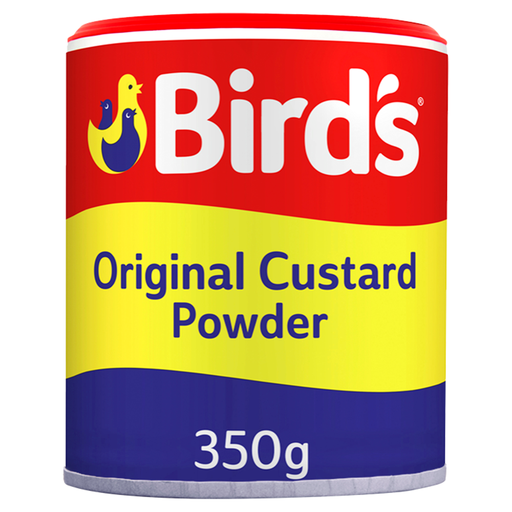
Bird's Original Custard Powder 350g
For a recipe where you want to prepare custard instead of pouring a finished product from a carton. Tesco lists 40 portions for the 350g pack when prepared with semi-skimmed milk; this is not a ready-to-serve portion count. Refrigerate made-up custard and treat it as fresh food. Check the current pack's allergen information.
View on Joybuy
Common questions
Is a 1kg sharing pack of custard a tin?
The 1kg ready-to-serve sharing packs listed by Ambrosia, Tesco and Sainsbury's are cartons, not tins. Each lists eight servings, so compare the serving guide as well as the pack type when planning a group dessert.
Can I serve ready-to-serve custard warm with a crumble?
The listed 1kg Ambrosia, Tesco and Sainsbury's products allow hot serving or provide heating directions. Follow the instructions on the particular pack; do not assume a smaller can has the same reheating rules.
How long can I keep custard after opening it?
Follow the time and storage instructions on your pack. The listed 1kg Ambrosia, Tesco and Sainsbury's cartons specify refrigeration and use within three days; Asda's 385g and M&S's 400g cans specify two days.
What should I check before serving custard to someone with a milk allergy?
Read the ingredients and allergen information on the current pack before serving. The ready-to-serve products discussed here list milk or milk ingredients; changing the product, flavour or pack size calls for another label check.


