
24/7 Customer Support

Free returns

Same-day & Next-day Delivery

Quality Guaranteed

Unlock Your Welcome Offers: FREE Delivery | Up to 80% OFF | Free 30-day JoyPlus trial
Download the APP
Tinned food can make weekly meals easier, but the label on the front does not always tell you what you need to know. A tin may look like good value until you compare its drained weight, sugar or salt content. Similarly, “ready to eat” does not always mean that cooking is unnecessary.
Whether you are stocking a student kitchen, planning family meals or arranging online grocery shopping, a few checks can help you choose useful tinned food rather than filling your cupboard with products that do not suit your routine.
A 400g tin may contain water, juice, syrup or brine, so the actual food available can be considerably lower. This matters when comparing tinned vegetables, tinned fruit, beans or fish. Look for the drained weight and consider how many portions the tin is likely to provide.
For example, a tin of fruit in syrup may weigh more than a similar product packed in juice, but the extra weight is not necessarily extra fruit. A multipack can also appear economical while offering more than your household can use before opening several tins.
Some tinned food can be eaten straight from the tin, while other products are ready to use but require heating or cooking. Tinned tomatoes are usually suitable for adding directly to a recipe, but the label may still state that cooking is required. Tinned soup should be heated thoroughly, while luncheon meat may need to be cooked before serving.
Check the usage instructions, especially if you are buying ready-to-eat food for lunches, camping or quick weekday meals.
Front-of-pack claims such as “classic”, “natural” or “light” do not replace the ingredients list. Check for:
For Halal shoppers, look for an appropriate certification statement on the current packaging rather than relying on product type alone. Recipes and packaging can change, so always check the tin you receive.
Use the net quantity to understand the overall pack size, then use the drained weight to estimate the portion you will actually eat. For instance, D’Aucy Sweetcorn 326g lists a 260g drained weight, while Princes Pineapple Chunks With Juice 432g is described as approximately two servings.
For families, multipacks such as HEINZ Baked Beans in Tomato Sauce 4 x 415g can be practical if baked beans are regularly served on toast, alongside jacket potatoes or in recipes. For occasional use, individual tins may reduce cupboard clutter and waste.
Comparing nutrition panels on the same basis makes shopping decisions clearer. Pay particular attention to:
Cooks & Co 5 Bean Mix, for example, lists 7.9g of fibre and 6.9g of protein per 100g drained. By contrast, Ye Olde Oak Standard Hot Dogs list 1.8g of salt per 100g drained. Neither figure alone determines whether a product suits you; the useful comparison is against how you plan to serve it and how often.
Unopened ambient groceries should generally be kept in a cool, dry place, away from direct heat and moisture. Do not use cans that are swollen, leaking, punctured or severely damaged. Be careful with sharp metal edges after opening.
Most products should be transferred to a covered, non-metallic container, refrigerated and consumed within the period printed on the packaging. The reference products include guidance ranging from two to four days after opening, so check each label rather than assuming all tinned food has the same lifespan.
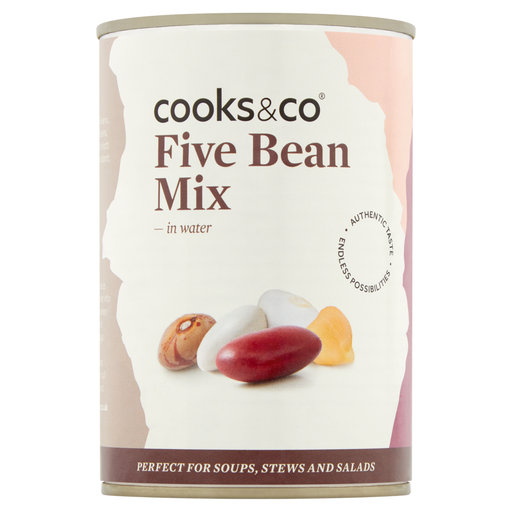
Why This Fits Their Persona: A useful starting point for students and small households wanting one tin to add to soups, stews, salads or grain bowls.
The drained nutrition panel makes it easier to judge the food rather than the packing liquid. The product is also certified by the Vegetarian Society according to the supplied details.
Five bean varieties in one 400g tin; 7.9g fibre per 100g drained.
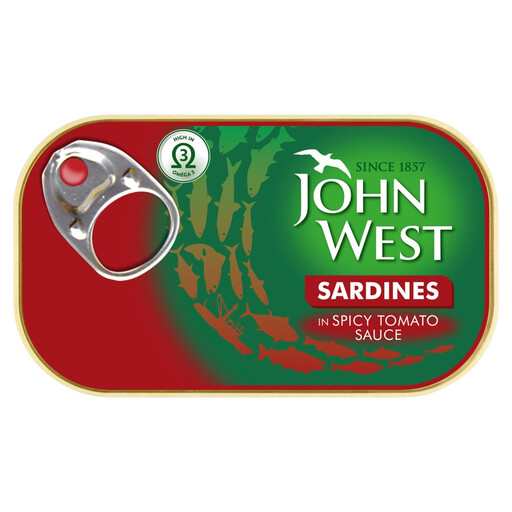
Why This Fits Their Persona: Suitable for shoppers who want a compact tinned fish option with a defined flavour for toast, pasta or salads.
The ingredient list identifies sardines as 71% of the product and clearly states that it contains fish, helping shoppers check contents and allergens.
Ready to eat hot or cold; provides 20g protein per can according to the supplied nutrition information.
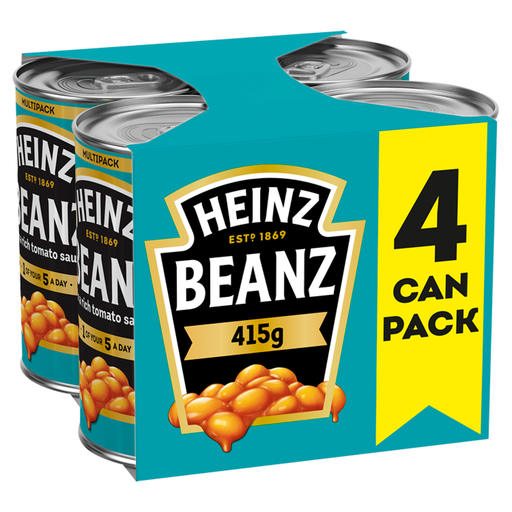
Why This Fits Their Persona: A four-tin format suits families and regular users who plan meals around baked beans, toast and quick side dishes.
The multipack quantity is stated clearly as 4 x 415g, making it easier to compare planned usage with storage space and likely consumption.
Vegetarian and vegan according to the supplied details; ready to eat after heating.

Why This Fits Their Persona: A straightforward cupboard option for a warm lunch or as a base for casseroles and sauces.
The label identifies milk and wheat allergens, states two servings per can and provides hob and microwave heating instructions.
Suitable for vegetarians according to the supplied details; contains 6% mushrooms.
We have compiled a complete, real-time list of products that fully satisfy these strict selection criteria and UK safety regulations.
Unopened tinned food is generally suitable for ambient storage until the best-before date shown on the packaging, provided the tin remains intact and has been stored correctly. Best-before dates relate mainly to quality. Do not use cans that are swollen, leaking, badly dented or punctured.
Usually, fruit packed in juice has less added sugar than fruit packed in syrup, but the nutrition panel is the reliable comparison. Del Monte Pear Halves in Juice lists 11g of sugars per 100g, while Princes Pear Halves In Syrup lists 15g per 100g. Drain the contents if you want to reduce the amount of packing liquid served.
Transfer unused food into a covered, non-metallic container, refrigerate promptly and follow the product’s stated timeframe. The supplied products commonly advise eating opened contents within two to four days. For hot dogs, luncheon meat, soup, beans and other products, follow the packaging instructions rather than relying on a general rule.