Choose tinned salmon if you want a cupboard option for meals that need little preparation, provided you can use the tin promptly after opening. Choose frozen fillets if you want a cooked salmon dinner and can plan around the portions and cooking instructions. For a one- or two-person household, pack size, leftover storage, bones and the exact product label matter more than the format alone.
Who is choosing?
In a smaller household, the useful question is not simply whether salmon comes in a tin or a freezer pack. It is whether the amount, preparation and storage instructions fit the meals you intend to make.
One- or two-person meal planners
Compare the number of portions you can take from a frozen pack with the amount you will use from an opened tin. Sainsbury's describes its cited fillets as individually frozen; Tesco gives a two-day refrigerated-use instruction for its cited tinned red salmon after opening.
Quick cupboard-meal shoppers
A tin can be kept unopened in a cool, dry place and used without defrosting a raw fillet. Before choosing one, check its size, bone statement and instructions for any salmon left after opening.
Label comparers
Compare ingredients, salt per 100g, any stated drained quantity and the fish-allergen information on the exact pack. Princes and Tesco product information shows why figures for one tin should not be applied to every salmon product.
What matters when buying?
For a one- or two-person household choosing between tins and frozen fillets, start with the amount you will use at one meal. Then decide how much preparation you want and which label details you need to compare.
| Concern | What to check | Who this matters to |
|---|
| Portions and leftovers |
Check tin size or fillet count, whether frozen pieces are individually portioned, and the tin's instructions after opening. |
If an opened tin will leave salmon for another meal, I need to know when I can use it; about 38% of consumers put avoiding awkward leftovers first. |
| Storage and preparation |
Check where the unopened product belongs and whether fillets can be cooked from frozen or need defrosting. |
When I need a meal without cooking a raw fillet, a cupboard tin is useful; about 31% of consumers primarily value storage and preparation convenience. |
| Ingredients and labels |
Compare salt per 100g on the stated basis, ingredients, fish-allergen information and any skin or bone statement. |
I want to compare the actual packs rather than assume all salmon has the same ingredients or bone status; for about 31% of consumers, checking these labels is the main concern. |
Buying pitfalls
-
Assuming every pack makes one meal
Sainsbury's describes its cited 360g frozen pack as approximately four servings, while Tesco's cited 170g tin must have unused contents refrigerated and consumed within two days of opening. Pack weight alone will not tell you whether either fits tonight's meal.
Decide how many portions you will use at once, then check whether fillets are individually frozen or how the tin's leftovers must be stored.
An opened tin may mean planning another meal within its stated use window.
-
Treating frozen fillets like a cupboard ingredient
A frozen fillet makes a cooked meal, but it needs the preparation stated on its pack. The cited Sainsbury's and Tesco products have instructions for cooking from frozen; those instructions are specific to those products.
Choose a tin for a meal you want to assemble without cooking raw fish, or check the exact frozen pack's instructions before planning dinner.
-
Using format as a shortcut for salt content
The cited Sainsbury's frozen fillets list 0.08g salt per 100g. Princes lists 0.91g per 100g drained for its Wild Pacific Red Salmon tin, and Tesco lists 0.90g per 100g for its cited tinned red salmon. These are differences between particular products, not averages for frozen and tinned salmon.
Compare the current packs on the same per-100g basis, noting when a tinned value is given for the drained product.
-
Overlooking allergen and bone statements
Fish-allergen information matters with either format. A skinless-and-boneless description also does not replace checking the current pack's bone statement.
Do not serve salmon to someone with a fish allergy. Check the pack's allergen declaration and take care with bones when serving.
Brands and retailers to compare
These examples show the formats and pack details worth comparing; a retailer's salmon products do not all share the same storage or preparation instructions.
John West
Tesco lists John West among its tinned-salmon options, including a skinless-and-boneless Wild Pink Salmon 3 x 80g format.
- Separately sealed small tins can suit meals that use less than a larger single can.
- The cited Joybuy listing instructed shoppers to refrigerate opened salmon and consume it within two days; that listing was marked unavailable.
Princes
Princes lists Wild Pacific Red Salmon in 105g and 213g tins.
- Its product information lists red salmon and salt as ingredients, with 0.91g salt per 100g drained.
- Princes says the product is available through selected retailers; confirm the size on the listing you intend to use.
Tesco
The cited Tesco products include both frozen wild salmon fillets and tinned skinless-and-boneless red salmon.
- The cited 500g frozen wild fillets have instructions for cooking from frozen.
- The cited 170g tin has different handling instructions: transfer unused contents to a non-metallic container, refrigerate and consume within two days.
Sainsbury's
The cited 360g frozen wild Pacific salmon pack contains individually frozen, skinless-and-boneless fillet portions.
- Sainsbury's labels the pack as approximately four servings and provides cooking instructions from frozen or chilled.
- Check whether you can use the portions as planned rather than treating the full pack as a single small-household meal.
M&S
M&S lists Scottish Salmon Portions in its frozen-fish category; its Caledonian Gold fillets are a separate chilled product that can be frozen.
- The chilled Caledonian Gold product gives specific freezing and defrosting instructions for anyone planning meals ahead.
- Do not apply those instructions to the frozen Scottish Salmon Portions: check the storage status and directions on the exact product.
A cross-retailer product ordering
This is a cross-retailer ordering by how the cited packs can be divided into smaller-household meals, using product information from Joybuy, Sainsbury's and Tesco. It is not a sales or performance ranking. The John West Joybuy listing was marked unavailable, so its position is not a current purchase recommendation.
| Rank | Product | Main specifications | Reason for position | Platform |
|---|
| 1 |
John West Skinless & Boneless Wild Pink Salmon 3 x 80g |
Three 80g tins; pink salmon, water and salt. |
Joybuy's cited listing describes separately sealed tins and refrigerated use within two days after opening. The listing was marked unavailable. |
Joybuy |
| 2 |
Sainsbury's Salmon Fillets 360g |
Individually frozen, skinless-and-boneless wild Pacific salmon; approximately four servings. |
Sainsbury's describes portions that can be taken from the frozen pack as needed, with oven instructions for cooking from frozen. |
Sainsbury's |
| 3 |
Tesco Wild Salmon Fillets 500g |
Skin-on, deboned wild Alaskan Pacific pink salmon; cooking instructions from frozen. |
Tesco's larger cited pack calls for more meal planning when only one or two people will eat at a time. |
Tesco |
Joybuy salmon options
These options cover tinned pink salmon for cupboard meals and frozen salmon steaks for a planned cooked meal. Compare the amount you will use and the preparation directions before choosing between them.
 No image available
Morrisons Pink Salmon 213g
Consider this tin for a cupboard meal when you can use its stated two portions or plan for any leftovers. Refrigerate opened contents and use them within the stated two-day window; check the pack for bone information and drained quantity.
View on Joybuy
 No image available
Morrisons Pink Salmon 213g, 4-pack
Choose the four-can bundle if you expect to make several cupboard meals over time. Each 213g tin is described as two portions; refrigerate any opened contents and use them within two days. Check the pack for bone information and drained quantity.
View on Joybuy
 No image available
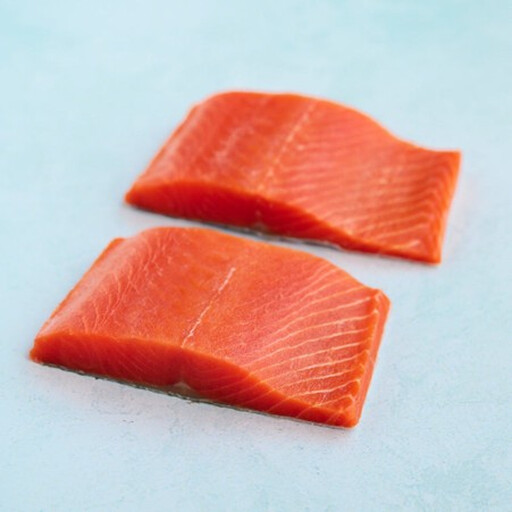
The Fish Society Wild Sockeye Salmon Fillet Steaks 220g
Consider these frozen steaks for a planned cooked meal for one or two. The listing describes two skin-on steaks and instructs thawing before cooking; do not assume the cooking directions for other frozen fillets apply. Check the current pack for cooking and allergen information.
View on Joybuy
Questions about buying and using salmon
Does tinned salmon count as oily fish?
Yes. The NHS identifies salmon, including tinned salmon, as an oily fish. If you are comparing particular tins, still check their ingredients and serving information rather than assuming their labels are identical.
Can I cook frozen salmon fillets without defrosting them?
Some frozen fillets have instructions for cooking from frozen. The cited Sainsbury's fillets specify 20–25 minutes in the oven from frozen, while Tesco's cited wild fillets specify 18–23 minutes. Follow the directions on your own pack rather than transferring either timing to another product.
What should I do with tinned salmon left after opening?
Follow the tin's storage directions. Tesco instructs shoppers using its cited 170g skinless-and-boneless red salmon to transfer unused contents to a non-metallic container, cover, refrigerate and consume within two days.
Where should I check fish-allergen information?
Check the current product's ingredient and allergen information before buying, particularly for anyone with a fish allergy. The Food Standards Agency's UK technical guidance gives “salmon (fish)” as an example of a clear fish reference in relevant food information; the physical pack remains important if a retailer listing differs.


