Quick lunch planners
If lunch needs to come together without cooking, tinned tuna can go into a sandwich, wrap or salad. Check the pack medium and serving information when choosing a tin.


Choose tinned tuna when you need a ready-to-eat ingredient; choose frozen tuna steaks when you want a cooked fillet and can allow for freezer storage and preparation. Compare the exact pack’s salt, serving and storage information rather than assuming either format suits every meal. Diabetes UK says there is no single ‘diabetic’ diet, so consider the tuna alongside the rest of what you plan to eat.
The choice starts with whether the meal needs an ingredient you can use straight from the tin or a fillet you have time to cook.
If lunch needs to come together without cooking, tinned tuna can go into a sandwich, wrap or salad. Check the pack medium and serving information when choosing a tin.
If salt is the deciding detail, compare the nutrition panels of the specific spring-water, brine or oil-packed products you are considering. The packing medium alone does not tell you the salt value.
Frozen steaks suit a planned cooked meal when you have freezer space and can follow the pack’s cooking or thawing instructions. They are not a straight swap for a ready-to-eat tin.
Decide first whether you need a no-cook ingredient or a cooked fillet. Then compare nutrition values on the same stated basis and check how the product must be stored.
| Concern | What to check | Who this matters to |
|---|---|---|
| Quick meals | Check the tin’s pack medium, serving information and instructions for storing any leftovers. | If lunch has to be assembled without cooking, a ready-to-eat tin matters more than a fillet that needs preparation. About 37% of consumers put immediate meal assembly first. |
| Salt and pack medium | Compare salt per 100g on the same basis, including whether the value is for drained fish; check the serving size too. | When choosing between spring water, brine and oil, I want the label to help me account for the fish in the whole meal. For about 36% of consumers, comparing the exact pack’s salt is the primary concern. |
| Cooked-fillet planning | Check frozen-storage, cooking, thawing and refreezing instructions on the pack. | A cooked tuna steak appeals when there is time and freezer space to prepare it as planned. Roughly 27% of consumers prioritise that fillet-style meal over immediate convenience. |
For a concrete label comparison, Sainsbury’s lists 0.12g salt per 100g drained for its cited spring-water tuna chunks, while Tesco lists 1.00g per 100g for its cited brine-packed tuna steak. Those figures describe the named products, not every tin in either packing medium. Check that two labels use the same basis before comparing their values.
Diabetes UK says there is no single ‘diabetic’ diet. Tuna is only one ingredient: bread, pasta, mayonnaise or sauce also affects the nutrition information relevant to the finished meal.
Read the tuna label, then consider the portion and the other foods you will serve with it. If you count carbohydrate, account for the whole meal rather than the fish alone.
The cited Sainsbury’s spring-water chunks list 0.12g salt per 100g drained; the cited Tesco brine-packed tuna steak lists 1.00g per 100g. A format or brand name cannot substitute for the exact label.
Compare salt per 100g on a like-for-like basis, then check the amount you intend to use.
The NHS says fresh and canned tuna do not count as oily fish. Its fish guidance advises at least two portions of fish a week, including one portion of oily fish.
If you are using that NHS guidance to plan meals, do not count a tuna meal as its oily-fish portion.
Frozen steaks require storage and preparation that a ready-to-eat tin does not. Tesco’s cited frozen tuna steaks specify storage at −18°C or colder and say not to refreeze after thawing.
Before choosing steaks, check that you can store them as directed and follow the cooking or thawing instructions on the exact pack.
Thawing portions without a plan to cook them can make the meal harder to fit into your schedule.
These product-line examples show why it is worth comparing individual labels. A brand name does not establish the nutrition or preparation requirements of every variant.
Its tinned range includes spring-water chunks and No Drain formats for meals that do not call for cooking.
Its tinned range includes spring-water tuna chunks in different pack sizes.
Its cited products include both tinned tuna and frozen tuna steaks, making the preparation difference relevant to the choice.
Its cited tinned products include spring-water chunks in single-can and multipack formats.
Its cited products span tinned spring-water chunks and yellowfin tuna steaks.
These products cover ready-to-eat tinned tuna in spring water or sunflower oil, alongside frozen tuna steaks for a planned meal. Choose by the format you will use, then check the exact pack’s nutrition and preparation details.
 No image available
A tinned option for a quick meal when a no-drain format is useful. The pack contains three 100g tins.
For a salt comparison, check whether the nutrition values on this pack refer to drained fish or the product as sold.
 No image available
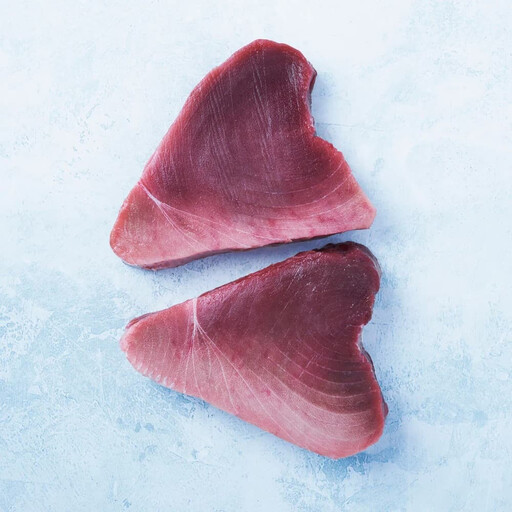
Two frozen steaks for a meal you can plan to prepare as fillets; the stated pack weight is 260g.
Check the pack’s frozen-storage, thawing and cooking directions. The ‘Sashimi Grade’ wording in the product name does not, by itself, establish that raw consumption is safe.
 No image available
A four-tin spring-water pack for keeping ready-to-eat tuna on hand for planned meals.
If using the fish without draining matters to you, check this pack’s instructions rather than assuming it has the No Drain format.
 No image available
A six-tin spring-water pack for shoppers planning several no-cook tuna meals.
Compare the exact pack’s salt value and stated nutrition basis with other spring-water options; the packing medium does not establish those values on its own.
 No image available
A four-tin option when sunflower oil suits the dish you are making rather than spring water.
Read the pack’s fat, salt and serving information when accounting for the tuna and oil in the finished meal.
No: the tin alone cannot settle the choice of meal. Diabetes UK says there is no single ‘diabetic’ diet, so check the tuna’s serving and nutrition information alongside the bread, pasta, sauce or other foods you plan to use.
Choose by the exact labels, not by format alone. Sainsbury’s cited spring-water chunks list 0.12g salt per 100g drained, Tesco’s cited frozen steaks list 0.20g per 100g, and Tesco’s cited brine-packed tinned steak lists 1.00g per 100g. Check the basis stated on each pack before using those figures to compare products.
The NHS says fresh and canned tuna do not count as oily fish. If you follow its advice to include an oily-fish portion among at least two weekly portions of fish, plan that portion separately from tuna.
Follow the instructions on each pack because storage directions differ. Sainsbury’s cited single tin says to transfer opened contents to a non-metallic container, refrigerate and use within one day; Tesco’s cited frozen steaks specify storage at −18°C or colder and say not to refreeze after thawing.
No. The Food Standards Agency identifies fish as an allergen; neither format should be assumed suitable for someone with a fish allergy. Check the allergen declaration on the exact product.