Hosts serving a shared table
If the fruit is for a platter, sponge topping or fruit salad, the amount left after draining matters more than the tin’s total weight.


For a shared afternoon tea, check a tin’s drained weight and suggested servings: its total weight includes packing liquid. Choose fruit in natural juice or water with no added sugar or salt if you want to follow NHS guidance; smaller pots suit individual servings when avoiding opened-tin leftovers matters more.
If the fruit is for a platter, sponge topping or fruit salad, the amount left after draining matters more than the tin’s total weight.
If you prefer fruit in juice or water, check the ingredients of the exact product. The NHS advises choosing canned fruit in natural juice or water with no added sugar or salt.
Small pots can make serving straightforward when guests want separate portions or a large opened tin would leave more fruit than you plan to use.
For afternoon tea, decide first whether the amount of fruit for the table, its packing medium or the serving format will determine your choice.
| Concern | What to check | Who this matters to |
|---|---|---|
| Fruit for a shared table | Check drained weight and suggested servings, not just total tin weight. | If I’m making a fruit platter or topping a sponge, I need enough fruit after the liquid is drained. About 42% of consumers would put usable fruit for the table first. |
| Packing medium | Read whether the fruit is packed in juice, water or syrup, and check the ingredients. | When choosing between similar tins, I want to know what the fruit is packed in before deciding. About 33% of consumers would make the packing medium their primary concern. |
| Portions and leftovers | Match the pack to the number of guests and read its opened-pack storage instructions. | For a small gathering, I would rather serve separate portions than open more fruit than we can use. Individual servings or fewer leftovers would come first for about 25% of consumers. |
A tin’s stated weight includes its juice or syrup. Tesco Groceries lists 250g drained weight for its peach slices in juice and 247g for the Princes peach slices in juice it sells, although both are sold in roughly 410g tins.
Check drained weight when working out how much fruit to put on a shared platter.
Peaches in light syrup and peaches in juice are different choices for a dessert. The NHS advises choosing canned fruit in natural juice or water with no added sugar or salt.
Read the ingredients and choose the packing medium that suits what you plan to serve.
Opened-pack instructions vary. The Tesco and Princes peach products described by Tesco Groceries specify two days for refrigerated leftovers, while Asda’s peach slices in fruit juice specify four days.
Transfer unused fruit from the opened can, refrigerate it and follow the instructions on the product you bought. For fewer guests, consider whether a smaller pack fits the serving plan.
Ingredients can change. GOV.UK states that prepacked foods containing any of the 14 specified allergens must identify them clearly on the label.
If a guest has an allergy or intolerance, inspect the current label on the exact product before serving it.
Del Monte peach halves and slices provide both juice-packed and light-syrup options for an afternoon-tea dessert.
Princes peach slices in juice appear in both standard and smaller tin formats.
Tesco own-label peach slices in juice offer a standard-tin option for a shared serving.
Sainsbury's lists own-label peaches in fruit juice as well as a light-syrup peach option.
Asda peach slices in fruit juice provide a 411g tin with a suggested three servings.
M&S shows tinned grapefruit segments and rhubarb for hosts considering fruit beyond peaches.
These peach and pineapple products cover shared tins, a smaller peach tin and individually portioned peach pots. Compare their drained weights where stated, packing media and serving formats against your afternoon-tea plan.
 Image unavailable
Peach halves suit a shared dessert when you want fruit packed in juice. The product description states 235g drained weight and clarified pineapple juice from concentrate; follow the tin’s directions for any leftovers.
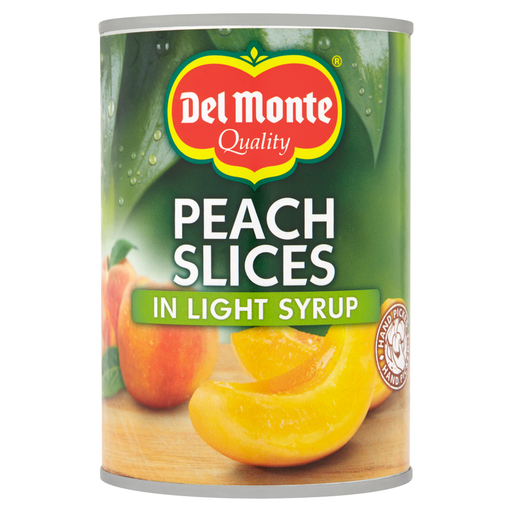 Image unavailable
Choose these slices when light syrup suits the dessert you are preparing. The product description states 250g drained weight; light syrup is a different packing medium from the natural juice or water recommended by the NHS.
 Image unavailable
Pineapple chunks offer a different fruit for a shared bowl or dessert. The 432g tin contains pineapple in pineapple juice and has a suggested two servings; check its label for the drained amount needed for your dish.
 Image unavailable
The smaller tin may fit an afternoon tea with fewer fruit servings planned. Its product description gives an approximate drained weight of 125–130g and identifies clarified grape juice from concentrate; check the exact tin’s label for its drained weight.
 Image unavailable
Four separate pots suit guests who want individual fruit portions without opening one large tin. The product description identifies peaches in white grape juice from concentrate and lists steviol glycosides as a sweetener; check the label if ingredients determine your choice.
Yes. The NHS says 80g of canned fruit counts as one portion and advises choosing fruit in natural juice or water with no added sugar or salt.
Choose natural juice or water with no added sugar or salt if you want to follow NHS guidance for canned fruit. Light syrup is a separate packing-medium choice; read the ingredients and consider whether it suits the dessert you are serving.
Transfer unused fruit from the can, refrigerate it and follow the product’s own storage instructions. The peach products described by Tesco Groceries and Asda give different periods for refrigerated leftovers, so use the label on the tin you bought.
Read the current ingredients and allergen information on the exact product before serving it. GOV.UK states that prepacked foods containing any of the 14 specified allergens must identify them clearly on the label.
Use it to shortlist suitable pack formats, then check the product’s label for ingredients, drained weight and storage directions. That matters particularly when a guest’s allergy or the amount of fruit needed for a recipe affects your choice.