Lower-fat dessert planners
These bakers compare the fruit's fat per 100g while also considering ingredients such as pastry, cream or icing in the finished bake.


Choose a fruit format that works in the recipe, then compare fat and sugars per 100g on the exact tin; packing fruit in juice does not, by itself, establish its sugar content. Plan portions using the drained fruit where that weight is given, and keep the tin's ingredient information for the school's allergy arrangements.
These bakers compare the fruit's fat per 100g while also considering ingredients such as pastry, cream or icing in the finished bake.
They need fruit that fits the recipe's shape and portion size, and compare sugars and usable fruit rather than relying on the words 'in juice'.
They need ingredient information for each prepared item and a serving plan that accounts for allergens and possible stones, pips or seeds.
Start with the complete bake: a low-fat fruit component does not establish the fat, sugar or allergen content of the finished item.
| Concern | What to check | Who this matters to |
|---|---|---|
| Fat in the fruit | Compare fat per 100g on the exact tin, noting whether the figure refers to drained fruit. Consider the other recipe ingredients separately. | If I am planning a lower-fat bake, I need to know what the fruit contributes without overlooking the rest of the recipe. About 42% of consumers put the fruit's fat information first. |
| Sweetness and usable yield | Compare sugars per 100g, the fruit's shape and any stated drained weight or serving count. | When I need enough fruit for individual portions, I want a format that works in the bake without judging sweetness by the packing liquid alone. About 33% of consumers make sweetness and usable yield their primary concern. |
| Ingredients and serving | Keep the tin label and full recipe information; check fruit for stones, pips or seeds and agree how allergens will be communicated at the sale. | If I am organising the school sale, I need to explain what is in each bake and serve it with care. For about 25% of consumers, ingredient and serving arrangements come first. |
The juice-packed peach and pineapple examples listed by ASDA Groceries and Sainsbury's contain 10g to 11g sugars per 100g. The words on the front of a tin cannot establish the sugar content of the finished bake.
Read the exact tin's sugars and fat per 100g, then consider the sponge, icing or other ingredients alongside the fruit.
Packing liquid is part of net weight. Sainsbury's lists a 415g Del Monte Peach Slices tin with 250g drained fruit, so the two weights answer different recipe questions.
Use drained weight where stated, or check the fruit quantity needed for the recipe before deciding how many tins to use.
An unsuitable quantity can leave fruit unused or require another tin.
ASDA peach and pear labels warn that stones, pips or seeds may remain despite processing.
Inspect the fruit and cut it as needed before mixing it into a bake or serving it to children.
A voluntary occasional cake sale and a food business can have different legal obligations. Regardless of that distinction, the complete recipe matters: flour, eggs, milk or toppings may introduce allergens that are not apparent from the fruit tin.
Ask the school or organiser how ingredients and allergens should be communicated, and keep each tin label with the corresponding recipe.
Preparing recipe records and arranging suitable serving utensils takes time before the sale.
An option to compare when a recipe calls for tinned peaches or pineapple in juice.
Offers pineapple and other tinned-fruit formats; compare the particular cut and packing liquid needed for a recipe.
An own-brand range to compare for fruit shape and packing liquid.
An own-brand option when ready-cut peaches suit the bake.
An own-brand route for comparing peach slices and pear halves in fruit juice.
A reference point for different tinned-fruit formats, including grapefruit segments and rhubarb chunks in the M&S Food range.
These selections cover pineapple, peach and pear formats for fruit-led bakes, including tins in juice and one in light syrup. Compare the exact label with your recipe and the school's ingredient arrangements.
 No image available
Consider the sliced format if the recipe calls for pieces to arrange or cut. Check fat and sugars per 100g, drained weight and ingredients on the can before planning portions.
 No image available
Peach halves may suit a bake that uses larger pieces, or they can be cut to fit smaller portions. Compare the nutrition panel and check the usable fruit quantity and ingredients on the tin.
 No image available
The chunks format is worth considering when the recipe calls for smaller pineapple pieces. Check the tin's fat and sugars per 100g and its usable fruit quantity before scaling the bake.
 No image available
Choose the halves format only if it works for the intended portions; cutting may be needed. Check the can for drained quantity, nutrition and ingredients, and inspect the fruit before use.
 No image available
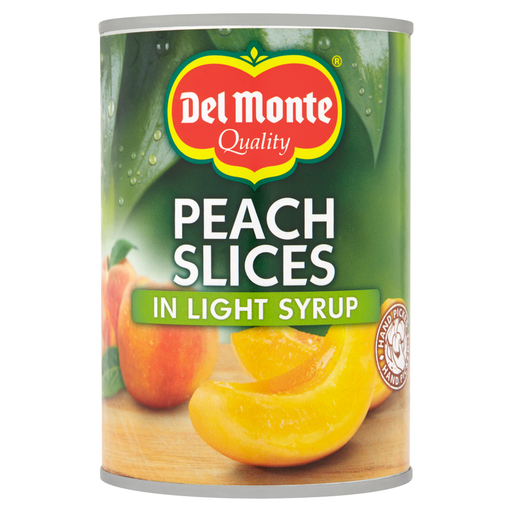
This is a sliced peach option packed in light syrup, not juice. If it suits the recipe, compare its fat and sugars per 100g with the juice-packed options and check the drained quantity and ingredients.
No. ASDA Groceries lists 10g sugars per 100g for its Peach Slices in Fruit Juice, while Sainsbury's lists 11g per 100g for its peach slices. Compare the exact tin's panel and consider other sweet ingredients in the bake.
The fruit's fat figure describes that ingredient, not the finished bake. Compare tins on a consistent per-100g basis, then account for pastry, buttercream, cream or other ingredients in the recipe.
The legal position depends on who provides the food and how it is sold. Somerset Council says individuals who are not food businesses and only occasionally provide food at voluntary cake sales do not have to follow food-business allergen requirements; that does not establish the position for every school sale. In England, Department for Education guidance says schools have a duty to support pupils with medical conditions, including allergies. Confirm the organiser's status and the school's arrangements before preparing or packaging items.
Keep the original tin labels and a complete recipe for each bake, and agree with the organiser how families can ask about ingredients. Anaphylaxis UK recommends obtaining allergen information from bakers, labelling items and using separate serving utensils where appropriate.
Follow the directions on the exact can. ASDA Groceries instructs buyers of its peach and pear products to transfer leftovers to a covered, suitable non-metallic container, refrigerate and use within four days; Sainsbury's gives a two-day refrigerated limit for its Peach Slices in Fruit Juice. Do not apply one product's time limit to another tin.