Repeat small-loaf bakers
If you bake modest quantities regularly, separate portions can help you avoid keeping part of a large tin after opening. Tesco lists a 4 × 120g pineapple-pieces pack alongside larger single tins.


For repeated small loaves, a multipack of fruit pieces lets you open a smaller portion for each bake; Tesco lists pineapple pieces in a 4 × 120g pack. For a larger batch, compare single tins by drained weight rather than total tin weight, and choose chunks or slices according to the cut your recipe requires. Check whether the fruit is packed in juice or syrup, then drain and measure any liquid as the recipe directs.
If you bake modest quantities regularly, separate portions can help you avoid keeping part of a large tin after opening. Tesco lists a 4 × 120g pineapple-pieces pack alongside larger single tins.
Ready-cut chunks are an option when a recipe calls for discernible pieces across a larger loaf or several loaves. Tesco lists Princes pineapple chunks in a 432g tin with 260g drained weight, giving you a fruit quantity to compare with the recipe.
Check the recipe before adding the packing liquid. Taste of Home’s pineapple-loaf recipe, for instance, drains the pineapple and reserves a measured quantity of juice rather than using all the liquid in the tin.
Start with the amount of drained fruit your loaf needs, then choose a pack size and fruit cut that fit how often you bake.
| Concern | What to check | Who this matters to |
|---|---|---|
| Portions and leftovers | Check the number and size of separate tins or portions, plus the label’s instructions for fruit left after opening. | If I bake small loaves regularly, I want to open only what I need rather than store part of a large tin. About 42% of consumers put manageable portions and fewer leftovers first. |
| Fruit cut and liquid | Match the recipe’s cut and drained-fruit quantity; check whether the fruit is packed in juice or syrup. | When my recipe specifies fruit pieces and a measured amount of liquid, I need the tin to fit those instructions. Getting the fruit cut and liquid right comes first for about 33% of consumers. |
| Quantity for a batch | Use drained weight to work out how much fruit each tin supplies, particularly when comparing different tin sizes. | For a larger loaf or several loaves baked together, I need enough fruit without opening more tins than necessary. Roughly 25% of consumers prioritise the quantity needed for a batch. |
The liquid is part of the stated net weight. Tesco lists the Princes pineapple-chunks tin at 432g net and 260g drained, so the full tin weight does not represent the amount of fruit.
Use drained weight when measuring fruit for a recipe or comparing how much fruit different tins provide.
UK listings include both fruit in juice and fruit in light syrup. Swapping between them changes the packing liquid added if you use juice or syrup from the tin.
Choose the packing medium named in the recipe where possible. If you substitute, follow a recipe method that specifies how to drain the fruit and measure any liquid.
A larger tin leaves fruit to store if the recipe uses only part of it. The Princes pineapple-chunks label says to refrigerate leftovers in a sealed container and use them within two days.
Choose separate portions for repeated small bakes, or plan another use within the opened-storage period printed on the particular tin.
Unused fruit may be discarded if the next bake falls outside that period.
Ingredients and product details can change. That matters when a recipe specifies a packing medium or drained quantity, or when you need to check ingredients and allergens.
Read the label on the tin before baking, including its ingredients, drained weight and storage instructions.
Tesco’s listings provide both a pineapple-pieces multipack and larger single-tin formats to consider for different baking quantities.
Princes is represented here by its pineapple chunks in juice, a single-tin option for recipes calling for ready-cut fruit.
Del Monte Europe describes several pineapple cuts in its fruit-in-juice range, while Sainsbury’s lists Del Monte sliced pineapple in juice.
Sainsbury’s tinned-fruit listings include own-label fruit in juice and peach slices in light syrup, as well as branded fruit.
M&S lists tinned rhubarb chunks and grapefruit segments for bakers considering a fruit other than pineapple.
These pineapple options cover ready-cut chunks, slices sold as single tins or a multipack, and a larger tin of pieces. Choose by the fruit cut, packing liquid and quantity your recipe calls for; slices may need chopping.
 Image unavailable
Consider the ready-cut chunks when a larger loaf calls for visible pineapple pieces. The 432g tin has 260g drained fruit; measure that quantity rather than the net weight when scaling a recipe. After opening, transfer leftovers to a sealed container, refrigerate and use within two days.
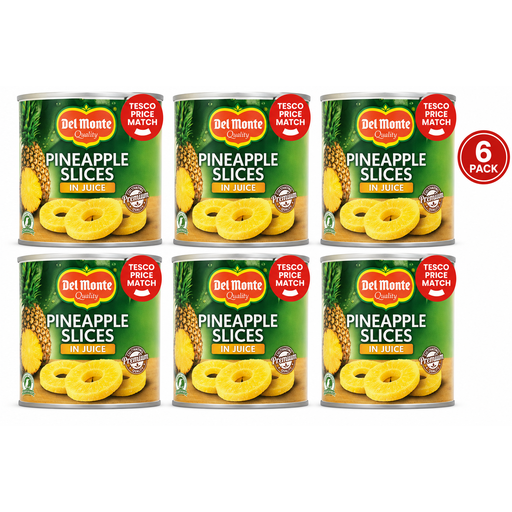 Image unavailable
Separate tins can serve repeated bakes when the recipe accepts pineapple slices. The pack contains six 435g tins, with 260g drained fruit stated per tin, not for the whole pack. Chop the slices if the recipe specifies smaller pieces.
 Image unavailable
This single tin is an option for a bake that uses pineapple in juice and allows time to cut slices if needed. It contains 260g drained fruit. Follow the tin’s instructions for transferring, refrigerating and using any fruit left after opening.
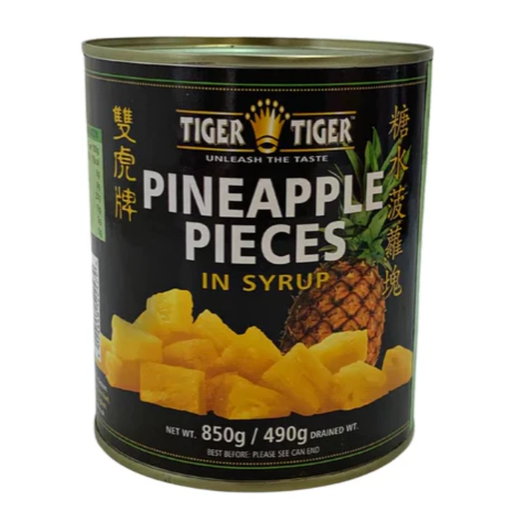 Image unavailable
The larger tin of ready-cut pieces may fit a batch bake if the recipe allows pineapple packed in light syrup rather than juice. Check the drained weight on the tin before working out how much fruit the batch will receive, and follow its opened-storage instructions for leftovers.
Add only the amount your recipe specifies. Taste of Home’s pineapple-loaf recipe says to drain the pineapple and reserve ¼ cup of juice; a recipe using another fruit or cut may give different instructions.
Drained weight tells you how much fruit is available after the packing liquid is removed. Tesco lists Princes pineapple chunks at 432g net but 260g drained, so the net weight alone cannot tell you how much fruit will go into the loaf.
Follow the instructions on the particular tin. The Princes pineapple-chunks label says to move leftovers to a sealed container, refrigerate and use within two days; a Nature’s Finest pineapple product listed by Tesco specifies refrigeration and use within three days instead.
No. GOV.UK explains that a best-before date concerns quality and that food is usually safe to eat after it, although its quality may have changed. Follow any product-specific storage or safety instructions as well.