For a cake, choose tinned fruit by checking fat and sugars separately on the product label, then matching the packing liquid to the recipe. Fruit in juice lets you decide how much sugar to add elsewhere; fruit in light syrup may suit a sweeter filling or topping. Choose slices or halves for an arranged layer, and chunks or pieces when you want smaller fruit in the bake.
Who is this for?
Lower-fat recipe planners
If you are changing a cake recipe, check whether the fruit is a significant source of fat before adjusting other ingredients. Product information from Princes Food and Drinks and Sainsbury's lists 0 g to less than 0.5 g fat per 100 g across the specified juice-packed pineapple products; those figures describe the fruit products, not the finished cake.
Bakers controlling sweetness
If you want to decide how much sugar goes into the batter or topping, compare the packing liquid and ingredients. The specified pineapple-in-juice products list fruit and juice, while Marks & Spencer lists rhubarb, water and sugar for its Rhubarb Chunks in Light Syrup.
Texture-and-decoration bakers
If the fruit's shape drives your choice, consider slices for an arranged layer, chunks for distinct pieces or smaller pieces when you want less cutting before mixing. The specified Princes, Del Monte and Sainsbury's pineapple products illustrate those different formats.
What matters when buying tinned fruit?
For cake baking, decide what would change your purchase first: the nutrition label, the fruit's shape or the usable quantity. Then check the packing liquid against the recipe rather than treating all tins of the same fruit as interchangeable.
| Concern |
What to check |
Who this matters to |
| Fat and sugars |
Compare fat and sugars separately per 100 g on the current label; check whether the fruit is packed in juice or syrup. |
When adjusting a lower-fat cake recipe, I need to know what the fruit contributes without mistaking a small fat figure for a low-sugar cake. About 42% of consumers put that label check first. |
| Fruit shape and liquid |
Match slices, chunks or pieces to the cake method; follow its instructions for draining or using the liquid. |
If I am arranging a topping or mixing fruit into batter, the shape and preparation determine which tin I pick. For about 33% of consumers, that method match is the primary need. |
| Fruit yield and leftovers |
Compare drained weight when the recipe specifies drained fruit, and read the after-opening storage instructions. |
For one cake, I want enough usable fruit without overlooking what to do with the remainder. That quantity-and-storage need comes first for about 25% of consumers. |
Cake-baking checks that are easy to miss
-
Reading a small fat figure as a sugar claim
Fat and sugars are separate entries on the nutrition panel. Princes Food and Drinks lists 12.2 g sugars per 100 g for its Pineapple Slices in Juice; Sainsbury's lists 12 g for Del Monte Pineapple Chunks in Juice and 10.2 g for its own Pineapple Pieces in Juice.
Compare both figures on the tin you are buying, particularly if the cake also uses sugar, icing or a sweet filling.
-
Swapping juice-packed fruit for syrup-packed fruit without checking
The packing liquid can change the ingredients you add to a recipe. Marks & Spencer lists sugar among the ingredients in its Rhubarb Chunks in Light Syrup, whereas the specified pineapple-in-juice products list fruit and juice.
Read the ingredient list before substituting, then follow the recipe's instructions for the liquid and any added sugar.
-
Using total tin weight as the drained fruit quantity
Liquid accounts for some of the pack weight. Sainsbury's lists Del Monte Pineapple Chunks in Juice as 435 g in total but 260 g drained.
If the recipe gives a drained-fruit quantity, use the drained weight to work out how many tins you need.
-
Overlooking instructions after opening
Storage directions and use-within periods can differ between products, which matters if a cake uses only part of a tin.
Check the specific label before opening and plan how you will store and use any remaining fruit.
Brands and ranges to consider
Princes
Princes Food and Drinks lists juice-packed pineapple slices, peach slices, mandarin segments and fruit cocktail in formats that may suit different cake methods.
- Its Pineapple Slices in Juice list pineapple, pineapple juice and citric acid, with less than 0.1 g fat per 100 g.
- The same pineapple slices list 12.2 g sugars per 100 g, so check sugars separately from fat.
Del Monte
Del Monte's Pineapple Chunks in Juice are a reference point when a recipe needs distinct pieces and specifies drained fruit.
- Sainsbury's lists that product at 435 g total and 260 g drained, with 0 g fat per 100 g.
- Those quantities and nutrition figures apply to the listed pineapple chunks, not every Del Monte product.
Sainsbury's
Sainsbury's Pineapple Pieces in Juice offer a smaller pre-cut format for a recipe calling for pieces.
- The 227 g product listing identifies pineapple and pineapple juice as ingredients and reports less than 0.5 g fat per 100 g.
- It also reports 10.2 g sugars per 100 g; check the current pack when deciding how it fits the cake.
M&S
Marks & Spencer lists grapefruit segments in juice and rhubarb chunks in light syrup, offering different fruit and packing-liquid choices.
- Its grapefruit segments list less than 0.1 g fat per 100 g; its rhubarb chunks list 0.2 g per 100 g.
- The rhubarb product lists sugar as an ingredient. Marks & Spencer suggests it for pies and crumbles, which does not establish how it will behave in a particular cake.
Tesco
Tesco Groceries lists peach slices in both juice and light syrup, alongside branded alternatives, for comparing packing liquids and formats.
- The range lets you look for the fruit shape and liquid specified by your recipe.
- Read the nutrition panel of the particular tin rather than treating a category listing as a fat or sugar comparison.
Tinned fruit formats on Joybuy
These tins offer slices, chunks, pieces and halves to consider for cake layers, toppings or fruit mixed into a bake. Check each product's current label for its packing liquid, nutrition values and drained quantity where the recipe requires them.
 No image available
Del Monte Pineapple Slices in Juice 435g
Consider the slice format when you want to arrange pineapple over a cake or use it in a visible fruit layer. The stated pack size is 435 g; check the drained quantity if the recipe specifies the weight of fruit without liquid.
View on Joybuy
 No image available
Morrisons Peach Slices In Juice 220g
The peach slices offer another shape for arranging a fruit layer or topping. The pack is labelled 220 g; check the drained weight if the cake method measures fruit after draining.
View on Joybuy
 No image available
Princes Pineapple Chunks With Juice 432g
Choose chunks when you want distinct pineapple pieces rather than arranged slices. The pack is labelled 432 g; check how much fruit remains after draining if the recipe uses a drained measure.
View on Joybuy
 No image available
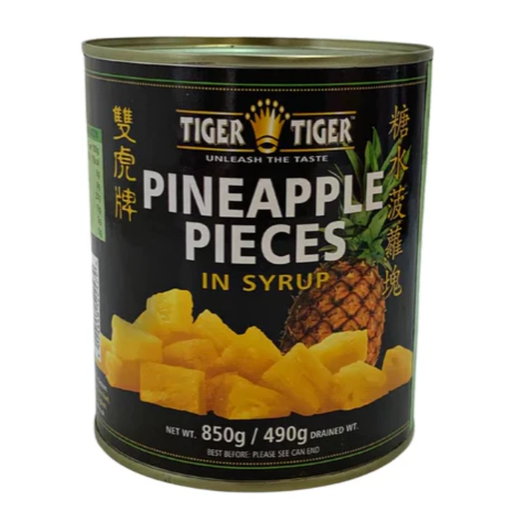
Tiger Tiger Canned Pineapple Pieces 830g
The pre-cut pieces may reduce chopping when a cake calls for pineapple mixed into the batter. This is an 830 g pack; check its packing liquid, sugars and drained quantity against the recipe before using it in place of fruit packed in juice.
View on Joybuy
 No image available
Del Monte Pear Halves in Juice 415G
Consider pear halves for a cake design that calls for larger pieces, allowing for any cutting the method requires. The pack is labelled 415G; check its drained fruit quantity if the recipe gives a weight.
View on Joybuy
Questions about tinned fruit for cakes
Is tinned fruit the main source of fat in a cake?
The tin alone cannot answer that for a finished cake. Princes Food and Drinks lists less than 0.1 g fat per 100 g for its Pineapple Slices in Juice, while Sainsbury's lists 0 g for Del Monte Pineapple Chunks in Juice and less than 0.5 g for its own Pineapple Pieces in Juice. Check the quantities and other ingredients in your cake recipe separately.
Does fruit packed in juice contain no sugars?
No. Fruit packed in juice can still list sugars on its nutrition panel. For example, Princes Food and Drinks lists 12.2 g sugars per 100 g for its Pineapple Slices in Juice. Read the figure for the specific tin and decide how its fruit and liquid fit the recipe.
Should I buy fruit in juice or light syrup for a cake?
Choose fruit in juice when you want to manage added sweetness through the cake recipe; consider light syrup when its sweeter packing liquid suits the intended filling or topping. Check the ingredients before substituting: Marks & Spencer lists sugar in its Rhubarb Chunks in Light Syrup, while the specified pineapple-in-juice products list fruit and juice.
What should I do with fruit left after opening a tin?
Follow the storage and use-within instructions on that product's label. If the cake uses only some of the fruit, check those directions before opening so you can plan for the remainder.


