One-project bakers
Adults baking with children who want enough fruit for one cake, crumble or dessert without opening more than the project needs.


Start with the amount and fruit shape your recipe requires. A 220g–227g tin can suit a small project, while a larger tin needs either a recipe that uses more fruit or a plan for leftovers; check the drained weight where it is shown. Then choose between slices, chunks or mixed fruit, and read the label to distinguish juice from syrup.
Adults baking with children who want enough fruit for one cake, crumble or dessert without opening more than the project needs.
Adults looking for a particular fruit shape, such as slices for a visible topping, or a mixture for a dessert that can use varied pieces.
Adults comparing tins packed in juice or light syrup and reading the ingredients and nutrition panel before choosing one for the recipe.
For a baking project with children, match the tin to the recipe quantity first, then check the fruit form and packing liquid.
| Concern | What to check | Who this matters to |
|---|---|---|
| Amount and leftovers | Compare the recipe quantity with the tin size and drained weight, where shown. | If I need fruit for just one bake with the children, I want enough for the recipe without a large remainder. About 40% of consumers put the amount needed for one project first. |
| Fruit shape | Look for slices, chunks or mixed fruit to match the recipe’s required shape. | For a topping with visible slices, the shape matters as much as the fruit itself; a mixed-fruit dessert allows a different choice. Roughly 30% of consumers make recipe fit their primary concern. |
| Packing liquid | Read the exact juice or syrup description, ingredients and per-100g nutrition panel. | When the packing liquid affects which tin I choose, I need to inspect the particular product rather than rely on a category name. About 30% of consumers prioritise the liquid and ingredient information. |
The pack weight is not necessarily the amount of fruit available after draining. A small tin may also fall short of a recipe written for a larger one.
Check the recipe quantity against the total weight and the drained weight, where the latter is shown.
If the usable fruit falls short, the recipe may require another tin.
Princes lists grape juice made from concentrate among the ingredients of its peach slices with juice. A juice-packed tin and a light-syrup tin should be compared as distinct products.
Read the ingredients and nutrition panel on the exact tin, alongside any packing-liquid instructions in the recipe.
A fruit mixture will not give the same control over fruit type as a tin containing only the fruit specified by the recipe.
Choose fruit cocktail when a mixed result works; otherwise, look for the specified fruit and shape.
Zero Waste Scotland advises moving tinned-food leftovers into another container and refrigerating them.
Transfer unused fruit after opening, refrigerate it and follow the exact product’s storage instructions.
Princes lists peach slices with juice and fruit cocktail with juice in both 220g and 410g tins.
Tesco Groceries lists a 227g tin of pineapple slices in juice.
Del Monte is a reference point when comparing the fruit form and packing liquid of a particular tin.
M&S presents tinned fruit as part of its Foodhall range and describes canned rhubarb for pies and crumbles.
These tins include a smaller peach-slices option and larger tins with other fruit shapes or packing liquids. Choose by the fruit and usable quantity your baking project requires.
 No image available
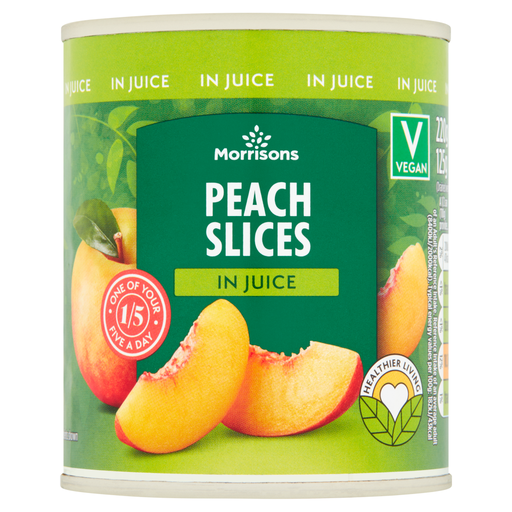
Consider this smaller tin when a recipe calls for peach slices. It contains 220g of fruit and packing liquid; compare the usable fruit quantity with the recipe before buying.
Check for any remaining stone fragments when preparing the fruit, and follow the tin’s instructions for storing leftovers.
 No image available
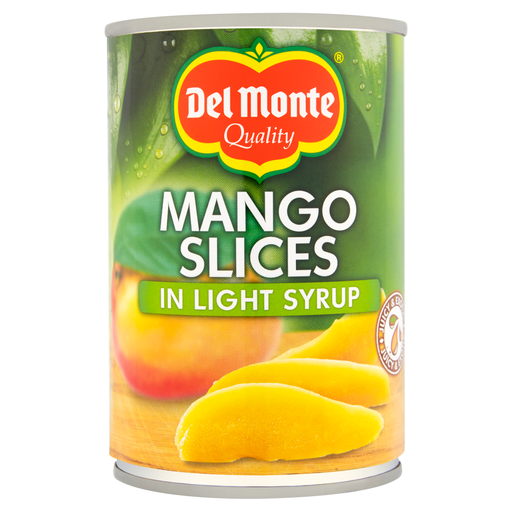
This 425g tin is an option for a recipe using mango slices and light syrup. Check how much mango the bake needs and plan for leftovers if it uses only part of the tin.
For a cooked dessert, the product guidance suggests adding the slices towards the end of cooking to maintain their texture.
 No image available
For a bake that calls for visible pineapple slices, this 435g tin offers that shape in juice. The slices may need cutting if the recipe specifies smaller pieces.
Compare the recipe quantity with the usable fruit and plan how to store any remainder.
 No image available
Choose the chunk format if the recipe calls for pineapple pieces rather than slices. This tin is 432g and packed with juice, so check the recipe quantity before opening it for a small project.
Follow the product instructions for transferring and refrigerating unused contents.
 No image available
This 415g tin suits a dessert recipe that can use pear halves in juice. Check the usable quantity against the recipe, particularly if you need fruit for only one small bake.
Follow the tin’s instructions for covering and refrigerating any unused contents.
Use the recipe quantity to decide, checking drained weight where it is shown. Princes lists peach slices with juice in 220g and 410g formats, while Tesco Groceries lists pineapple slices in juice in a 227g tin; a smaller pack is useful only if it supplies enough fruit for your bake.
Choose the packing liquid specified by the recipe, or compare the exact tins if either would work. Princes lists peaches, grape juice made from concentrate and water for its peach slices with juice; read the ingredients and per-100g nutrition panel rather than assuming what a packing description means.
Move unused fruit out of the opened tin and refrigerate it in a suitable container, as Zero Waste Scotland advises for tinned-food leftovers. Follow the exact product label for its storage and use-by-opening instructions.
Check the label of the exact tin before use. Sainsbury’s also says its product descriptions can include ingredients, nutrition, dietary information and storage instructions; use the details for the particular product rather than assuming that all tinned fruit has the same composition.