Salt-conscious batch cooks
If tinned fruit appears regularly in your prepared meals, compare salt per 100g rather than relying on a front-of-pack description or a per-serving figure. The NHS defines low salt as 0.3g or less per 100g.


A reduced-salt label is not enough to choose tinned fruit for batch cooking: check salt per 100g on the exact tin. The NHS defines low salt as 0.3g or less per 100g, and the UK fruit products considered here fall below that threshold. Once salt meets your requirements, choose the packing liquid for the recipe, check how much fruit you can use, and plan around the tin’s after-opening instructions.
If tinned fruit appears regularly in your prepared meals, compare salt per 100g rather than relying on a front-of-pack description or a per-serving figure. The NHS defines low salt as 0.3g or less per 100g.
When a recipe does not call for syrup, compare the packing liquid, ingredients and sugars as well as salt. Princes lists the same salt figure for its juice and light-syrup fruit cocktails, but different sugars figures.
If you are preparing several portions, check drained weight or the stated serving count before deciding how many tins to buy. Match any fruit left over to the storage and use-within directions on its pack.
Start with salt per 100g, then consider the recipe’s sweetness, the quantity of fruit needed and when an opened tin will be used.
| Concern | What to check | Who this matters to |
|---|---|---|
| Salt level | Compare salt per 100g on the current nutrition panel. The NHS low-salt threshold is 0.3g or less per 100g. | If I use tinned fruit throughout the week, I want to confirm its salt figure before choosing it for a batch. About 36% of consumers put that check first. |
| Packing liquid | Read the ingredients and sugars per 100g; do not assume juice and light syrup have the same composition. | For breakfasts or fruit salads that do not need syrup, I would rather choose the packing liquid deliberately. Roughly 29% of consumers prioritise avoiding syrup-led sweetness. |
| Usable fruit | Check drained weight where stated, or use the serving guidance to plan the batch. | When I am preparing several portions, I need enough fruit after the liquid is drained. Around 21% of consumers make usable quantity their main concern. |
| Opened-tin storage | Read the product’s refrigeration and use-within directions, and plan a use for any remainder. | If a recipe uses only part of a tin, I want to know when I can use the rest. About 14% of consumers chiefly want to avoid opened-tin waste. |
Princes lists 0.01g salt per 100g for both its fruit cocktail with juice and its light-syrup version. Its published sugars figures differ: 9.0g and 15.0g per 100g respectively.
Once you have checked salt, compare the packing liquid, ingredients and sugars for the format you intend to use.
Net weight includes liquid. Tesco lists its 227g pineapple slices in juice with a drained weight of 136g, which is the more useful figure if your recipe calls for drained fruit.
Check drained weight where available, or use the pack’s serving guidance as a planning aid.
Buying too little usable fruit can leave a batch short; buying more than you can use can leave unwanted fruit.
After-opening directions vary: Tesco specifies two days for its pineapple slices in juice, while the checked Del Monte mandarins state three to four days.
Follow the instructions on the tin you receive and plan when any leftover fruit will be used.
The ingredients, nutrition information and storage directions relevant to your batch are those on the product you receive.
Before preparing repeat meals, check that tin’s salt and sugars figures, ingredients, allergens and after-opening instructions.
These examples show different fruit formats and label details to compare; the observations apply to the named products, not every tin from each brand.
Its checked mandarin segments in juice provide an example for breakfasts, desserts and prepared fruit dishes.
Its fruit cocktail offers a direct choice between juice and light syrup for recipes with different sweetness requirements.
Its checked pineapple slices in juice give a drained-weight figure useful for smaller batches.
Its checked pear halves in juice provide serving guidance for a planned batch.
Its tinned-fruit category includes rhubarb chunks and grapefruit segments for recipes calling for those fruits.
These tins cover fruit packed in juice and one sliced-mango option in light syrup. Choose the fruit and packing liquid for your recipe, then check the current label for salt, sugars, usable quantity and storage directions.
 Image unavailable
Pineapple slices in juice are an option when a batch calls for sliced fruit rather than mixed fruit or syrup. The tin is labelled 435g; check the drained weight and after-opening directions when planning portions.
 Image unavailable
Peach halves suit a batch recipe that calls for larger pieces of fruit packed in juice. The tin is labelled 415g; compare its drained quantity with the amount your recipe needs.
 Image unavailable
Choose the chunk format when it fits a prepared fruit dish without needing slices. This 432g tin is described as two servings; its listing says to refrigerate unused contents and consume them within two days of opening.
 Image unavailable
Pear halves in juice suit a recipe that calls for this fruit and cut. The tin is labelled 415g; check its drained weight or serving guidance before relying on one tin for a particular batch.
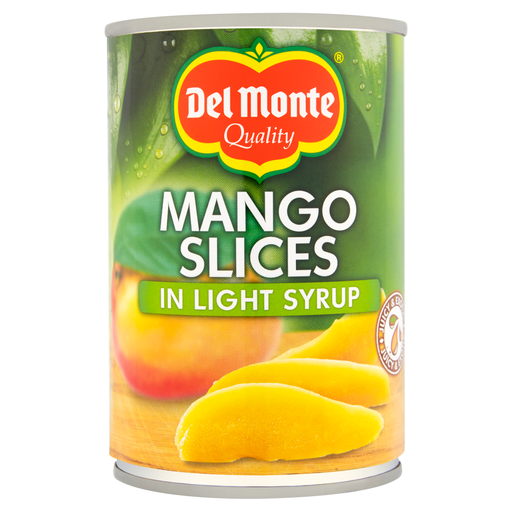 Image unavailable
This sliced mango is an option when light syrup suits the recipe, rather than when juice is required. The tin is labelled 425g; compare its sugars figure and drained quantity with your other options, noting that its listed nutrition figures use drained fruit as the basis.
No. Compare the salt figure per 100g on the product you intend to buy: the NHS defines low salt as 0.3g or less per 100g. The checked UK fruit products fall below that figure, so packing liquid, sugars and usable fruit may also affect which tin suits your batch.
Choose according to whether the dish calls for syrup, and compare the exact products’ ingredients and sugars. Princes lists 0.01g salt per 100g for both checked fruit cocktails, but 9.0g sugars per 100g for the juice version and 15.0g per 100g for light syrup.
Follow the directions on the individual tin. Tesco specifies transferring unused pineapple to a non-metallic container, refrigerating it and consuming it within two days; the checked Del Monte mandarins state three to four days after opening. Do not apply either period to every product.
Use the pack’s nutrition information and compare salt per 100g. The NHS explains how to read this figure; a front-of-pack traffic-light label is not needed to make the comparison.