Hosts serving several people
If fruit is going into a shared dessert, salad or topping, work out how much usable fruit the dish needs before choosing a tin size.


For a BBQ serving several people, choose a tin with enough usable fruit in a cut that suits your dishes. A smaller tin may make more sense if you cannot use the remainder within the label’s refrigerated-storage period. Fruit in juice and fruit in light syrup have different ingredient lists, so check the individual tin before treating them as substitutes.
If fruit is going into a shared dessert, salad or topping, work out how much usable fruit the dish needs before choosing a tin size.
When tinned fruit is only one part of the menu, a smaller tin may be easier to finish. Check how the label says to store anything left after opening.
Check whether the fruit is packed in juice or light syrup, then read the ingredients and nutrition panel of the particular tin you intend to serve.
Start with the quantity you expect to serve, then choose the packing liquid and fruit format that fit the menu. These concerns describe consumers planning tinned fruit for a summer BBQ, grouped by the need that would take priority in their choice.
| Concern | What to check | Who this matters to |
|---|---|---|
| Fruit for a group | Check the net and drained quantities, then match the usable fruit and cut to the planned dishes. | If I’m serving several guests, I need enough fruit for the dishes I have planned. About 40% of consumers put group-serving quantity first. |
| Juice or syrup | Read the packing-liquid description and ingredients; compare nutrition panels on the same declared basis. | When fruit is part of a dessert, I want its packing liquid to suit the recipe rather than assuming every tin is alike. About 30% of consumers make that ingredient choice their primary concern. |
| Leftovers | Choose a manageable tin size and check its instructions for storing fruit after opening. | If I cannot finish a tin at the BBQ, I need a practical plan for the remainder. Limiting leftovers comes first for about 20% of consumers. |
| Serving format | Choose chunks, slices or a fruit mix to suit the dish; check the mix on a fruit-cocktail tin. | For skewers or a fruit bowl, I want a cut or mix that needs little preparation. Serving format is the primary concern for about 10% of consumers. |
The stated net quantity includes the packing liquid. A drained quantity, where given, helps you judge how much fruit is available for the dish.
Check both quantities on the tin, particularly when planning portions for several people.
Fruit left after serving needs the storage treatment specified for that product. Sainsbury’s listing for Del Monte fruit cocktail in juice says to transfer unused contents to a covered, non-metallic container, refrigerate them and use them within 3–4 days.
Choose a smaller tin if you are unlikely to use the remainder within the period stated on its label.
Juice-packed and light-syrup versions can have different ingredients. Sainsbury’s listings show clarified pineapple juice from concentrate in Del Monte fruit cocktail in juice, while its light-syrup version lists water, glucose-fructose syrup and sugar.
Read the packing-liquid description and ingredients of the exact variant you are buying.
Chunks, slices and mixed fruit suit different preparations; the same quantity will not necessarily fit every planned dish.
Choose chunks if you want pieces to mix into a salad, slices if you need that shape, or fruit cocktail if its stated mix suits the dessert.
These ranges offer different fruit types, cuts and packing liquids. Check the particular product rather than assuming one brand’s tins share the same formulation.
Tesco Groceries lists own-label pineapple slices and chunks in juice in 227g and 425g formats.
Sainsbury’s lists own-label peaches, apricots, pears, mandarins, apples and prunes, with juice- and light-syrup-packed options.
Del Monte fruit cocktail appears in both juice- and light-syrup-packed versions in Sainsbury’s listings.
Princes lists pineapple chunks in juice in 227g and 432g sizes.
Asda lists a 432g own-label tin of pineapple chunks in fruit juice.
Marks & Spencer lists 560g rhubarb chunks and 540g grapefruit segments in its tinned-fruit category.
These tins offer pineapple in slices, chunks or pieces, sliced mango and mixed fruit for BBQ sides or desserts. The selection includes juice- and syrup-packed options, so choose by the dish and check each tin’s label.
 Image unavailable
Choose the slice format if it suits your BBQ presentation or dessert. This is a 435g tin packed in juice; check the label’s drained quantity when planning portions.
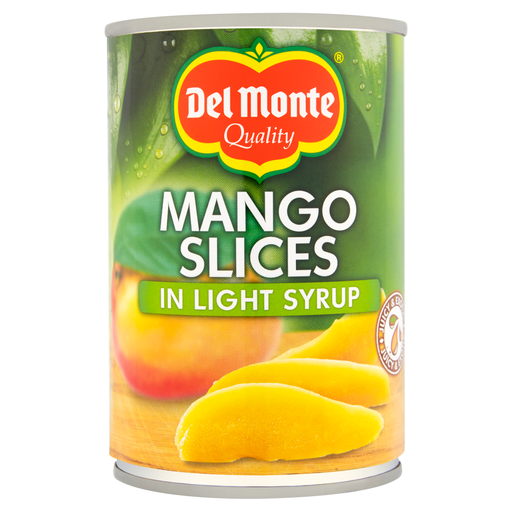 Image unavailable
Consider the mango slices for a dessert if light syrup suits your recipe. The tin states 425g net weight; check the drained quantity and ingredients on the label.
 Image unavailable
The chunk format may suit a fruit salad or another dish needing pieces of pineapple. This 432g tin contains pineapple with juice; check its drained quantity and current storage instructions on the pack.
 Image unavailable
Choose a mixed-fruit tin if its contents suit your dessert or fruit bowl. This 415g variant is packed in juice; check the current label for the fruit mix and drained quantity.
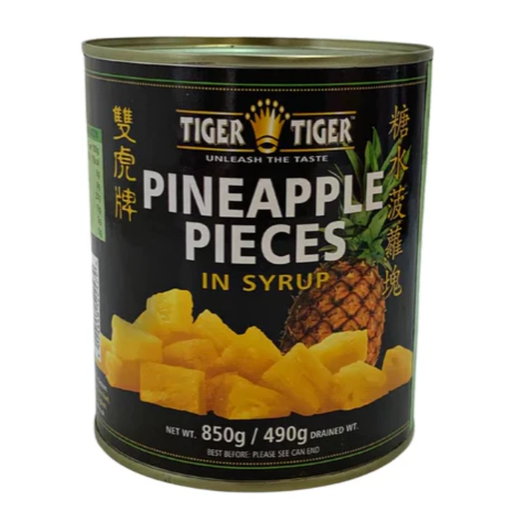 Image unavailable
Consider this larger stated tin size if pineapple pieces fit a shared dish and you have a plan for any remainder. Check the label for its packing liquid, drained quantity and instructions after opening.
Check its drained quantity where stated, as well as its net weight: the net weight includes the packing liquid. Match the usable fruit and the cut to the dishes and number of people you plan to serve.
The packing liquid can change the ingredients of the finished product. Sainsbury’s listings show clarified pineapple juice from concentrate in Del Monte fruit cocktail in juice, while the light-syrup version lists water, glucose-fructose syrup and sugar. Read the exact tin’s ingredients and nutrition panel.
Follow that product’s label. Sainsbury’s listing for Del Monte fruit cocktail in juice says to transfer unused contents to a suitable non-metallic container, cover and refrigerate them, and use them within 3–4 days. Do not assume another tin has the same storage period.
Read the ingredients list on the tin. GOV.UK states that foods with two or more ingredients must list them in descending order of weight, with the main ingredient first. Check the particular variant because fruit type and packing liquid can differ.