What matters when buying?
For a summer BBQ, settle any organic requirement first, then choose the packing liquid, cut and quantity for the dish you plan to serve. These priorities can coexist: a tin labelled organic still needs the same ingredient and format checks.
| Concern |
What to check |
Who this matters to |
| Organic claim |
Look for an explicit organic claim on the individual product and confirm that the listed fruit and format are the ones you need. |
If organic production is my priority, I need the claim to apply to this tin, not merely to another product from the same shop. About 27% of consumers put that product-specific organic check first. |
| Packing liquid and ingredients |
Read the ingredients to distinguish fruit in juice or water from syrup and sweetened fillings; check for added sugar or thickeners where relevant. |
For a fruit salad or skewer, I may want plain fruit rather than a prepared dessert topping. Around 33% of consumers make the packing liquid and ingredients their primary concern. |
| Cut and usable quantity |
Match slices, chunks or halves to the dish, and compare drained weight where it is stated rather than relying on total tin weight alone. |
When I am serving several guests, the cut must work for the recipe and the usable fruit must be enough. About 27% of consumers prioritise format and quantity. |
| Finding a suitable pack |
Check the cut, pack size and local availability before finalising the BBQ shopping list. |
If I need several tins for an event, I want to know I can obtain the right fruit and quantity in time. Roughly 13% of consumers place that practical availability need first. |
Brands to consider
These brands and retailer ranges offer points of comparison for fruit type, cut and packing liquid. Check organic status on the individual product rather than extending a claim across a whole range.
Princes
Princes product pages describe peach and pineapple slices in juice, formats to consider for BBQ fruit platters and desserts.
- Princes lists peach slices in 410g and 220g sizes and pineapple slices in 432g and 227g sizes.
- Check the organic claim on the particular tin; the stated fruit and juice format does not establish organic status.
Del Monte
Sainsbury's lists Del Monte tinned fruit in juice, including peach slices, alongside other packing-liquid options.
- One Sainsbury's listing states a separate 250g drained weight for a 415g tin of Del Monte peach slices in juice.
- Check the exact product's packing liquid: the retailer also lists Del Monte fruit in light syrup.
Tesco
Tesco's tinned-and-pot-fruit category covers several fruits and cuts that can be matched to different BBQ dishes.
- The category includes pineapple, peaches, apricots, pears, citrus, prunes and fruit cocktail.
- An organic Marketplace listing should not be taken to mean that Tesco own-label tinned fruit is organic.
Sainsbury's
Sainsbury's lists own-label fruit in juice alongside branded tinned fruit, providing choices to compare by cut and packing liquid.
- Its category listings include peach slices in fruit juice as well as products with stated drained weights.
- The category also contains light-syrup products, so check the individual tin's ingredients and any organic claim.
Asda
Asda's pear halves in fruit juice provide one own-label example for comparing ingredients and planning leftovers.
- Asda lists pears and pear juice from concentrate as the ingredients in this 410g product.
- Its directions for an opened tin apply to this pear product, not automatically to every Asda fruit tin.
M&S
The M&S tinned-fruit category lists rhubarb chunks and grapefruit segments for dishes calling for those particular fruits.
- The listed rhubarb and grapefruit offer different fruit choices from the peach and pineapple formats discussed above.
- An organic claim elsewhere in the M&S food range does not establish that either tinned-fruit item is organic.
Joybuy product selections
These juice-packed pineapple and peach products offer slices, chunks and halves for BBQ fruit salads, platters and desserts. If organic certification is essential, check the claim on the individual product before choosing it.
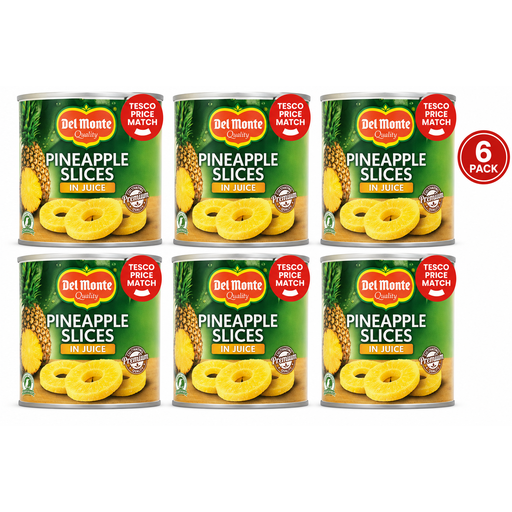 Image unavailable
Del Monte Pineapple Slices in Juice, 435g × 6
Consider this six-tin pack when planning pineapple slices for a larger fruit salad or dessert spread. Each tin is labelled 435g, including its juice; check the drained quantity if you need a precise amount of fruit. Confirm an organic claim on the individual product if that is a requirement.
View on Joybuy
 Image unavailable
Del Monte Pineapple Slices in Juice, 435g
Choose the single tin when pineapple slices suit your dessert or fruit platter and a multipack is unnecessary. The stated 435g is the total tin weight, so check drained weight for portion planning and check the individual product for an organic claim if needed.
View on Joybuy
 Image unavailable
Princes Pineapple Chunks with Juice, 432g
Chunks are a format to consider when preparing a mixed fruit salad or dessert rather than laying out slices. This tin is labelled 432g with juice; check the usable quantity for your serving plan and verify any organic claim on the exact product.
View on Joybuy
 Image unavailable
Del Monte Peach Halves in Juice, 415g
Peach halves provide a different serving format for a fruit platter or dessert. The tin is labelled 415g including juice; check its drained quantity if servings need to be measured, and check the exact product for an organic claim if that matters to you.
View on Joybuy
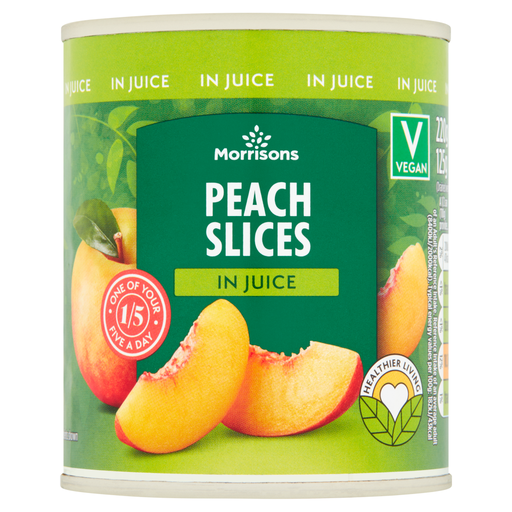 Image unavailable
Morrisons Peach Slices in Juice, 220g
Consider this 220g tin when sliced peaches fit a smaller fruit salad or dessert plan. Compare the drained amount with the fruit you need, and look for an organic claim on this particular product if organic production is a priority.
View on Joybuy
Common questions
How can I tell whether tinned fruit is organic in the UK?
Check for an explicit organic claim on the individual tin or its product listing. The UK Department for Environment, Food & Rural Affairs says food labelled organic must meet the applicable organic rules, with the product and suppliers certified by an approved organic control body; an organic range elsewhere in the shop does not establish the status of this tin.
Should I choose fruit in juice for a BBQ dessert?
Fruit in juice or water is a useful starting point if you want plain fruit for a salad, skewer or platter rather than a syrup-packed product or prepared filling. The NHS advises choosing canned fruit in natural juice or water with no added sugar or salt, but read the exact ingredients: juice-packed fruit is not sugar-free, and a filling may be the format your dessert recipe requires.
How do I compare tins when planning fruit for guests?
Match the cut to the dish, then use drained weight or stated serving guidance where available instead of comparing total tin weights alone. For instance, Sainsbury's lists a 415g Del Monte peach-slice tin with a separate 250g drained weight. Plan for the fruit you can serve, as well as any leftovers.
How long can I keep tinned fruit after opening it?
Follow the instructions on the particular product. Asda directs shoppers to transfer unused contents of its pear halves in fruit juice, cover and refrigerate them, and use them within four days. The Princes summer-fruit filling listed by Asda gives a three-day instruction; neither period should be applied to every tin.


