Hosts making a shared fruit dish
For a fruit salad, dessert or BBQ topping served to several people, the useful figure is the amount of fruit after draining. Choose a tin size you can use without leaving more opened fruit than you can store.


A standard tin suits a shared BBQ dish when you expect to use most of its drained fruit at once; smaller portions make more sense for separate servings, while a bulk multipack needs a plan for several dishes or gatherings. Compare drained weight and packing liquid on the exact product, then check its instructions for storing any fruit left after opening.
For a fruit salad, dessert or BBQ topping served to several people, the useful figure is the amount of fruit after draining. Choose a tin size you can use without leaving more opened fruit than you can store.
If guests need individual servings or the gathering is small, compare portion packs with a shared tin. The pack format affects how many containers you open and whether you need to store leftovers.
Fruit in juice, water and syrup are different preparations. Read the ingredients and nutrition information for the exact variant rather than judging its contents from the fruit pictured on the label.
Start with the dish and the number of servings, then choose a pack format that fits how much fruit you expect to open at one time.
| Concern | What to check | Who this matters to |
|---|---|---|
| Enough fruit for a shared dish | Compare drained weight and the number of tins or portions. Tesco Groceries lists 247g drained fruit for a Princes 410g peach tin and 250g for a Del Monte 415g peach tin; the fruit amount is not the full tin weight. | If I am making fruit salad for several guests, I need to plan with the fruit I can serve rather than the liquid in the tin; about 42% of consumers put usable quantity first. |
| Juice, water or syrup | Read the packing liquid, ingredients and sugars information on the exact label. The NHS advises choosing canned fruit in natural juice or water with no added sugar or salt when that is the priority. | When I am choosing between two versions of the same fruit, I want to know what it is packed in before buying; about 33% of consumers place the packing liquid and label information first. |
| Leftovers after opening | Match the tin or portion size to what you will serve, and read the product-specific refrigeration and use-by instructions for opened contents. | For a smaller BBQ, I would rather not open a tin that leaves fruit I cannot use or store as directed; about 25% of consumers prioritise managing leftovers. |
Net weight includes the packing liquid. In the peach examples listed by Tesco Groceries, the drained fruit weighs substantially less than the full tin, which matters when filling a shared bowl.
Work from the drained weight on each label, and decide whether the recipe also uses the liquid.
Storage instructions vary by product. A bulk purchase does not remove the need to handle each opened tin according to its own label.
Before opening more than you need, check the instructions for transferring, refrigerating and using any remaining fruit.
An oversized opened tin can leave fruit you cannot use within its stated refrigerated period.
The same fruit can be sold in different packing liquids, so a picture of peaches or pineapple does not tell you whether the product is in juice or syrup.
Check the full product name, ingredients and nutrition panel for the variant you intend to serve.
A branded range covering several tinned fruits, including peaches and pineapple in juice.
A canned-fruit range that includes peaches, pineapple, pears and fruit cocktail.
Own-label options include a shared peach tin and a pear-and-peach portion multipack.
Its tinned-fruit range includes peach slices, mandarin segments, apricots and pears.
Lists tinned fruits such as rhubarb chunks and grapefruit segments.
These selections cover six-packs for repeated BBQ use, a standard shared tin and a larger single tin. Check the packing liquid and usable fruit quantity for the particular dish you have planned.
 No image available
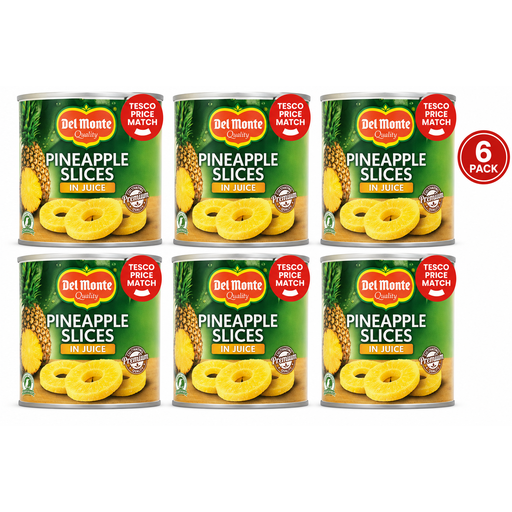
For pineapple dishes across several gatherings, this six-pack lets you open tins as needed.
Each tin is labelled 435g and the fruit is packed in juice. Check the drained weight on the exact pack when planning servings.
 No image available
For one shared fruit dish, this single tin avoids opening a multipack you do not plan to use.
It is a 435g tin of pineapple slices in juice. Use its drained weight, rather than its net weight, to work out the fruit available.
 No image available
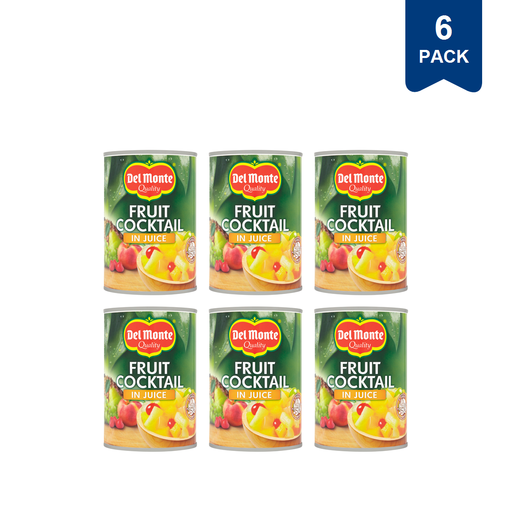
For mixed-fruit dishes at more than one gathering, the six-pack offers tins that can be opened separately.
Each tin is labelled 415g and the fruit cocktail is packed in juice. Check the drained weight before calculating servings.
 No image available
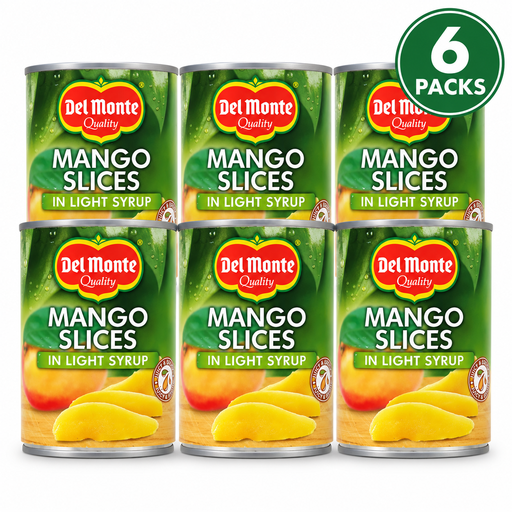
For repeated desserts where mango in syrup suits the recipe, this pack contains six tins.
Each tin is labelled 425g. This is a light-syrup variant, not fruit in juice; compare its ingredients and nutrition panel if the packing liquid matters to your choice.
 No image available
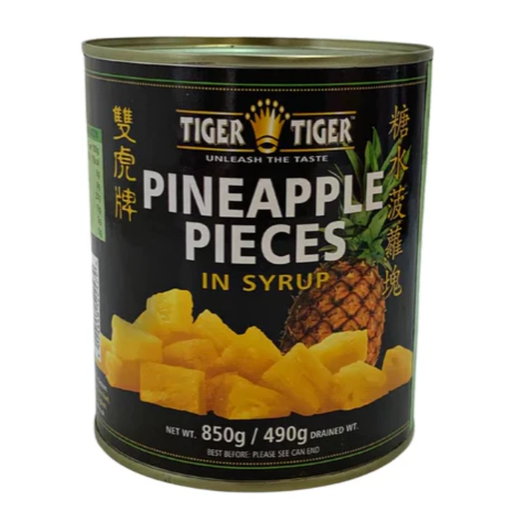
For a larger shared dish prepared at one time, this 830g single tin is an alternative to opening several smaller tins.
Check its drained weight and packing liquid on the label before deciding how many servings it provides or whether it suits your recipe.
Use the drained weight on the exact tin if you will discard the liquid. Tesco Groceries lists 247g drained fruit for its Princes 410g peach listing and 250g for its Del Monte 415g peach listing; work out what your dish needs before deciding how many tins to open.
Choose according to the packing liquid your recipe calls for and the exact product label. If avoiding added sugar is a priority, the NHS advises choosing canned fruit in natural juice or water with no added sugar or salt; compare ingredients and nutrition information rather than assuming all juice-packed or syrup-packed tins are alike.
Follow that tin's instructions for transferring unused fruit, refrigerating it and using it within the stated period. Do not apply an opened-storage period from one brand or fruit variant to another.
A best-before date concerns quality rather than being a use-by date. GOV.UK notes that food may sometimes be eaten after its best-before date but may not taste as good; also check the tin's condition and follow its storage instructions when planning ahead.
Read the ingredients on the physical pack of the exact product you will serve. GOV.UK states that regulated allergens used as ingredients in prepacked food must be clearly indicated in the ingredients list; do not rely on a picture or a different variant's listing.