Hosts planning a plated BBQ dessert
If the fruit will be visible on each plate, its shape and drained quantity matter. Halves and slices give you a different serving option from chunks spooned over a dessert.


For a composed BBQ dessert, start with a cut that suits how you will serve it: pineapple slices or peach halves for individual plates, or smaller pieces for bowls and toppings. Compare drained weight to plan portions, then choose juice or syrup according to the sweetness you want. If you intend to grill the fruit, drain it first and treat the result as a cooking choice rather than a guaranteed property of the tin.
If the fruit will be visible on each plate, its shape and drained quantity matter. Halves and slices give you a different serving option from chunks spooned over a dessert.
If you prefer fruit packed in juice to fruit packed in syrup, check the packing liquid before choosing a flavour or cut. The NHS recommends juice rather than syrup when cutting down on sugar.
Tinned fruit can be portioned into bowls or used as a topping. Check the drained weight against the number of servings you plan, and read the storage instructions in case the tin is not finished.
Decide how you will serve the fruit, then check the packing liquid and the amount of fruit left after draining.
| Concern | What to check | Who this matters to |
|---|---|---|
| Cut and presentation | Choose slices or halves for individual plates, or chunks for bowls and toppings; compare drained weight for the usable quantity. | If I want recognisable pieces on a dessert plate, the cut and the amount of drained fruit decide which tin I buy. About 42% of consumers put presentation and usable quantity first. |
| Packing liquid | Read whether the fruit is in juice, water or syrup, and check the current ingredients and nutrition information. | When I am planning the dessert’s sweetness, I want to know what surrounds the fruit before adding anything else. For about 33% of consumers, the packing liquid is the primary concern. |
| Portions and leftovers | Match the drained quantity to the servings you need; follow the tin’s instructions for unused fruit. | If I am feeding a group, I need enough fruit without leaving more opened fruit than I can use. Managing portions and leftovers comes first for about 25% of consumers. |
That word does not tell you whether the tin contains the shape, packing liquid or quantity your dessert needs.
Pick the serving style first, then compare the fruit cut, ingredients and drained weight.
Total weight includes the packing liquid, so it does not tell you how much fruit you will have after draining.
Use drained weight where it is shown, particularly when serving several people.
The packing liquid affects the sweetness you are choosing for the dessert. The NHS advises choosing tinned fruit in juice rather than syrup when cutting down on sugar.
Check the label and choose syrup deliberately if it suits the pudding you plan to make.
Opened-fruit storage instructions vary by product. Marks & Spencer, for example, instructs shoppers to transfer its Rhubarb Chunks to a non-metallic container, refrigerate them and eat them within two days.
Transfer leftovers as directed and follow the time stated on the tin you bought.
Del Monte appears in UK listings for peach halves, peach slices and pineapple slices in juice.
Princes offers peach slices with juice in 410g and 220g sizes, according to Princes Food and Drinks.
Tesco Groceries lists own-label pineapple chunks in juice alongside other tinned-fruit formats.
Sainsbury’s tinned-fruit listings include branded juice-packed fruit as well as its own-label options.
M&S lists rhubarb chunks and grapefruit segments for dessert uses beyond peach and pineapple.
These tins offer pineapple or peach in different cuts for BBQ desserts, plus a larger tin of pineapple pieces. Choose according to how you will serve the fruit, and check the label before relying on a particular packing liquid or drained quantity.
 No image available
Consider slices when you want identifiable pineapple pieces on individual dessert plates. Sainsbury’s lists this 435g product with a 260g drained weight; drain the slices before deciding how to serve or cook them.
 No image available
Peach halves are an option for plating fruit as individual dessert portions rather than spooning out smaller pieces. Tesco Groceries lists this 415g tin with a 235g drained weight. Handle the halves gently if keeping their shape matters.
 No image available
Choose peach slices if you want to divide the fruit between bowls or add it to a dessert topping. The tin is labelled 220g; check its drained weight when planning how many portions it will provide.
 No image available
Chunks suit a dessert served in bowls or with fruit spooned over another component. This tin is labelled 432g and packed with juice; check the drained weight if the amount of usable pineapple will decide your portions.
 No image available
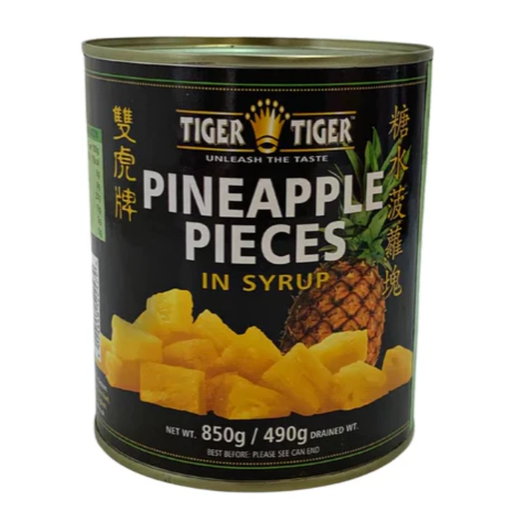
Consider pineapple pieces if you plan to portion fruit into several dessert bowls rather than plate whole slices. This is an 830g tin; check its packing liquid, drained weight and opened-tin instructions before deciding whether it suits your dessert.
Choose according to the sweetness you want in the finished dessert. The NHS advises choosing tinned fruit in juice rather than syrup when cutting down on sugar; light syrup is a deliberate option when a sweeter pudding is the aim.
Yes. The NHS includes tinned fruit in its 5 A Day guidance and suggests choosing versions in natural juice or water. Check the label of the fruit you intend to serve.
Follow the instructions on the exact tin you opened, including how to transfer and refrigerate unused fruit. Marks & Spencer instructs shoppers to move its Rhubarb Chunks to a non-metallic container, refrigerate them and eat them within two days; another product’s instructions may differ.
Read the current tin’s ingredient and allergen information before serving it. This is particularly useful when the type of packing juice matters: Sainsbury’s notes that the juice used for Del Monte peach slices can vary by season.