What should you check?
For a cupboard stock-up, settle the packing-liquid and label question first, then assess how much fruit you can use from each can.
| Concern |
What to check |
Who this matters to |
| Packing liquid and salt |
Look for natural juice or water with no added sugar or salt if that is your aim. Read the ingredients and salt value per 100g on the exact can. |
If avoiding added salt and sugar is my main reason for choosing a tin, the packing liquid alone is not enough to settle it. About 31% of consumers put this label-led choice first. |
| Usable fruit quantity |
Compare drained net weight, not just the total weight including liquid. For a multipack, check how many cans you will use. |
When I am stocking the cupboard for several meals, I need to know how much fruit the tins contain after draining. Usable quantity is the primary concern for about 31% of consumers. |
| Storage after opening |
Read the pack’s refrigeration and use-after-opening directions; choose smaller cans if you will not finish a larger one in time. |
A large can is awkward if only a small portion is needed before the rest has to be stored. About 23% of consumers chiefly want to avoid opened fruit going unused. |
| Fruit type and cut |
Choose slices, chunks or mixed fruit for the meals you have planned, and check that the packing liquid suits those uses. |
If the same stock-up needs to work for breakfasts and recipes, I want a fruit format I can use in both. Flexibility is the main need for about 15% of consumers. |
Brands to consider
These brands and retailers offer relevant examples for checking formats and labels; the details below apply to the named products or listings, not every item in a range.
Del Monte
Its UK supermarket listings include juice-packed fruit such as peach slices and pears.
- Sainsbury’s lists peaches and clarified pineapple juice from concentrate for Del Monte Peach Slices in Juice.
- That peach listing declares salt below 0.5g per 100g; check the label of the particular Del Monte fruit and pack size you choose.
Princes
Princes lists canned peaches, pineapple, fruit cocktail, pears and other fruit types.
- Princes lists Peach Slices with Juice in 410g and 220g sizes, with salt below 0.01g per 100g for that product.
- The range also includes fruit in light syrup, so check the packing liquid rather than assuming every tin follows the same recipe.
Tesco
Tesco’s tinned-fruit listings include own-label and branded options in different formats.
- Its listings show fruit packed in juice alongside light-syrup options, allowing a comparison of the named variants.
- Read each product’s label and drained weight; a category listing does not establish shared nutrition values.
Sainsbury’s
Sainsbury’s lists own-label juice-packed fruit alongside branded tins.
- Its Peach Slices in Fruit Juice listing declares salt below 0.01g per 100g.
- The same listing gives a two-day refrigerated post-opening period; follow the directions on the product you buy.
M&S
The M&S tinned-fruit category includes grapefruit segments and rhubarb chunks.
- These named fruit types offer alternatives to peach or pineapple for a planned recipe.
- Check the individual product and local selection before planning a multi-can purchase.
Tinned fruit on Joybuy
These juice-packed pineapple, peach and mixed-fruit selections include both single cans and multipacks. Check each pack’s label and drained weight against the quantity you intend to use.
 No image available
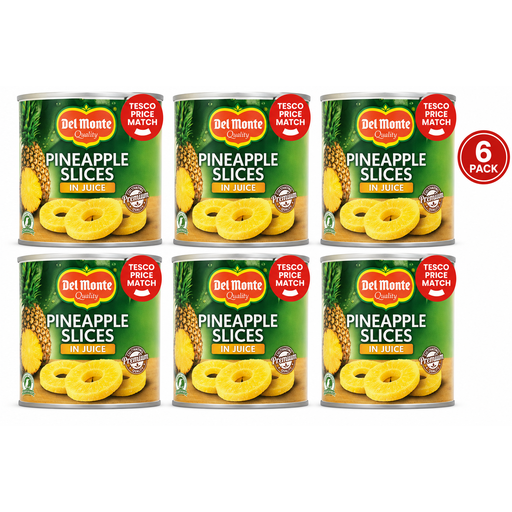
Del Monte Pineapple Slices in Juice 435g, 6-pack
For a planned stock-up of pineapple slices, this listing is for six 435g cans in juice. Compare the drained weight on the pack and check its salt declaration and directions for storing an opened can.
View on Joybuy
 No image available
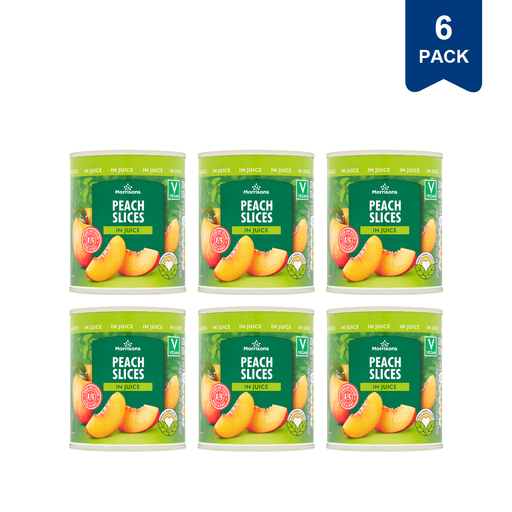
Morrisons Peach Slices in Juice 220g, 6-pack
The six 220g cans offer separate peach portions for a household that may not use a larger opened can at once. Check the drained weight and post-opening directions on the pack. The listing warns that stone fragments may occasionally remain, so take care when serving, particularly to children.
View on Joybuy
 No image available
Del Monte Pineapple Slices in Juice 435g
This single 435g can suits a purchase where a six-pack is unnecessary. Check its labelled drained weight if the amount of pineapple matters to your meal plan, and follow the can’s storage directions after opening.
View on Joybuy
 No image available
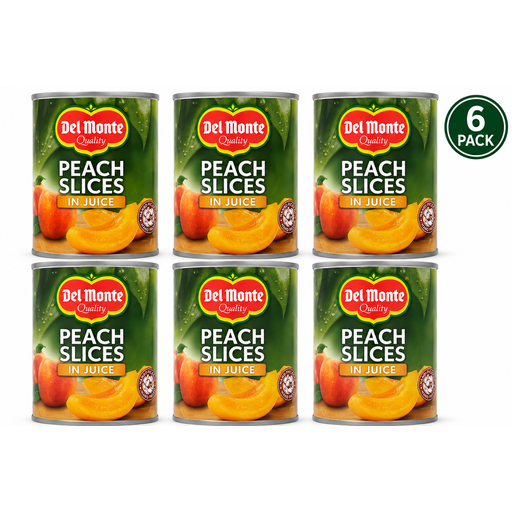
Del Monte Peach Slices in Juice 415g, 6-pack
For keeping peach slices across several cans, this is a six-pack of 415g tins in juice. Check drained weight before comparing fruit quantities, and read the exact pack’s ingredients, salt value and post-opening instructions.
View on Joybuy
 No image available
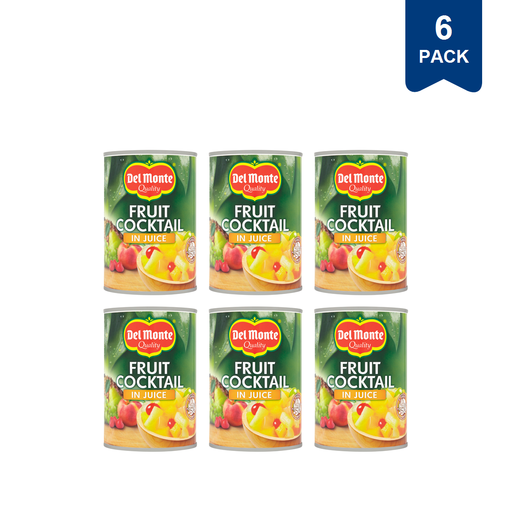
Del Monte Fruit Cocktail in Juice 415g, 6-pack
Choose this six-pack of 415g mixed-fruit cans if that format fits several planned servings or recipes. Check the label for the fruit mix, drained weight, salt declaration and instructions once a can is opened.
View on Joybuy
Common questions
Should I search for “reduced salt” tinned fruit?
Use the exact label rather than assuming that phrase describes the tin. For canned fruit, the NHS advises choosing natural juice or water with no added sugar or salt; check the ingredients and salt declaration per 100g on the variant you intend to buy.
How do I compare the fruit in different can sizes?
Compare their drained net weights to assess the fruit quantity, rather than comparing total weights that include liquid. GOV.UK states that solid foods packed in liquid must show drained net weight.
How long can I keep tinned fruit after opening it?
Follow the directions on the particular product. Sainsbury’s instructs buyers of its Peach Slices in Fruit Juice to transfer leftovers to a non-metallic container, refrigerate them and use them within two days; do not apply that period to every tin.
Which label details matter before a bulk purchase?
Check the packing liquid and ingredients against your intended choice, then compare salt per 100g, drained weight and the storage directions on each variant. The date marking also matters when deciding how many cans you can use.


