Shared-breakfast planners
If several people add fruit to yoghurt, cereal or porridge, a larger tin can provide more than one serving. Check that you can use any remainder within the specific product’s storage instructions.


Choose larger tins when breakfast is shared or you can use the fruit within the tin’s labelled storage period after opening. Smaller tins or individually sealed fruit pots make more sense when you want one portion at a time; for any format, check whether the fruit is packed in juice, water or syrup, and compare drained weight where it is given.
If several people add fruit to yoghurt, cereal or porridge, a larger tin can provide more than one serving. Check that you can use any remainder within the specific product’s storage instructions.
If you usually prepare breakfast for one, a smaller tin or individually sealed fruit pot can help you avoid opening more fruit than you intend to use.
If packing medium guides your choice, read the ingredients on the exact variant. NHS guidance advises choosing tinned fruit in natural juice or water with no added sugar or salt.
Decide how much fruit you will use each time before choosing between a multi-can pack and individually sealed portions. Then check the packing medium and the instructions for anything left after opening.
| Concern | What to check | Who this matters to |
|---|---|---|
| Usable fruit across breakfasts | Compare drained weight where stated and read the opened-tin storage instructions. | When several people share breakfast, I want enough fruit without leaving an opened tin unused; about 36% of consumers would put usable quantity first. |
| Individual portions | Check the number and size of portions, and whether the multipack contains pots or tins. | If breakfast is usually for one, I want to open only what I need. About 29% of consumers would prioritise separate portions. |
| Packing medium | Read the exact variant’s ingredients and per-100g nutrition information rather than relying on its fruit name. | When choosing between juice and syrup, I want the label to match my preference; about 21% of consumers would make packing medium their main concern. |
| Fruit and cut | Choose the fruit and cut you want for porridge, cereal, yoghurt or a separate serving. | If I want to vary weekday breakfasts, slices, chunks and mixed fruit give me different choices. About 14% of consumers would put fruit variety first. |
The stated tin weight includes liquid. Sainsbury’s lists Del Monte Pineapple Chunks in Juice at 435g, but gives 260g as the drained fruit weight.
Use drained weight where available when comparing how much fruit you can serve, rather than treating two similar-sized tins as equal portions.
They are different packing choices. NHS guidance favours natural juice or water with no added sugar or salt; the Del Monte light-syrup peaches listed by Ocado include glucose-fructose syrup and sugar.
Read the ingredients on the particular tin or multipack you intend to buy.
Storage instructions differ by product. Ocado’s Princes peach listing says to refrigerate leftovers in a sealed container and use them within two days; its Del Monte peach-halves listing specifies three to four days in a covered, suitable non-metallic container in the fridge.
Choose a tin size you can use within its own labelled period, or consider smaller, separately sealed portions.
Fruit left beyond the labelled period may go unused.
A four-pack of fruit pots provides separate portions, not several large tins. Ocado lists peach-pot multipacks in both 4 × 113g and 4 × 120g formats.
Check the individual container size and format before deciding whether a pack fits shared breakfasts or one-at-a-time use.
UK retailer listings include larger peach and pineapple tins in juice, alongside a light-syrup peach variant.
Peach slices and pineapple slices in juice offer different tin sizes and fruit cuts.
Tesco Groceries lists own-label tinned and pot fruit, including peaches in juice and pineapple in juice.
The M&S Foodhall tinned-fruit listing includes 560g rhubarb chunks and 540g grapefruit segments.
These selections are six-can packs for stocking up on weekday breakfast fruit. They include smaller and larger tins in juice, plus a light-syrup mango option for shoppers who want that packing medium; they are not individually portioned fruit-pot multipacks.
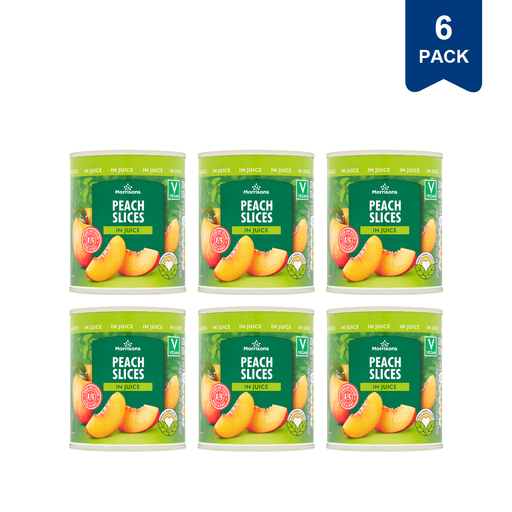 Image unavailable
For breakfasts where you would rather open a smaller tin at a time, this pack contains six 220g tins of peach slices in juice. Check the label’s drained weight and storage directions if you expect to use a tin over more than one breakfast.
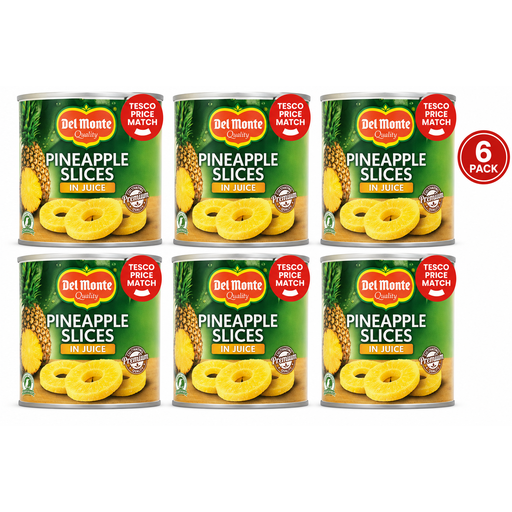 Image unavailable
For shared breakfasts or repeated use of larger tins, this pack contains six 435g tins of pineapple slices in juice. The tin weight includes liquid, so check drained weight when comparing the amount of fruit, and follow the label after opening.
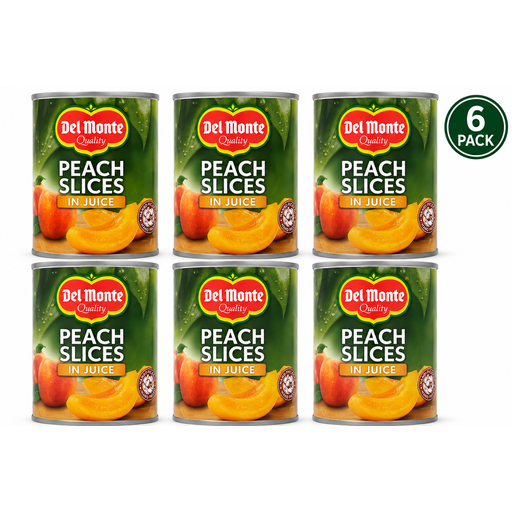 Image unavailable
For households planning several breakfasts with peach slices, this pack contains six 415g tins in juice. Check drained weight on the exact pack if usable fruit quantity is important to your comparison, and plan around its opened-tin instructions.
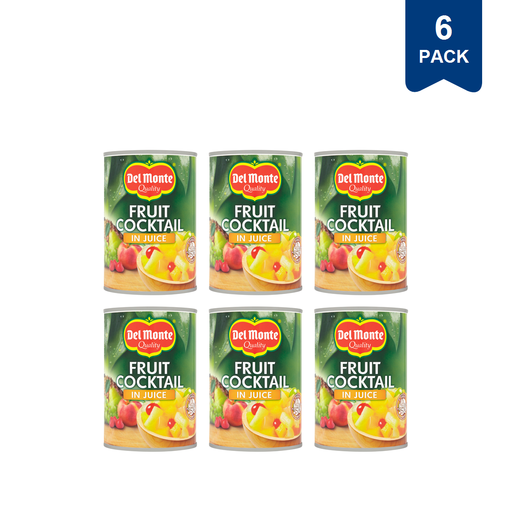 Image unavailable
For shoppers who want mixed fruit rather than a single fruit type, this pack contains six 415g tins in juice. Read the exact ingredient list if the mix matters to you, and check drained weight and storage directions on the pack.
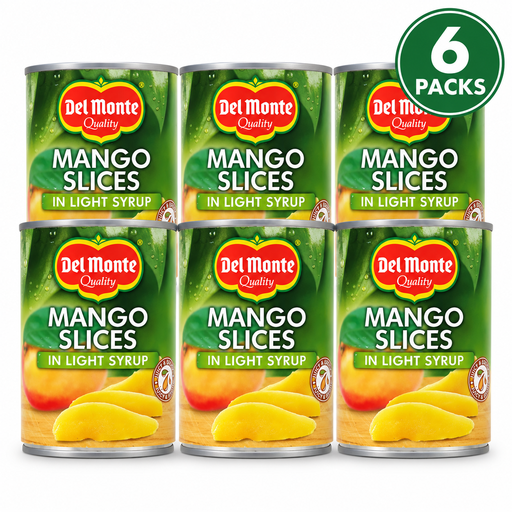 Image unavailable
For shoppers specifically choosing mango in light syrup, this pack contains six 425g tins. It is a different packing-medium choice from fruit in juice or water; read the ingredients if following NHS guidance on choosing tinned fruit with no added sugar or salt.
Yes. NHS guidance includes canned fruit in its 5 A Day advice and recommends choosing fruit in natural juice or water with no added sugar or salt. Check the serving information on the product you choose.
If you are following NHS guidance, look for natural juice or water with no added sugar or salt. Check the exact ingredients: Ocado’s Del Monte light-syrup peach listing includes glucose-fructose syrup and sugar, so it is not interchangeable with a juice-packed variant.
Follow that product’s label and refrigerate leftovers as directed. Food Standards Scotland advises checking opened-food storage instructions; Ocado lists two days for Princes peaches in a sealed container, while its Del Monte peach-halves listing specifies three to four days in a covered, suitable non-metallic container.
No: the stated total includes packing liquid. Compare drained weight where it is given; Sainsbury’s lists Del Monte Pineapple Chunks in Juice as 435g total and 260g drained.
Check the ingredients and allergen information on the exact pack. GOV.UK states that food businesses must tell consumers when any of 14 specified allergens are ingredients in their food or drink products.