Canteen buyers choosing fruit in juice
Compare the ingredients, nutrition panel and drained yield of each product. A peach tin and a fruit cocktail tin may meet different menu specifications even when both are packed in juice.


For a workplace canteen with predictable lunch numbers, larger tins can suit planned multi-portion service; separate fruit pots offer a portioned alternative when demand varies. Choose juice or syrup to match the menu, then check the exact product’s ingredients, drained yield and instructions for any fruit left after opening.
Compare the ingredients, nutrition panel and drained yield of each product. A peach tin and a fruit cocktail tin may meet different menu specifications even when both are packed in juice.
Match larger tins to expected lunch numbers, or consider separate pots when numbers fluctuate. Check how the chosen product must be stored and used after opening.
Choose fruit types and cuts that work for the intended bowls, toppings or plated desserts. Tesco Groceries, Sainsbury’s and Princes list options ranging from single fruits to fruit cocktail.
Set the menu requirement and expected number of portions before comparing pack formats. The concerns below separate consumers by the need they would put first when buying for workplace canteen lunch service.
| Concern | What to check | Who this matters to |
|---|---|---|
| Liquid and label fit | Check whether the fruit is in juice or syrup, then read the ingredients and nutrition panel of the exact product. | If the lunch menu calls for fruit in juice, a similarly named syrup product will not meet that specification. About 31% of consumers put liquid and label fit first. |
| Portions and leftovers | Compare tin size with separate-pot formats, and follow the product’s refrigeration and use-after-opening directions. | When lunch numbers change from day to day, I need a format that does not leave more opened fruit than service can use. Portion and leftover control is the primary need for about 31% of consumers. |
| Usable fruit yield | Use drained weight, where stated, to plan portions rather than relying on the total weight, which includes packing liquid. | For a planned dessert service, I need to know how much fruit will reach the bowls. About 23% of consumers would make usable yield their main concern. |
| Menu variety | Check the fruit type, cut and ingredients; check the composition of mixed fruit if a recipe requires particular fruits. | A rotating lunch menu may call for different fruit cuts, while a fixed recipe needs a predictable mix. Variety is the leading need for about 15% of consumers. |
Total weight includes the liquid. Sainsbury’s lists a 415g Del Monte peach tin with 250g drained fruit, illustrating why the two figures answer different planning questions.
Set a serving size and use the drained weight of the exact product, where available, to work out how many portions a tin can provide.
Peaches may be packed in juice or syrup. Princes also describes the fruits in its fruit cocktail as being in variable proportions, which matters if a recipe calls for a fixed mix.
Specify the liquid, fruit cut and required ingredients, then check substitutions against the same requirements.
A tin sized for a busy lunch may leave fruit to handle after a quieter service. The storage directions and use-after-opening period depend on the product.
Match the pack to expected portions and follow the label and the canteen’s food-safety procedures for opened fruit.
Unserved fruit also takes up chilled storage space and may have to be discarded if it cannot be used within the stated period.
Ingredients and local availability can change. Sainsbury’s advises checking product labels and describes its store-stock information as indicative.
Check the current item and physical label before making it a recurring menu specification, especially when a substitute is offered.
These brands and retailer ranges are reference points for checking fruit formats and labels, not a list of products stocked together by one seller.
UK supermarket listings include Del Monte peaches, pears, mandarins, prunes and fruit cocktail in several formats.
Princes lists peach slices and fruit cocktail with juice in 410g and 220g formats.
Tesco Groceries lists own-label tinned fruit in juice alongside branded products.
Sainsbury’s lists own-label fruit in juice in several fruits and pack sizes, alongside a syrup option.
Asda has listed Smartprice peach slices in light syrup.
The M&S tinned-fruit range includes examples such as grapefruit segments and canned rhubarb.
These selections cover fruit-in-juice tins for planned service and separate peach pots for portioned service. Choose a fruit and pack format that fit the menu, then check the current label before ordering.
 Image unavailable
Pineapple slices offer a single-fruit option for planned lunch service. This is a 435g tin in juice; check its drained weight when setting portions and follow its label for handling fruit after opening.
 Image unavailable
This 415g fruit cocktail tin suits a menu calling for mixed fruit in juice. Check the current ingredient list if the recipe requires particular fruits in fixed proportions, and use drained weight to plan servings.
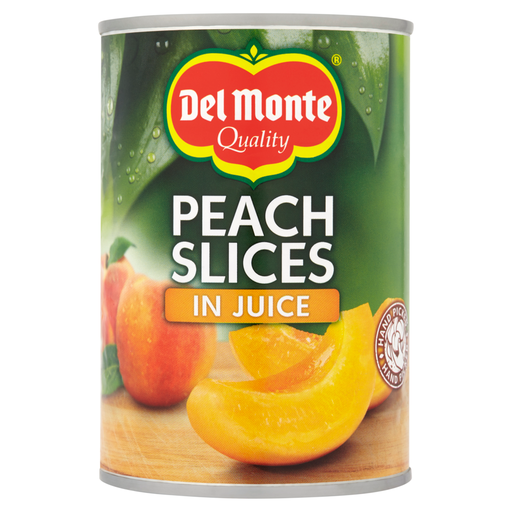 Image unavailable
For a planned serving of peach slices, this 415g tin provides a fruit-in-juice format. Confirm the drained quantity on the current product information before calculating how many portions it will provide.
 Image unavailable
Pear halves provide a different fruit cut for a plated lunch dessert. This is a 415g tin in juice; check its drained quantity when planning servings and follow the label after opening.
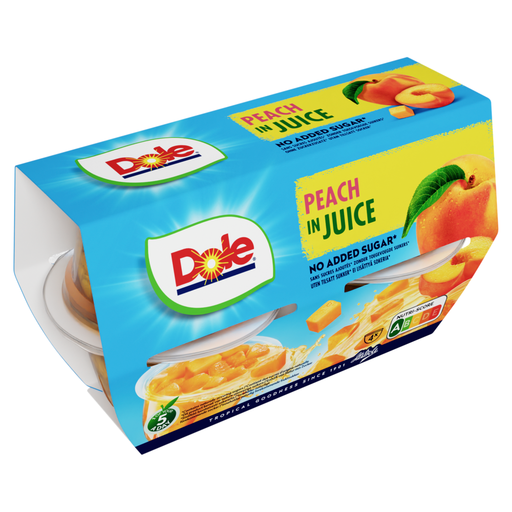 Image unavailable
Four separate 113g pots suit portioned service when lunch numbers are less predictable. Check the current ingredients against the menu requirements, and follow the label if a pot is opened but not finished.
Choose the liquid that fits the menu specification rather than buying by fruit name alone. Tesco Groceries and Princes list juice-packed options, while UK retail listings also include peaches in light syrup; check the exact ingredients and nutrition panel before substituting one for the other.
Follow the chosen product’s label and the canteen’s food-safety procedures. A Sainsbury’s listing for Nature’s Finest Peach in Juice 400g says to refrigerate after opening and consume within three days; that period must not be assumed for other products.
Yes. The Food Standards Agency says catering food businesses must provide allergen information for non-prepacked as well as prepacked food and drink. Keep ingredient information accurate for the exact fruit product and anything served with it, such as toppings or sauces.
A best-before date concerns quality rather than safety, according to GOV.UK. A canteen should still follow its food-safety procedures, storage requirements and supplier instructions instead of assuming every tin past that date is suitable for service.
Avoid buying damaged cans. Reading Borough Council advises against them because dented, damaged or incorrectly processed cans may cause mould; check the condition of tins when they arrive and before use.