Whole-tin portion planners
If you want one tin to be one snack or dessert, look for a stated one-can serving and check carbohydrate per can. Sainsbury's labels its 213g Peach Slices in Fruit Juice tin as one serving.


For a diabetes-aware snack or dessert, start with fruit in juice rather than syrup, as Diabetes UK advises, then check the total carbohydrate for the amount you intend to eat. A tin labelled as one serving makes a whole-tin portion easier to plan; a larger tin requires you to measure a portion and store the rest. Fruit in juice still contains carbohydrate, so use the current pack label alongside your individual diabetes-management advice.
If you want one tin to be one snack or dessert, look for a stated one-can serving and check carbohydrate per can. Sainsbury's labels its 213g Peach Slices in Fruit Juice tin as one serving.
If you count carbohydrate for the portion you eat, use the total carbohydrate figure rather than the sugars sub-line. Leeds Teaching Hospitals NHS Trust makes this distinction in its carbohydrate-counting guidance.
If you want a cupboard dessert without syrup, check the packing liquid in the full product name and ingredients. Diabetes UK recommends choosing fruit in juice instead of syrup; that choice does not make the fruit carbohydrate-free.
| Concern | What to check | Who this matters to |
|---|---|---|
| Packing liquid | Check whether the fruit is in juice, light syrup or syrup; read the ingredients as well as the front label. Diabetes UK advises choosing juice instead of syrup. | For a cupboard dessert without syrup, the packing liquid matters even though fruit in juice still contains carbohydrate. About 33% of consumers make avoiding syrup their primary concern. |
| Portion carbohydrate | Use total carbohydrate for the amount you will eat, not just the sugars figure. Check whether the label gives values per portion, per can or per 100g. | When counting carbohydrate for a planned portion, the sugars sub-line cannot replace the total carbohydrate figure. About 42% of consumers put portion-level carbohydrate first. |
| Whole-tin portion | Look for servings per can and a whole-can carbohydrate figure if you intend to eat everything at once; otherwise, plan how to divide the tin. | If the snack should be the entire tin, a clear one-can serving avoids having to divide it or store leftovers. About 25% of consumers chiefly want a manageable whole-tin portion. |
Juice-packed fruit still contains carbohydrate. Sainsbury's lists 23.9g total carbohydrate per can for its 213g Peach Slices in Fruit Juice.
Choose the packing liquid first, then check total carbohydrate for the portion you plan to eat.
A per-100g value does not describe a whole-tin snack unless the tin contains exactly that amount. As the NHS explains, labels may also provide nutrition per portion.
Use a per-can figure when you will eat the whole tin, or work from the per-100g figure for a measured portion.
Light syrup is still syrup. Diabetes UK advises avoiding tinned fruit in syrup, including light syrup, when choosing fruit for a diabetes-aware eating pattern.
Read the words after the fruit name and check the ingredients rather than choosing by fruit or brand alone.
A larger tin need not be eaten in one sitting, but dividing it means deciding how much to serve and what to do with the rest.
Measure the portion you intend to eat and follow that pack's instructions for storing the remainder.
Its 213g Peach Slices in Fruit Juice tin is an example for shoppers seeking a clearly labelled one-can serving.
Its pear and peach ranges include juice-packed fruit for shoppers willing to portion a larger tin.
Its range includes fruit in juice as well as syrup formats, so the complete product name matters.
Its tinned-peach range includes own-label slices in juice and slices in light syrup.
Its tinned-fruit range may be relevant if you are checking a local Foodhall for a particular fruit.
These tins contain fruit in juice. Some are larger formats to portion across eating occasions; check each pack's serving information if you want to eat the whole tin at once.
 Image unavailable
Consider this larger tin if you plan to divide it between eating occasions. Check total carbohydrate for the amount you serve rather than treating the whole tin as one portion, and follow the pack's storage instructions for leftovers.
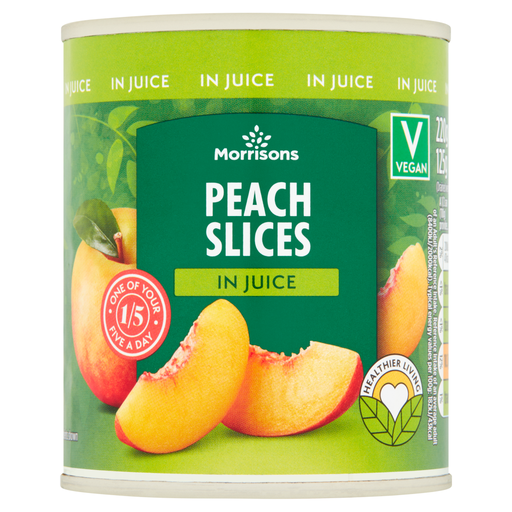 Image unavailable
The 220g format may suit a smaller snack plan, but do not assume the entire tin is one declared serving. Check the pack's serving size and total carbohydrate for the amount you intend to eat.
 Image unavailable
For a larger tin you can portion yourself, decide how many pineapple slices you will serve and check the carbohydrate for that amount. Follow the pack's instructions if any fruit remains.
 Image unavailable
This is a juice-packed peach option if you are prepared to portion a larger tin. Check total carbohydrate for the amount served and the pack's instructions for any leftovers.
 Image unavailable
If you prefer mixed fruit and can measure out your intended portion, check the pack's total carbohydrate figure for the amount you will eat. Store any remainder according to its instructions.
No single tin suits everyone's needs. Diabetes UK advises choosing tinned fruit in juice rather than syrup, but fruit in juice still contains carbohydrate; check the portion against your individual diabetes-management advice.
Use total carbohydrate for the amount you will eat, not the ‘of which sugars’ figure. Leeds Teaching Hospitals NHS Trust makes this distinction in its carbohydrate-counting guidance.
Follow the instructions on the particular pack. For its 213g Peach Slices in Fruit Juice tin, Sainsbury's instructs shoppers to transfer the contents to a non-metallic container, refrigerate them and use them within one day of opening.