Buffet hosts watching usable quantity
For bowls, trifles or other desserts served to several guests, drained weight helps show how much fruit the tin will provide. Tesco Groceries displays drained-weight information for tinned fruit.


For a christening-party spread, compare the amount of drained fruit rather than relying on total tin weight, then choose a format that fits the dish. Fruit in natural juice suits a serving where added sugar is not wanted; syrup-packed fruit may suit a deliberately sweet dessert, while fruit cocktail offers variety in one tin. A larger single-fruit tin makes sense when the planned servings will use it within its labelled storage period.
For bowls, trifles or other desserts served to several guests, drained weight helps show how much fruit the tin will provide. Tesco Groceries displays drained-weight information for tinned fruit.
These hosts need to distinguish fruit in natural juice from fruit in syrup and check the ingredients of the particular tin. Both formats appear in the retailer ranges covered here.
A fruit cocktail can supply a ready-mixed bowl, while single-fruit tins let the organiser choose the fruit and cut needed for a particular dessert. Sainsbury’s and M&S list examples of these different formats.
Start with the servings and dessert you have planned: usable fruit quantity, packing medium and cut can each change which tin fits the table.
| Concern | What to check | Who this matters to |
|---|---|---|
| Usable fruit quantity | Check drained weight against the amount needed for the planned servings; total tin weight includes liquid. | If I am filling several buffet bowls, I need enough fruit once the liquid is drained. About 40% of consumers put usable quantity first. |
| Juice or syrup | Read the packing-medium description and ingredients. For a no-added-sugar choice, the NHS advises canned fruit in natural juice or water with no added sugar or salt. | For a less-sweet fruit bowl, I want to know whether the tin contains juice or syrup. Around 30% of consumers make packing medium their primary concern. |
| Fruit and cut | Choose a mixed cocktail for a mixed bowl, or check the fruit and cut when a dessert calls for slices, chunks or halves. | When the dessert table needs variety without extra cutting, I would choose a format that is ready to serve. About 20% of consumers chiefly prioritise presentation and preparation. |
| Leftovers | Match tin size to likely use and read its instructions for storage after opening. | If only a little fruit will be served, a large opened tin could leave more than I can use in time. Roughly 10% of consumers put leftover control first. |
Packing liquid contributes to the stated net weight, but it is usually the drained fruit that goes into the buffet bowl.
Use the drained weight to plan how many tins the intended servings require.
They are different packing media. The NHS advises choosing canned fruit in natural juice or water with no added sugar or salt.
Check the ingredients and choose syrup when its sweetness fits the dessert you intend to make.
Open-life instructions vary by product. Food Standards Scotland advises following the label; M&S says its grapefruit segments should be transferred to a non-metallic container, refrigerated and eaten within two days.
Choose a size you expect to use, and check that tin’s storage instructions before opening it.
Ingredients and allergen information are specific to the product, so the fruit name alone is not enough to establish whether it suits a guest.
Keep the original tin or a clear photograph of its label available while serving.
Tesco Groceries and Sainsbury’s list Del Monte fruit cocktail and single-fruit tins in juice and syrup formats.
Tesco Groceries lists Princes fruit cocktail and single-fruit options, including tins packed with juice.
Tesco Groceries lists own-label tinned peaches, pineapple, mandarins, pears and other fruits in juice and syrup formats.
Sainsbury’s lists own-label fruit cocktail and single-fruit tins, including fruit packed in juice.
M&S lists specific dessert ingredients such as grapefruit segments and rhubarb chunks.
These tins cover juice-packed pineapple, peaches and mixed fruit, plus syrup-packed pear halves. Match the fruit and cut to your christening-party dessert, then check drained weight and the label when planning servings.
 No image available
Choose slices when pineapple is needed for a bowl or dessert topping. Plan servings from the drained fruit rather than the 435g net weight.
The listing’s leftover instructions call for transfer to a non-metallic container, refrigeration and use within 3–4 days after opening.
 No image available
The halves suit a dessert planned around peaches rather than a mixed-fruit bowl. Check the tin’s storage instructions if any fruit may be left after serving.
 No image available
A mixed-fruit tin suits a shared bowl when you want variety without selecting and cutting several separate fruits. Check its drained weight to work out how many tins your serving plan needs.
 No image available
Chunks fit a fruit salad or dessert that calls for pieces rather than slices. Check the drained weight before deciding how many tins will cover the servings.
The listing says to refrigerate unused contents after opening and consume them within two days.
 No image available
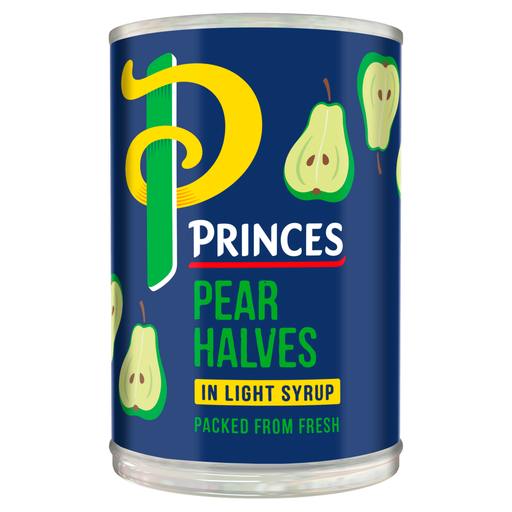
Consider these halves for a pear dessert where syrup suits the finished dish, rather than for a serving intended to avoid added sugar. Check drained weight when planning portions.
The listing says to refrigerate opened contents and consume them within three days.
Compare drained fruit quantities for tins with a similar fruit type and packing medium, then match that quantity to the servings you plan. Total tin weight includes the liquid, so it does not tell you how much fruit will go into the bowl.
Yes. The NHS says 80g of canned fruit counts as one portion and advises choosing fruit canned in natural juice or water with no added sugar or salt.
Follow the instructions on the specific tin. Food Standards Scotland advises checking food labels for storage directions; for its grapefruit segments, M&S specifies transfer to a non-metallic container, refrigeration and use within two days. That timing should not be applied to other products without checking their labels.
Keep the original tins or clear photographs of their ingredient and allergen labels available. Check every product used in the dessert rather than assuming suitability from the fruit name.
A best-before date relates to quality, whereas a use-by date relates to safety, according to GOV.UK. Before serving the fruit, check how the tin has been stored, its condition and the product label.