Batch dessert bakers
If you are making several cakes or a large trifle, pie or crumble, you need enough fruit for the recipe without opening substantially more than you can use.


Choose the fruit and cut your Christmas recipe needs, then compare how much fruit you can use rather than relying on the tin’s net weight, which includes packing liquid. Fruit in juice gives you more control over added sweetness; light syrup suits a recipe intended to use a sweeter fruit or liquid. Check the drained quantity, ingredients and storage directions for the particular tin, especially if you expect leftovers.
If you are making several cakes or a large trifle, pie or crumble, you need enough fruit for the recipe without opening substantially more than you can use.
You want to compare tins by the fruit available after draining, not assume that a larger net weight means proportionately more fruit.
When a recipe already specifies its sugar and liquid, you need to decide whether fruit in juice or light syrup fits it, and whether to drain the fruit before adding it.
Start with the fruit your dessert calls for, then check its cut, usable quantity and packing liquid. A tin that fits those requirements is less likely to leave you with unsuitable fruit or an awkward amount left over.
| Concern | What to check | Who this matters to |
|---|---|---|
| Usable fruit quantity | Look for the drained weight as well as the net weight. Match the fruit quantity to your recipe; Tesco Groceries displays drained-weight information on many tinned-fruit listings. | If I need fruit for several desserts, packing liquid cannot stand in for the fruit in my recipe. About 33% of consumers put usable fruit quantity first. |
| Fruit and cut | Check whether the recipe needs a particular fruit, slices, halves, pieces or a fruit cocktail. Princes lists peach slices in 410g and 220g formats, for example. | For a dessert with visible fruit pieces, I need a cut that works in the finished dish rather than a tin chosen by size alone. About 27% of consumers primarily look for the right fruit format. |
| Sweetness and liquid | Read the packing medium and ingredient list for the exact tin. Decide whether the recipe uses drained fruit or some of its liquid. | When a sponge or filling already has a planned amount of sugar and moisture, I want the fruit and liquid to fit that plan. Roughly 27% of consumers make sweetness and liquid their primary concern. |
| Leftovers and storage | Choose a size you can use and follow that product’s directions for storing fruit after opening. Check any preparation warnings on the label. | If a bake uses only part of a tin, I need a practical plan for the remainder. About 13% of consumers put leftover management first. |
Net weight includes the packing liquid, so it does not tell you by itself how much fruit a bake will receive.
Check the declared drained weight where available and make sure it covers the quantity your recipe needs.
The packing liquids have different ingredients. ASDA Groceries lists grape juice from concentrate in one 411g peach product and water and sugar in its 411g light-syrup peach product; those examples do not describe every brand.
Read the exact tin’s ingredients and decide whether to drain the fruit or use its liquid as the recipe directs.
A larger pack may leave fruit unused when the recipe calls for only a small portion. Post-opening instructions can differ between products.
Match the pack to the bake and follow its label when transferring, covering and refrigerating any remainder.
The cited ASDA peach products warn that stones may remain despite preparation.
Check the pieces before using them, particularly for a smooth filling or a dessert served to children.
These ranges illustrate different fruit and pack choices; compare the individual tin with your recipe rather than treating a brand name as a substitute for its label.
Prepared-fruit formats include pears and fruit cocktail. Del Monte Europe describes its pear halves in juice as an option for baking desserts.
Princes lists tinned fruit for baking, including peaches and pineapple in more than one pack size.
Tesco Groceries lists several tinned-fruit types, including pineapple, peaches, pears and fruit cocktail.
Sainsbury's lists a 227g tin of pineapple pieces in juice, a format to consider when a recipe calls for smaller pieces.
ASDA Groceries lists 411g peach-slice products in fruit juice and in light syrup, making the packing-liquid choice relevant to a peach recipe.
Marks & Spencer presents canned rhubarb as a fruit for pies and crumbles.
These tins offer pineapple, peaches or pears in cuts relevant to desserts, with both juice-packed and syrup-packed choices. Match the named fruit and pack size to your recipe, then check the individual tin for the drained amount and any storage directions you need.
 No image available
Consider these slices for a dessert that needs recognisable pineapple pieces and where juice packing fits the recipe. The tin is labelled 435g net weight; check its drained quantity when planning how much fruit to use.
 No image available
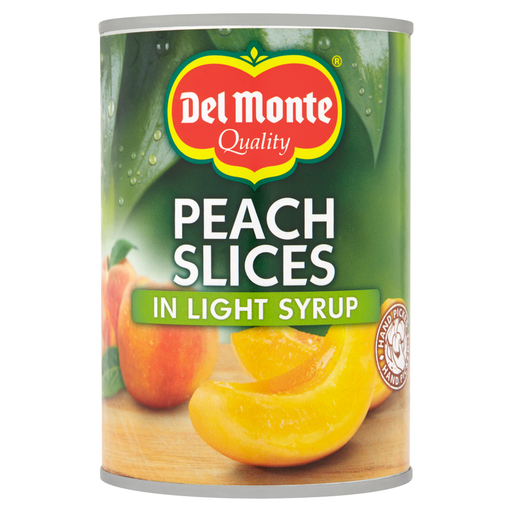
These peach slices suit a recipe intended to accommodate fruit in light syrup. The tin is labelled 420g net weight; check the drained quantity for the amount of peach available and decide whether the recipe uses any syrup.
 No image available
Choose the chunk format if your recipe calls for pineapple pieces rather than slices. This is a 432g net-weight tin with juice; check how much fruit remains after draining and follow the tin’s directions for any leftovers.
 No image available
Pear halves are an option when the dessert calls for larger, visible pieces; Del Monte Europe also identifies pear halves in juice for baking desserts. This tin is labelled 415g net weight, so check its drained quantity against your recipe.
 No image available
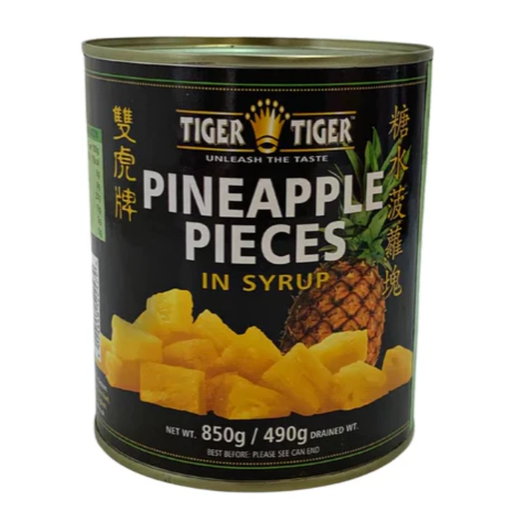
The 830g net-weight tin is worth considering when a batch dessert calls for pineapple pieces. Check its drained quantity against the total needed, whether its packing liquid fits the recipe, and how you will use any remainder.
Look for the drained weight, which separates the fruit quantity from the liquid-inclusive net weight. If your recipe specifies a fruit quantity, check that figure on the exact product rather than choosing by tin size alone.
Choose juice when you want to control the recipe’s added sweetness yourself; choose light syrup when a sweeter fruit or liquid suits the recipe. Read the exact ingredients, because the packing medium affects what you add if you use the liquid.
Drain it when the recipe calls for fruit pieces without their packing liquid. Princes instructs cooks to drain canned peach slices and pineapple chunks in one of its recipes; if your own dessert uses the liquid, account for it in the recipe instead.
Follow the storage instructions on that tin, including any directions to transfer, cover and refrigerate the remainder. The cited ASDA peach products have different post-opening use periods, so do not apply one tin’s instructions to another.
Check the food name, ingredients, quantity, date and storage directions on the product you intend to use. GOV.UK explains that a best-before date concerns quality, while a use-by date concerns food safety; follow the date and instructions actually shown on the pack.