Who is this for?

Coeliac shoppers checking labels

If you need to choose fruit for someone with coeliac disease, the current tin matters more than assumptions about the fruit or brand. Coeliac UK advises checking declared gluten-containing cereals and any precautionary wording.

Everyday fruit-in-juice shoppers

For breakfasts, snacks or fruit salad, a juice-packed tin may offer the format you want. Check its individual ingredients and gluten information before deciding whether it suits coeliac shopping.

Dessert and baking shoppers

For a topping, filling or crumble, fruit type and packing liquid can affect the recipe. Compare juice, syrup and prepared fillings separately, then check the gluten information on the chosen pack.

What matters when choosing?

Start with the exact tin’s gluten information. Then compare the fruit and packing liquid for the way you plan to use it.

Concern What to check Who this matters to
Gluten information Read the current pack’s ingredients, any gluten-free claim and any precautionary allergen wording. Coeliac UK explains that gluten-containing cereals used as ingredients must be emphasised on UK prepacked-food labels. If I’m choosing fruit for someone with coeliac disease, I need to assess the tin in my hand rather than rely on another product in the range. About 50% of consumers put pack-specific gluten information first.
Everyday fruit in juice Compare the ingredient list, pack size and instructions for storing leftovers. Check gluten information separately: packing fruit in juice does not establish its suitability. For breakfast or fruit salad, I may want a straightforward juice-packed option I can use across several servings. Around 30% of consumers make everyday fruit-in-juice use their primary concern.
Dessert and recipe fit Check the fruit type and whether it comes in juice, syrup or a prepared filling. Compare ingredients and sugars per 100 g on the products you are considering. If I’m making a crumble or topping, the fruit and its packing liquid need to work in that recipe. Roughly 20% of consumers put dessert and recipe fit first.

What should you avoid assuming?

  • Fruit alone proves the whole tin is suitable

    A tinned product must be assessed by its own ingredients and allergen information. A different flavour, size or recipe from the same brand is not a substitute for that check.

    Read the current physical pack, including any precautionary wording, before buying or serving it to someone with coeliac disease.

  • An online ingredient list is the final check

    Asda, Sainsbury’s and M&S advise shoppers that product information can change. The listing you used to shortlist a tin may not match the pack you receive.

    Confirm the ingredients and allergen wording on the tin in hand before serving it.

  • Fruit in juice and fruit in syrup serve the same recipe

    The packing liquid changes the ingredients you bring to a dessert. For example, M&S lists sugar in its Rhubarb Chunks in light syrup; its Grapefruit Segments are packed in grapefruit juice from concentrate.

    Compare the exact products’ ingredients and sugars per 100 g, as well as how each would work in your recipe. Check gluten information whichever format you choose.

  • One storage rule works for every opened tin

    Instructions for transferring, refrigerating and using leftover fruit vary by product.

    Follow the storage directions and use-by period stated on the particular pack after opening.

Brands and retailer ranges to consider

Del Monte

Tesco’s tinned-fruit range includes Del Monte fruit in juice and syrup.

  • The listed formats give shoppers a choice of packing liquid for different uses.
  • A range listing does not establish the gluten information for every Del Monte variant; check the chosen tin.

Princes

Princes offers canned fruit as well as fruit fillings and toppings.

  • Its Pineapple Slices in Juice list pineapple, pineapple juice and citric acid as ingredients.
  • Princes advises checking the ingredients on each purchase. A short ingredient list for one product does not establish the status of its whole range.

Tesco

Tesco’s tinned-fruit category includes own-label products alongside other brands.

  • The category offers different fruits and packing liquids to compare.
  • The category listing cannot replace an allergen check on an individual Tesco tin.

Sainsbury’s

Its Pineapple Chunks in Fruit Juice are an example of an own-label, juice-packed tin.

  • The listed ingredients for the 425 g product are pineapple and pineapple juice.
  • Sainsbury’s cautions that product ingredients can change; check the pack for current gluten information.

Asda

Its Pineapple Chunks in Fruit Juice provide another own-label example to compare.

  • The listed ingredients for the 432 g product are pineapple and pineapple juice.
  • Asda warns that ingredient and allergy information can change, so use the current pack for the final check.

M&S

Its cited tinned-fruit products include grapefruit in juice and rhubarb in light syrup.

  • The two ingredient lists help distinguish a juice-packed fruit from rhubarb packed with water and sugar.
  • Neither example’s cited information establishes a gluten-free claim; check the exact pack.

Tinned fruit on Joybuy

This selection is a mango-in-light-syrup option for desserts or fruit salad. For coeliac shopping, confirm its current pack labelling before buying or serving it.
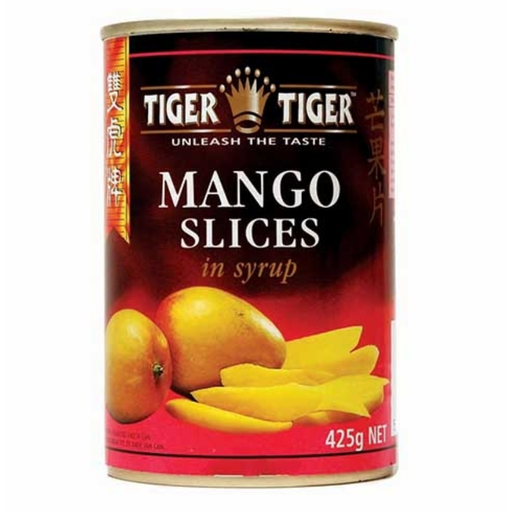
Tiger Tiger Mango Slices in Light Syrup 425g

Tiger Tiger Mango Slices in Light Syrup 425g

Mango slices in light syrup for a dessert topping or fruit salad; 425 g pack. The listing describes the product as gluten-free, but check the exact tin for its current claim, ingredients and precautionary allergen wording before serving it to someone with coeliac disease. Check that the syrup suits the intended recipe.

View on Joybuy

Questions about tinned fruit and gluten

Can someone with coeliac disease eat any tinned fruit?

Do not assume every tin is suitable. Coeliac UK advises checking the exact pack: UK prepacked-food labels emphasise gluten-containing cereals used as ingredients, and any precautionary allergen wording needs separate attention.

What does a gluten-free claim on a UK tin mean?

For a UK product bearing that claim, the Food Standards Agency’s gluten-free threshold is no more than 20 mg of gluten per kg of food, equivalent to 20 parts per million. Check that the claim appears on the exact pack you are buying.

Is an ingredient list without gluten-containing cereals enough?

It is not the same as an explicit gluten-free claim. Princes says the absence of named gluten cereals or gluten on its label means no gluten has been added, but precautionary wording is a separate consideration. Check the current pack and contact the manufacturer if you are unsure about a warning.

How should I store tinned fruit after opening it?

Follow the instructions on that product’s pack. Directions for transferring leftovers, refrigerating them and using them within a stated period differ between the cited Asda, Sainsbury’s and M&S products.

Should I choose fruit in juice or fruit in syrup for a dessert?

Choose by the fruit, ingredients and packing liquid your recipe calls for, then make the same pack-specific gluten check either way. For example, M&S lists sugar in its Rhubarb Chunks in light syrup, while its Grapefruit Segments are packed in grapefruit juice from concentrate.