Sunday-dessert planners
If the fruit is going into a bake or being served with custard, its cut and drained quantity matter more than the total weight of the tin. Pear halves, peach slices and mixed fruit suit different presentations.


Choose the fruit format to suit the dessert: halves or slices give you a particular fruit and cut, while a cocktail suits a mixed topping. If avoiding added sugar matters, compare fruit in natural juice or water with syrup-packed options; whatever you choose, check the drained weight, stated servings and instructions for leftovers on the individual tin.
If the fruit is going into a bake or being served with custard, its cut and drained quantity matter more than the total weight of the tin. Pear halves, peach slices and mixed fruit suit different presentations.
The packing liquid is a useful starting point, but the ingredients and sugars declaration tell you more about the particular tin. The NHS recommends choosing tinned fruit in natural juice or water without added sugar.
If Sunday dessert will use only part of a tin, compare its stated servings and drained weight with the amount you need. Check the product label for how to store the remainder and when to use it.
Start with the dessert you intend to make, then check the packing liquid and the amount of fruit you can serve. Before putting a tin in the cupboard, check its condition and date label too.
| Concern | What to check | Who this matters to |
|---|---|---|
| Packing liquid and sweetness | Read the ingredients for added sugar or syrup, then compare sugars on the same per-100g basis. | If avoiding added sugar is my priority, I need to distinguish juice or water from syrup without assuming juice-packed fruit is sugar-free. About 31% of consumers put the packing liquid and sweetness first. |
| Fruit format | Match the named fruit and cut—such as halves, slices or a mixture—to the dessert. | For a plated dessert or bake, I want pieces that fit the recipe; for a mixed topping, variety matters more. Fruit format is the primary need for about 31% of consumers. |
| Portions and leftovers | Compare drained weight and stated servings rather than relying on total tin weight. | When only a few people are having dessert, I want enough fruit without opening more than we can use. Roughly 23% of consumers chiefly prioritise portions and leftovers. |
| Tin condition and storage | Check the date and packaging; read the product-specific instructions for storing fruit after opening. | If a tin will sit in the cupboard until roast day, I want its packaging to be sound and to know how to handle any remainder. For about 15% of consumers, condition and storage come first. |
The packing liquid accounts for some of that weight. Tesco lists 225g drained fruit for its 410g Princes pear-halves tin, while Sainsbury's lists 230g drained fruit for a 415g Del Monte pear-halves tin.
Use the drained weight and stated servings on the exact product to decide how many tins your dessert needs.
Fruit and juice can contribute sugars even when syrup is absent. A sugars figure also needs its stated basis—per 100g, per serving or drained fruit—to be useful in a comparison.
If added sugar is a deciding factor, read both the ingredients and nutrition panel. The NHS recommends tinned fruit in natural juice or water without added sugar.
Food-safety guidance published by Health Well says not to store food in an opened tin. Open-life instructions differ between the fruit products listed by Sainsbury's, Tesco and Asda.
Transfer the remainder to a suitable container, cover and refrigerate it, then follow the time stated on that product's label.
These ranges offer different fruit formats and packing liquids. Compare individual product labels rather than assuming every tin from a brand has the same ingredients or drained quantity.
A prepared-fruit range that includes pear halves and mixed fruit in juice.
Its pear halves in juice are an option when a dessert calls for distinct pear pieces.
Its tinned-pears range includes own-brand halves and quarters in juice alongside branded options.
Its own-brand pear halves in refined fruit juice suit a dessert needing pear pieces.
Its listings include own-brand peach slices in juice and a light-syrup alternative.
Its Foodhall tinned-fruit range includes fruit presented for recipe uses such as pies and crumbles.
For a Sunday-roast dessert, these tins offer single-fruit pieces in juice, a light-syrup option and a mixed-fruit cocktail. Choose by the fruit and packing liquid your dish calls for, then check the pack for portion and storage details.
 Image unavailable
Consider this when a dessert calls for pineapple slices rather than a mixed-fruit topping. The named tin contains 435g including its juice; check the drained weight when planning portions.
 Image unavailable
Choose the peach-halves format if the dessert needs larger peach pieces. This is a 415g tin in juice; use the pack's drained weight and serving information to plan how much to open.
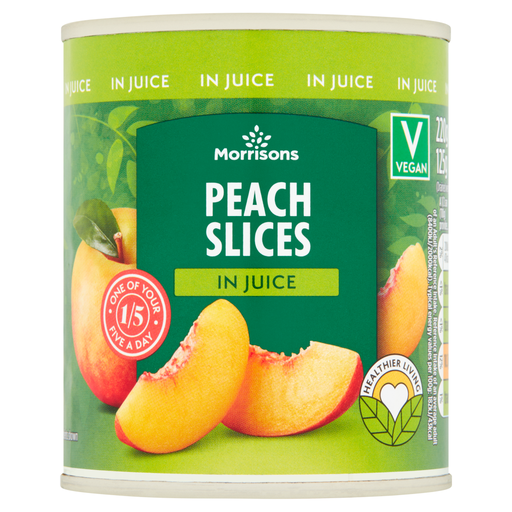 Image unavailable
The sliced format fits a dish that calls for peach pieces rather than halves. At 220g including juice, this is a different pack size from the 415g peach-halves tin; compare drained weights to judge the fruit quantity.
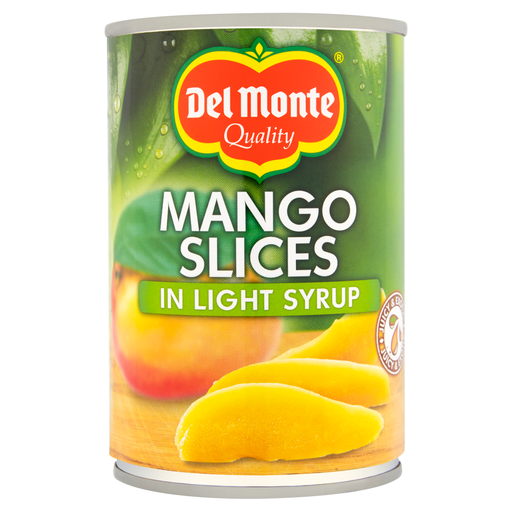 Image unavailable
This sliced-mango tin is a light-syrup option for a recipe where that packing liquid suits the dish. If avoiding added sugar is the priority, compare its ingredients with a juice- or water-packed alternative. The stated tin weight is 425g.
 Image unavailable
Use a fruit cocktail when a mixed topping suits the dessert better than uniform slices or halves. Asda's listing for this 415g Del Monte product names peaches, pears, pineapple, grapes and cherries in variable proportions; check the pack if a particular fruit matters to your recipe.
Yes. The NHS includes tinned fruit in its 5 A Day guidance and recommends choosing versions in natural juice or water without added sugar. Check the individual label when comparing products.
Choose according to the dish and your preference about added sugar: juice-packed fruit avoids making syrup the default, while a syrup-packed tin may suit a dessert that calls for that liquid. Read the ingredients on the exact tin; Asda's listed peach slices in juice contain peach and grape juice from concentrate, whereas its listed light-syrup peach slices contain water and sugar.
Transfer it to a suitable container instead. Health Well's food-safety guidance says not to store food in an opened tin; cover and refrigerate the fruit, then follow the product's stated time for using it.
No. GOV.UK explains that a best-before date concerns quality, while a use-by date concerns food safety. Check the date shown on your tin alongside its storage instructions and the condition of its packaging.