Couples making a shared dessert
If fruit will fill two bowls or form the main part of a plated dessert, compare drained weight and piece size rather than choosing by tin size alone.


For a shared dessert, start with a full-size tin and check its drained weight: Tesco labels its 410g peach tin as 250g drained and two half-can servings. Choose a small multipack if you need only a little fruit at a time or want unopened portions for later. If reducing sugar is a priority, NHS guidance favours fruit in juice over syrup, but the ingredients and nutrition panel still matter.
If fruit will fill two bowls or form the main part of a plated dessert, compare drained weight and piece size rather than choosing by tin size alone.
Peach slices, pear halves and mixed fruit suit different preparations. Choose the fruit and cut that work for your dish before deciding how many tins to buy.
If several tins or a multipack will be used over time, check the packing liquid, individual portion sizes and instructions for any fruit left after opening.
For dinner for two, decide how much fruit will reach the plate, then choose its shape and packing liquid. If you are buying extra for later, consider how you will use each opened portion.
| Concern | What to check | Who this matters to |
|---|---|---|
| Enough fruit for two | Compare drained weight and serving guidance, not just net weight. Tesco lists 250g drained weight for its 410g peach tin. | If fruit is the main part of our shared dessert, I need to know how much will be left after draining the liquid. About 36% of consumers put sufficient usable fruit first. |
| Fruit shape and recipe fit | Choose slices or halves for visible pieces, or check whether chunks or fruit cocktail suit a mixed dish. | When the menu calls for fruit I can arrange or mix in, the cut matters as much as the pack size; about 29% of consumers prioritise recipe and presentation fit. |
| Packing liquid and ingredients | Read whether the fruit is in juice or syrup, then compare the exact ingredients and per-100g nutrition panel. | If I plan to add a sweet topping, I want to choose the packing liquid deliberately. About 21% of consumers make sweetness and ingredient control their primary concern. |
| Leftovers and storage | Check the open-life instruction and whether individually sealed portions would better match later meals. | Buying extra makes sense to me only if I can use the portions before they go to waste; about 14% of consumers put leftover handling first. |
Net weight includes the liquid. Tesco lists 250g drained weight for its 410g peach tin, a distinction that matters when fruit is the main part of a dessert.
Compare drained weights and serving guidance on the tins you are considering.
The packing liquid changes what goes into the dish. NHS guidance suggests tinned fruit in juice rather than syrup for people cutting down on sugar; juice-packed fruit still has sugars shown on its nutrition panel.
Read the exact ingredients and per-100g panel, and choose syrup when its sweeter liquid is part of the recipe you intend to make.
Small fruit portions may suit a garnish or later meals but may not supply the pieces or quantity planned for a shared plated dessert.
Compare the fruit in the portions you would open with the drained weight of a full-size tin.
Food-safety guidance says not to eat food from a visibly bulging can. Leftovers also need handling according to the product's instructions after opening.
Do not use a visibly bulging tin. Transfer leftovers from an opened tin to a suitable container, refrigerate them and follow the pack's open-life instruction.
Tesco lists both a full-size peach tin and smaller fruit multipacks, useful when comparing a shared dessert with portions for later.
Its tinned-fruit listings include peach slices in juice and in light syrup, alongside other fruit types.
Del Monte offers prepared fruit in several shapes and packing liquids.
Princes lists Peach Slices with Juice in 410g and 220g sizes.
M&S presents tinned fruit as a store-cupboard dessert and baking ingredient; its listed examples include grapefruit segments and rhubarb chunks.
These fruit-in-juice selections cover larger pieces for serving, chunks or mixed fruit for combining with a dish, and six-packs for keeping tins for later meals. Check drained weight on the exact pack when the quantity of fruit for two matters.
 No image available
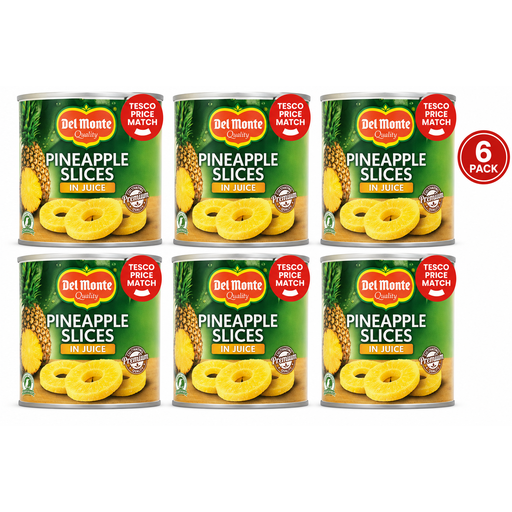
Consider the sliced pineapple if you want visible pieces for a dessert and expect to use the remaining tins later. The named pack contains six 435g tins in juice; check the drained weight when planning portions for two.
 No image available
The chunk format is worth considering when pineapple will be mixed into a dessert or fruit salad. This is a 432g tin with juice; check its drained weight if the amount of fruit on each plate is important.
 No image available
Peach halves offer larger pieces to arrange in a shared dessert. The tin is labelled 415g and packed in juice; use its drained weight to judge the serving quantity.
 No image available
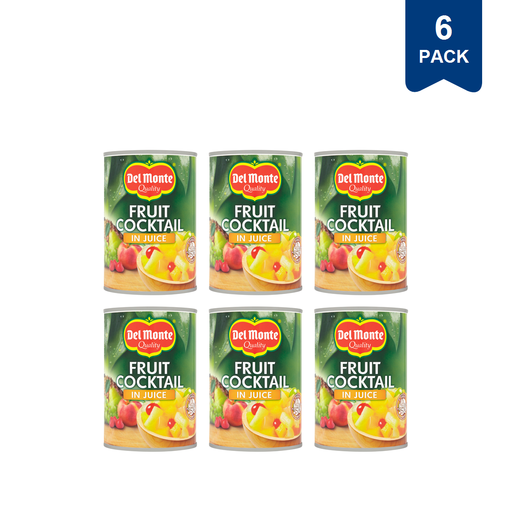
Mixed fruit is a choice for a dessert or salad that does not call for uniform large pieces. The product is named as a 415g six-pack in juice; confirm the pack quantity and drained weight before comparing portions.
 No image available
Consider pear halves when your dessert calls for larger fruit pieces. This is a 415g tin in juice; check drained weight and serving guidance to decide whether it meets your plan for two.
Start with drained weight and the pack's serving guidance, then consider whether fruit is the main dessert or just a garnish. Tesco labels its 410g Peach Slices in Juice tin as 250g drained and half a can per serving; a small portion may suffice when fruit is only an addition to the dish.
Choose juice if cutting down on sugar is your priority: that is the option suggested by the NHS. Syrup may suit a recipe that calls for a sweeter liquid. Either way, compare the ingredients and per-100g nutrition panel on the exact product.
Transfer it to a suitable container, refrigerate it and follow that product's open-life instruction rather than storing it in the opened tin. Tesco instructs shoppers to put unused contents of its peach tin in a non-metallic container in the fridge and use them within two days.
Read the ingredients and allergen information on the particular pack before serving. UK government food-labelling guidance identifies ingredients, allergens and net quantity among the information required for pre-packed food; the product's current label is the place to check what is in the tin you buy.