Plated-dessert hosts
If the fruit will be visible on two dessert plates, halves or distinct segments give you pieces to arrange deliberately. Check the drained quantity as well as the shape: the tin’s total weight includes liquid.


For a plated anniversary dessert, choose recognisable fruit halves if appearance matters most, or grapefruit segments or rhubarb when you want a sharper flavour alongside the other components. Match the packing medium and ingredients to the dessert, then check the drained weight and on-pack storage directions before buying.
If the fruit will be visible on two dessert plates, halves or distinct segments give you pieces to arrange deliberately. Check the drained quantity as well as the shape: the tin’s total weight includes liquid.
If the rest of the meal or dessert is rich, you may want the sharper flavour M&S describes for its grapefruit segments or rhubarb chunks. Check the exact packing medium too: the rhubarb is in light syrup, while the grapefruit segments are in grapefruit juice.
If the fruit is going into a bake, fruit salad or topping, choose a format that fits that job rather than one intended to stand alone on the plate. Del Monte describes dessert and baking uses for its pear halves in juice; check the label for ingredients and instructions after opening.
For an anniversary dessert, decide what the fruit must do on the plate before choosing its shape, flavour and packing medium.
| Concern | What to check | Who this matters to |
|---|---|---|
| Presentation and shape | Look for halves, slices, chunks or segments; check the drained weight if the pieces will be plated separately. | I want each plate to look deliberately assembled, with fruit that remains recognisable. About 36% of consumers would make piece shape their primary concern. |
| Flavour and packing medium | Compare juice or syrup wording and read the ingredient list for the exact product. | If the dessert is already sweet, I want to decide whether sharper fruit or syrup-packed fruit fits its flavours. Flavour balance would come first for about 29% of consumers. |
| Fit with the dessert | Choose a format for its role: visible component, topping or baking ingredient. | I have a recipe in mind and need fruit that works in it, rather than a tin chosen only for its appearance. About 21% of consumers would prioritise that recipe fit. |
| Portions and handling | Check drained weight, the current label and the instructions for storage after opening. | For a small dinner, I want enough fruit without overlooking what to do with the remainder. Portioning and handling would be the main concern for about 14% of consumers. |
A fruit format can help you plan the presentation, but a brand name or a claim of luxury does not establish how the finished plate will look. Del Monte identifies dessert uses for pear halves; M&S suggests pies, crumbles or custard with its rhubarb chunks.
Choose the fruit’s role first. Halves can be arranged as a visible component, while chunks may make more sense as part of a prepared dessert.
The words on the front do not tell you the full ingredient list. Princes, for example, lists peaches, grape juice from concentrate and water in its peach slices with juice.
Read the ingredients and nutrition declaration on the product you intend to serve, then decide whether its flavour and sweetness suit the other dessert components.
Some of that weight is liquid. Tesco lists its Nature's Finest Peach In Juice 700G product with a drained weight of 390g, a materially different quantity for planning fruit portions.
Use the stated drained weight, where available, and consider the size of the pieces if you intend to divide them between plates.
Instructions can change once a tin is opened. Food Standards Scotland advises checking the label for refrigeration and any specified period for eating the contents after opening.
Read the instructions on your tin before the dinner and follow them for any fruit left over.
These ranges offer different fruit forms and packing media; their inclusion is not a quality ranking.
Del Monte offers prepared fruit including pear halves in juice and retailer-listed peaches, pineapple, mandarins and fruit cocktail.
Princes has tinned-fruit options including peaches and pineapple in juice, alongside other fruit types.
M&S lists grapefruit segments in grapefruit juice and rhubarb chunks in light syrup as two distinct dessert components.
Tesco’s tinned-fruit listings include own-label products and other brands, with fruit offered in different shapes and packing media.
Sainsbury's lists own-label and branded tinned fruit, including peach slices in fruit juice and Del Monte pear halves in juice.
These tins cover visible fruit halves for plating, pineapple slices and peach slices for prepared desserts, and a syrup-packed pear option when that packing medium suits the dish. Compare their shapes and the stated pack weights with the portions you plan to serve.
 Image unavailable
Consider the halves when you want recognisable peach pieces on the plate. This is a 415g tin packed in juice; check the drained weight and ingredients when planning portions and pairings.
 Image unavailable
Pear halves give you distinct pieces to arrange or use in a prepared dessert. The tin is 415g and packed in juice; check its drained weight if each serving needs a planned quantity.
 Image unavailable
The sliced format can work when pineapple will be arranged over or added to a dessert rather than served as intact halves. This 435g tin is packed in juice; use the drained weight, not the tin weight alone, to plan fruit portions.
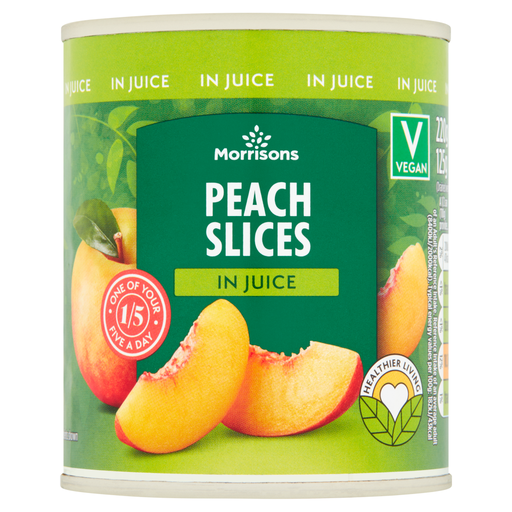 Image unavailable
Consider these slices when peaches are going into a topping, trifle or flan rather than taking centre stage as whole pieces. The pack is 220g and the fruit is in juice. Check the label and take care over the listed possibility of stone fragments when serving.
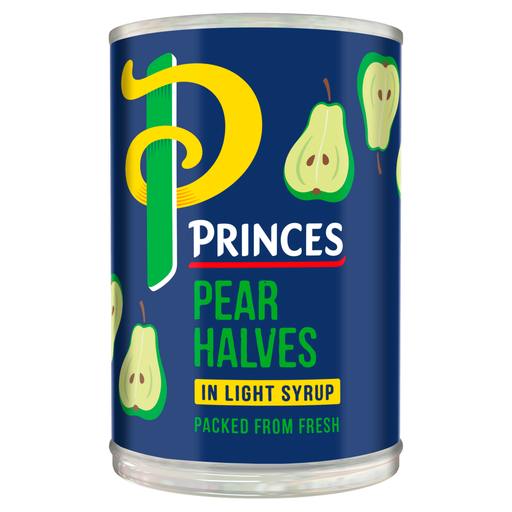 Image unavailable
These pear halves offer a recognisable shape if syrup-packed fruit suits the dessert you are making. The tin is 410g; check the drained weight for portions and compare the syrup and ingredients with the other components before serving.
No: GOV.UK distinguishes best-before dates, which concern quality, from use-by dates, which concern safety. For a particular tin past its best-before date, consider how it has been stored, its condition and the manufacturer’s guidance.
Follow the instructions on that product’s label. Food Standards Scotland advises checking whether opened food needs refrigeration and whether an “eat within” period applies; the period stated for one fruit tin should not be applied to another.
You can choose either if its flavour and packing medium suit the recipe, but do not assume they will give the same result. Check the exact ingredients: Princes lists grape juice from concentrate in its peach slices with juice, while a syrup-packed product has a different packing medium.
Use a listing to narrow your choice, then read the label on the product you will serve. Sainsbury's warns that products and ingredients can change, which matters particularly when a guest has an allergy or another dietary requirement.