Presentation-focused hosts
Choose a recognisable cut when the fruit will be visible on a plate, in a tart or in a fruit salad. Del Monte describes dessert uses for pear halves, while Princes lists peach slices.


For a dinner-party dessert with visible fruit, choose halves, slices or segments that suit the dish you plan to serve; choose a fruit filling when the fruit will go into a pie, crumble or topping. Juice-packed fruit gives you a different starting point from syrup-packed fruit, whose sweetness needs to suit the recipe. Check the ingredients, usable fruit quantity and any stone or storage warnings on the exact pack before serving.
Choose a recognisable cut when the fruit will be visible on a plate, in a tart or in a fruit salad. Del Monte describes dessert uses for pear halves, while Princes lists peach slices.
If you want to control the dessert's added sweetness, compare juice-packed fruit with syrup-packed options and read the exact ingredients. The NHS advises choosing tinned fruit in juice rather than syrup when cutting down on sugar.
For a pie, crumble or other assembled dessert, look for a fruit form that fits the recipe rather than assuming neat halves are necessary. M&S describes its canned rhubarb as suitable for pies and crumbles.
Decide how the fruit will appear in the finished dessert, then check its packing liquid and the quantity your recipe needs.
| Concern | What to check | Who this matters to |
|---|---|---|
| Fruit shape | Check whether the pack contains halves, slices, segments or filling, and whether that form suits your planned presentation. | If the fruit will be visible on a plate or in a tart, recognisable pieces are the primary need for about 40% of consumers. |
| Packing liquid | Compare juice with light syrup or syrup, then read the ingredients and nutrition information per 100g. | For a dessert that already has sweet components, controlling the fruit's added sweetness comes first for about 30% of consumers. |
| Recipe and portions | Match the fruit format and pack size to your recipe; check the drained quantity where portion planning depends on it. | When preparing a pie, crumble or shared dessert, a convenient ingredient in the right quantity is the primary concern for about 30% of consumers. |
Juice is not the same as syrup, but the ingredients and sugars still vary by product. Sainsbury's lists its peach slices in refined grape juice.
Read the ingredients and nutrition information on the tin you intend to serve, rather than relying on the words ‘in juice’ alone.
The packing liquid becomes part of the dessert if you use it with sweet pastry, ice cream or sauce. The NHS advises juice rather than syrup when cutting down on sugar.
Choose the packing liquid to suit the whole recipe; drain the fruit if you do not want that liquid in the finished dish.
Halves, slices and fruit fillings serve different purposes: a filling will not give the same visible pieces as fruit selected for plating.
Check the cut named on the pack against the dessert you plan to make.
Sainsbury's warns that some stones may remain in its peach slices. Instructions for storing opened fruit are also product-specific.
Check the exact pack for warnings before serving and follow its instructions if you prepare the fruit ahead.
A prepared-fruit range with defined cuts for desserts.
A canned-fruit range that includes sliced peaches for recipe planning.
A tinned-fruit category for comparing several fruit types and formats.
An own-label peach-slice option for desserts using visible fruit pieces.
Options for a dessert built around rhubarb or grapefruit rather than peaches.
These options cover visible peach and pear pieces in juice, peach slices in light syrup, and a black cherry filling for recipe-led desserts. Choose by the dish and packing liquid rather than treating every tin as a substitute for the others.
 No image available
Consider peach halves when the fruit itself will be visible in the dessert. This 415g tin is labelled as fruit in juice; check its ingredients, serving quantity and stone warning before plating.
 No image available
Pear halves offer a defined fruit shape for a plated dessert or tart. The tin is labelled 415g and packed in juice; check the drained quantity if the number of portions matters to your recipe.
 No image available
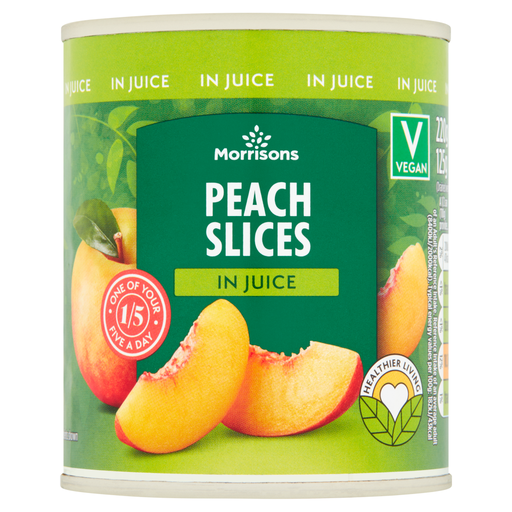
Slices may suit a visible layer in a trifle or flan. This is a 220g tin labelled as fruit in juice; check the drained quantity for portions and the pack for any stone warning.
 No image available
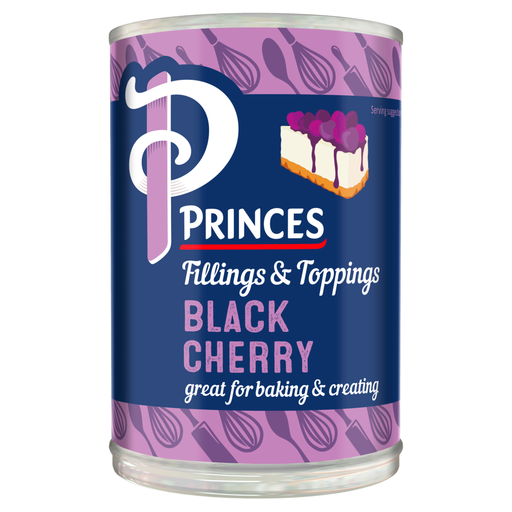
Choose a filling when the fruit will be used in a pie, crumble or topping rather than plated as separate halves or slices. This is a 410g black cherry fruit filling; check its ingredients and any warning about stones before serving.
 No image available
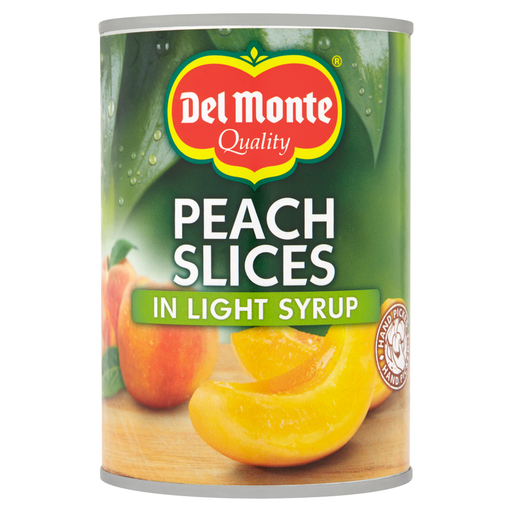
These slices are an option when light syrup suits the intended dessert, rather than when avoiding syrup is the priority. The tin is labelled 420g; decide whether the recipe calls for the packing liquid as well as the fruit.
Choose juice if controlling added sweetness is your priority; consider syrup when its sweetness suits the whole dessert. The NHS advises choosing tinned fruit in juice rather than syrup when cutting down on sugar, but you should still read the exact product's ingredients.
Choose the cut that fits how you will serve the fruit: halves can remain distinct on a plate, while slices can form layers. Check the cut named on the tin before substituting it in a recipe.
You can prepare it ahead if you follow the exact pack's opened-storage instructions. Sainsbury's instructs customers to transfer its opened peach slices to a non-metallic container, refrigerate them and use them within one day; do not apply that time limit to other products without checking their labels.
Check the warning on the product you buy. Sainsbury's states that some stones may remain in its peach slices despite efforts to remove them, so take care when preparing and serving that product.
The NHS states that 80g of canned fruit counts as one 5 A Day portion. That is not a required dinner-party serving size; use your recipe and its other components to plan what to put on each plate.