Hosts adding fruit to individual desserts
If fruit is a topping or small addition to dessert bowls or cheesecake glasses, a 220g–227g tin is worth considering. Check how much fruit the recipe uses before assuming it will cover every portion.


For a topping or small addition to individual desserts, start with a 220g–227g fruit-cocktail tin; for a more substantial shared dessert component, consider a 410g–415g tin. Neither size establishes how many guests it will serve, so check the recipe and guest count before relying on one tin. If you prefer fruit in juice to fruit in syrup, compare the exact tins’ ingredients and nutrition panels.
If fruit is a topping or small addition to dessert bowls or cheesecake glasses, a 220g–227g tin is worth considering. Check how much fruit the recipe uses before assuming it will cover every portion.
For a trifle or another dessert in which fruit is a noticeable component, a 410g–415g fruit-cocktail tin is a starting point. Compare the recipe quantity with the guest count; the tin size alone is not a serving guide.
If the packing liquid matters to your dessert, read the exact tin’s ingredients and sugars per 100g. NHS guidance suggests choosing tinned fruit in juice rather than syrup when cutting down on sugar.
Decide whether the fruit is a topping, a dessert layer or the main shared fruit element before choosing a tin size.
| Concern | What to check | Who this matters to |
|---|---|---|
| Amount of fruit | Compare the recipe and guest count with the tin size. Check drained weight when the amount of fruit, rather than fruit and liquid together, matters. | If I am relying on one tin for a shared dessert, I need enough fruit without planning around substantial leftovers. About 42% of consumers put that quantity decision first. |
| Juice or syrup | Read the packing-liquid ingredients and compare sugars per 100g on the exact tins. | If I do not want syrup in the dessert, I need to choose the packing liquid deliberately rather than judge by tin size. For about 33% of consumers, that choice is the primary concern. |
| Fruit and cut | Check whether the recipe calls for mixed fruit, chunks, slices, halves or segments. | When a recipe needs a particular fruit or shape, a mixed cocktail will not make the same dessert. Getting that match right comes first for about 25% of consumers. |
A small tin can work as a topping, while a larger tin offers more contents for a shared dessert. Neither pack size establishes the number of party portions.
Settle the fruit’s role in the recipe, then check the quantity needed against the guest count before buying.
Net weight includes the liquid. For example, Sainsbury’s lists Del Monte Pineapple Chunks in Juice as 435g net and 260g drained.
Compare drained weights where stated if the amount of fruit pieces determines whether the dessert will work.
Fruit in juice and fruit in light syrup have different ingredients. NHS guidance favours tinned fruit in juice over syrup when cutting down on sugar, but the exact nutrition panel still matters.
Decide whether the recipe calls for syrup, then compare the ingredients and sugars per 100g of the tins you are considering.
Storage instructions and use-within periods differ by product. M&S Rhubarb Chunks, for instance, instructs customers to transfer leftovers to a non-metallic container, refrigerate them and eat them within two days.
Read the chosen tin’s instructions before opening it, and plan how you will store and use any surplus.
Del Monte has fruit-cocktail and single-fruit tins relevant to different dessert recipes.
Princes offers fruit-cocktail formats to compare for smaller additions and shared desserts.
Tesco is a retailer reference for comparing fruit-cocktail listings, rather than a single fruit formulation.
M&S is relevant when a recipe calls for a particular fruit rather than a small mixed-fruit tin.
These tins offer a mixed-fruit option for a shared dessert and single-fruit options for recipes calling for a particular fruit or cut. Match the amount you need to the recipe and guest count before deciding whether one tin is sufficient.
 No image available
Consider this mixed-fruit tin when fruit will form part of a shared dessert. It contains 415g of fruit cocktail in juice; check the drained weight on the tin if the recipe specifies an amount of fruit without liquid.
 No image available
Choose a peach tin when the dessert calls for peach halves rather than mixed fruit. This is a 415g tin packed in juice; use the recipe quantity and the tin’s drained weight to plan how much fruit is needed.
 No image available
Consider this tin when the recipe calls for pineapple chunks. It contains 432g of pineapple chunks with juice; compare the drained fruit quantity on the label with the amount your dessert needs.
 No image available
This single-fruit option fits a dessert that calls for pear halves. The tin is 415g and packed in juice; check the label’s drained weight when planning the amount of pears to serve.
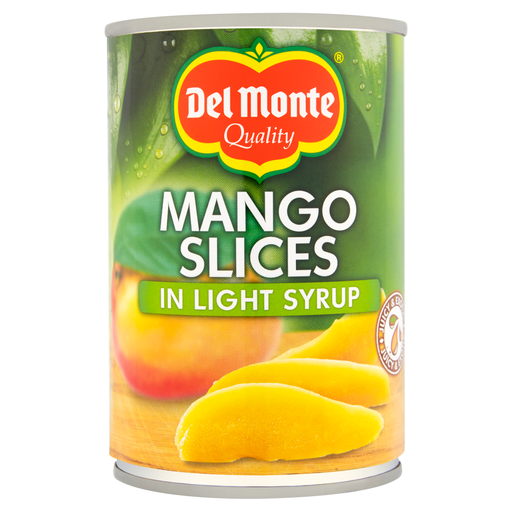 No image available
Consider mango slices when that fruit and cut suit the dessert. This 425g tin is packed in light syrup, not juice; check its ingredients and nutrition panel if the packing liquid affects your choice.
No: the recipe and the exact product both matter. NHS guidance suggests tinned fruit in juice rather than syrup when cutting down on sugar, but compare the current ingredients and sugars per 100g of the tins you are choosing between.
Follow that tin’s storage instructions and use-within period. For example, M&S Rhubarb Chunks instructs customers to transfer leftovers to a non-metallic container, refrigerate them and eat them within two days; another fruit tin may give different instructions.
Check the current tin label before serving, particularly if a guest has an allergy or intolerance. Use its ingredients and allergen information for the product in hand rather than relying solely on an online description.