Shoppers choosing by packing liquid
If you want tinned fruit for everyday cupboard use, the words after the fruit name matter. Diabetes UK advises choosing natural juice instead of syrup, so check the exact variant rather than relying on the brand.


Diabetes UK advises choosing tinned fruit in natural juice rather than syrup. For a cupboard staple, check the carbohydrate information per 100g and plan the amount of fruit you will serve: juice-packed fruit is not sugar-free, and draining the liquid does not remove the carbohydrate in the fruit.
If you want tinned fruit for everyday cupboard use, the words after the fruit name matter. Diabetes UK advises choosing natural juice instead of syrup, so check the exact variant rather than relying on the brand.
If you account for carbohydrate in your meals, compare the label’s per-100g information with the amount you intend to eat. Drained weight can help you judge how much fruit a tin contains, but check whether the nutrition figures refer to the fruit alone or the contents with liquid.
If you use fruit occasionally, consider whether a larger tin or individual pots better fit the portions you serve. Check the after-opening instructions before assuming leftovers will suit your plans.
Choose the packing liquid first, then use the nutrition panel and pack format to plan how you will serve the fruit.
| Concern | What to check | Who this matters to |
|---|---|---|
| Packing liquid | Read the product name and ingredients for natural juice, syrup or light syrup. Diabetes UK advises juice rather than syrup for this choice. | For regular cupboard use, I want to distinguish juice from light syrup rather than assume a familiar brand settles it; about 42% of consumers would put avoiding syrup first. |
| Carbohydrate portion | Compare carbohydrate per 100g, the planned serving amount and, where stated, drained weight. Check the basis used for the nutrition figures. | If I serve only part of a tin, I need to account for the fruit in that portion as well as any liquid I consume; for about 33% of consumers, managing the carbohydrate portion would come first. |
| Pack format and leftovers | Compare tin and individual-pot sizes, then read the storage instructions for anything left after opening. | When fruit is kept for occasional use, I want a pack that fits the portions I serve without leaving avoidable leftovers; about 25% of consumers would put cupboard convenience and leftover management first. |
“Light syrup” is still syrup. Diabetes UK advises avoiding fruit tinned in syrup, including light syrup, when selecting fruit for this use.
Check the full variant name and ingredients, particularly when the same fruit or brand appears in more than one packing liquid.
Fruit and juice still contribute sugars and carbohydrate. A peach product listed by Tesco, for example, shows 12.1g carbohydrate and 12.1g sugars per 100g.
Use the current pack’s carbohydrate figures and the amount you plan to serve rather than the front-of-pack wording alone.
The net weight includes packing liquid, so it need not equal the amount of fruit you will serve after draining.
Look for the drained weight when planning portions, and check whether the nutrition figures are given for drained fruit or for the contents as packed.
Unopened cupboard storage does not tell you how to keep leftover fruit once the pack is open.
Read the exact pack’s refrigeration and use-within instructions, and plan portions accordingly.
A brand name does not establish the packing liquid or carbohydrate content of a particular pack. Tesco’s tinned-fruit listings provide examples of the formats to check.
Tesco lists Del Monte peach halves in juice.
Tesco’s tinned-fruit listings include Princes apple slices.
Tesco’s tinned-fruit listings include several fruit formats alongside branded products.
These selections cover peaches and pineapple in juice, including tins and individual peach pots. Use each pack’s current label to compare carbohydrate information, portion size and storage instructions.
 No image available
A peach-in-juice tin to consider when packing liquid is your first check. The stated pack size is 415g; use the current label’s drained weight and carbohydrate information to plan the fruit portion you will eat.
If the type of juice matters to you, check the ingredients: this variant is described as using juice from concentrate.
 No image available
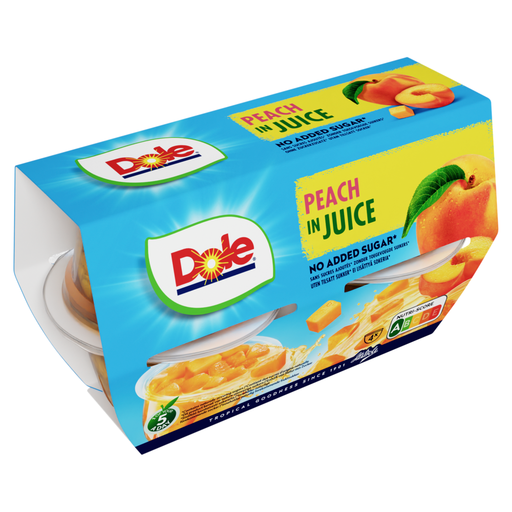
Four individual peach pots offer a defined pack format if you prefer not to open a larger tin. Check the carbohydrate information for the amount you intend to eat; fruit in juice still contributes carbohydrate.
The product information lists steviol glycosides, so check the current ingredients if you are choosing between differently sweetened variants. Follow the pack’s instructions for an opened pot.
 No image available
This 220g tin is a peach-slice option for shoppers comparing juice-packed fruit. Check the pack’s serving information and approximate drained weight before using its nutrition figures for a planned portion.
The product description warns that occasional stone fragments may remain; take care when eating.
 No image available
A 432g pineapple tin for shoppers who prefer chunks to peaches or slices. If you plan to drain it, check the current pack for the amount of fruit available and the basis of its carbohydrate figures.
Use the serving information on the pack to assess the amount you intend to eat rather than assuming the whole tin is one portion.
 No image available
This 435g pineapple-slice tin is another juice-packed format. For a serving smaller than the whole tin, use the pack’s per-100g carbohydrate information and the amount you intend to eat.
Check the drained weight when judging how much pineapple the tin provides, and follow its instructions for leftovers.
No special “diabetic” product label is needed. For tinned fruit, Diabetes UK advises choosing natural juice rather than syrup; the exact product’s ingredients, carbohydrate information and your planned portion remain the useful checks.
No. Fruit and juice can contain sugars and carbohydrate without added sugar. One peach product listed by Tesco shows 12.1g carbohydrate and 12.1g sugars per 100g, so use the figures on the pack you buy and the amount you intend to eat.
You can drain it if you do not intend to consume the packing liquid. Diabetes UK notes that draining juice can reduce sugar intake from that liquid, but it does not remove the carbohydrate in the fruit.
Follow the storage and use-within instructions on the exact pack. Check them when choosing a tin size, especially if you expect to serve only part of it at a time.
Yes, particularly for mixed-fruit, flavoured or sweetened products, or if an ingredient matters to you. Check the current physical pack: GOV.UK guidance says UK food businesses must provide information when any of the 14 regulated allergens are ingredients.