Families stocking up
If several people will share fruit at breakfast or in a dessert, drained weight and the amount in each tin help you judge how many tins to buy.


For a large family shop, compare drained weight and choose a tin size the household can use after opening; the weight on the front of the tin includes its liquid. If avoiding added sugar is a priority, NHS guidance favours tinned fruit in natural juice or water with no added sugar or salt. Syrup-packed fruit can suit a particular recipe, but check the ingredients and nutrition label on the exact product.
If several people will share fruit at breakfast or in a dessert, drained weight and the amount in each tin help you judge how many tins to buy.
If the packing liquid matters to your household, look for natural juice or water and check the ingredients for added sugar. This follows the choice described in NHS guidance for tinned fruit.
Choose the fruit and cut that fit the dish: a mixed-fruit cocktail for a dessert, for example, or pear halves when a recipe calls for pears.
Start with how much fruit the household will use, then check the packing liquid and the fruit needed for planned meals.
| Concern | What to check | Who this matters to |
|---|---|---|
| Usable quantity | Check drained weight as well as tin size, and plan how the contents will be used after opening. | If several of us will share a dessert, I need enough fruit without opening more than we can use. About 42% of consumers put usable quantity first. |
| Packing liquid | Read the ingredients for juice, water, syrup and added sugar; compare the nutrition information on the exact tin. | When choosing cupboard fruit for regular family use, I want to know what it is packed in. For about 33% of consumers, that is the primary concern. |
| Fruit and format | Match halves, slices, chunks or fruit cocktail to the meal; check the fruit mix if a recipe needs specific ingredients. | If I am making a particular dish, the right fruit and cut matter more than a larger tin of something else. Fruit and format come first for about 25% of consumers. |
The stated tin weight includes packing liquid, so tins of similar size need not provide the same amount of drained fruit.
Check the drained weight where shown, then choose a quantity that fits the meals you have planned.
Fruit in juice and fruit in syrup have different ingredient lists. NHS guidance advises choosing tinned fruit in natural juice or water with no added sugar or salt.
Read the packing description, ingredients and nutrition table on the product you intend to buy.
A larger tin may leave fruit unused after one family meal. The product label gives the relevant instructions for storing it after opening.
Choose a size you can use and follow that tin’s after-opening storage directions.
GOV.UK distinguishes best-before dates, which concern quality, from use-by dates, which concern safety.
Check which date appears on the tin and follow its storage instructions rather than treating the two date types as interchangeable.
Princes offers fruit cocktail in juice in 410g and 220g formats, according to its product information.
Del Monte lists prepared fruit including cocktail, peaches, pears and pineapple, with packing liquids varying by product.
Tesco’s tinned-fruit range includes own-label fruit alongside branded options.
Sainsbury's lists own-label and branded tinned peaches, pears, apricots, mandarins and pineapple.
Asda has a tinned-fruit grocery category with online ordering, delivery and click-and-collect options.
The M&S online tinned-fruit category includes cupboard ingredients such as rhubarb chunks and grapefruit segments.
These choices cover fruit cocktail, pineapple, pears and peaches in juice, in single tins and six-can packs for planned family meals. Match the fruit and tin quantity to what you intend to make.
 No image available
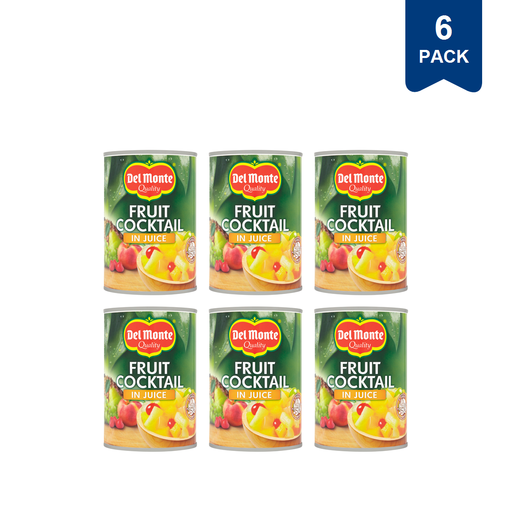
Consider this pack when several family meals or desserts call for fruit cocktail. It contains six 415g tins in juice; check the drained weight on the pack to plan the amount of fruit you need.
 No image available
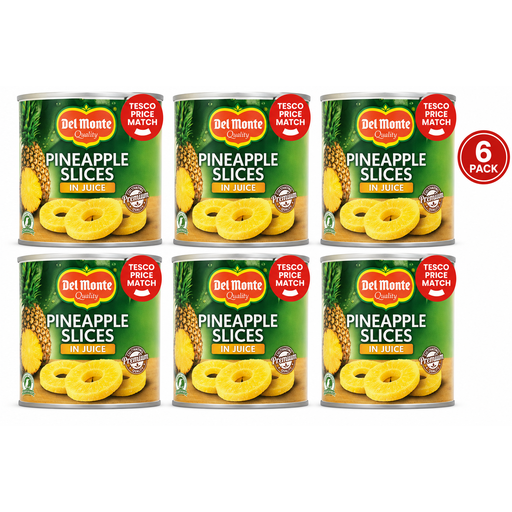
Choose pineapple slices when that cut fits meals you have planned across several tins. The pack contains six 435g tins in juice; check each tin’s drained weight when planning portions.
 No image available
This single tin fits a meal that calls for pineapple chunks rather than slices. It is a 432g tin with juice; check the drained weight and after-opening directions on its label.
 No image available
Choose this tin when a family dessert or recipe calls for pear halves. It contains 415g of pears in juice including the liquid; use the drained weight on the label to plan the fruit quantity.
 No image available
Consider peach halves for a planned dessert or other dish needing that cut. This is a 415g tin in juice; check its drained weight and the label’s directions for any fruit left after opening.
Compare drained weight, then decide how much fruit the household will use from an opened tin. Net weight includes the packing liquid, so tin size alone does not tell you the quantity of fruit.
If avoiding added sugar is your priority, follow NHS guidance to choose tinned fruit in natural juice or water with no added sugar or salt. If a recipe calls for syrup-packed fruit, read that product’s ingredients and nutrition label rather than assuming all syrup-packed tins are alike.
Yes. The NHS includes tinned fruit in its 5 A Day guidance and advises choosing fruit in natural juice or water with no added sugar or salt. Check the product label for its packing liquid.
Follow the storage and open-life directions on that product’s label. Choose a tin size that fits your planned servings so you know how the remaining fruit will be used.
No. GOV.UK explains that a best-before date concerns food quality, while a use-by date concerns safety. Read the date type and storage instructions on the particular product.