Hosts serving several guests
If fruit is going into a shared Easter dessert or side dish, the labelled drained weight helps you judge how much fruit the tin provides. Choose halves for individual plates or smaller pieces for a mixed dessert.


For an Easter Sunday lunch, start with the drained weight to see how much fruit a tin provides, then choose a fruit cut that suits the dish. If limiting added sugar matters, choose fruit in juice rather than syrup, as the NHS advises; check the exact label and plan for any leftovers, since ingredients and opened-tin instructions vary.
If fruit is going into a shared Easter dessert or side dish, the labelled drained weight helps you judge how much fruit the tin provides. Choose halves for individual plates or smaller pieces for a mixed dessert.
If added sugar is a consideration, compare the packing liquid and ingredient list on the exact tin. The NHS advises choosing tinned fruit in juice rather than syrup when looking for an option without added sugar.
A tin that suits the number of servings may leave less fruit to store. Check its opened-tin directions: Tesco, Princes and Del Monte pear listings give different refrigerated storage periods.
| Concern | What to check | Who this matters to |
|---|---|---|
| Fruit after draining | Check the labelled drained weight, not just the total tin weight. Match the amount of fruit to the servings you plan. | For a shared dessert, I need enough fruit after the liquid is poured away. About 36% of consumers put the amount of usable fruit first. |
| Juice or syrup | Read the packing-liquid description, ingredients and nutrition panel on the exact variant. | If I am limiting added sugar, the liquid in the tin affects my choice. Roughly 29% of consumers make that their primary concern. |
| Fruit and cut | Choose halves for plated portions or slices and chunks for a topping or mixed dessert; check that the fruit suits the recipe. | When the fruit needs to fit a particular dessert, I want the right shape without extra cutting. For about 21% of consumers, recipe fit comes first. |
| Leftovers | Match tin size to the meal and follow that product’s instructions for transferring, refrigerating and using leftovers. | With only a few people at lunch, I would rather plan servings than open more fruit than we can use. Leftover management is the main need for approximately 14% of consumers. |
Total weight includes the packing liquid. Tesco Groceries lists pear tins weighing 410–415g with labelled drained weights of 225–230g, so the number on the front does not tell you how much fruit will reach the dish.
Check the drained weight and choose a cut you can use in the planned servings.
The packing liquids are not interchangeable. A Princes peach-slices listing on Joybuy names sugar in its light-syrup ingredients, while NHS advice distinguishes fruit in juice from fruit in syrup when considering added sugar.
Read the ingredients on the exact tin and decide whether its liquid belongs in the dessert.
According to their Tesco Groceries listings, Tesco pears say to use refrigerated leftovers within two days, Princes pears within three days and Del Monte pears within three to four days.
Follow the container and refrigeration directions on the tin you open, and plan the quantity around your guests.
Tesco Groceries lists Del Monte peach slices and halves in different packing liquids, alongside pear halves in juice.
Princes lists peach slices with juice in 410g and 220g formats, giving hosts a choice of tin size.
Tesco Groceries lists own-label fruit in several cuts and packing liquids, including halved pears in juice.
Marks & Spencer presents tinned fruit for store-cupboard and dessert use; its category includes rhubarb chunks and grapefruit segments.
These tins cover peaches, pears and pineapple in juice or light syrup, with halves, slices and chunks for different Easter lunch servings. Check each tin’s drained weight and label against the dish you plan.
 No image available
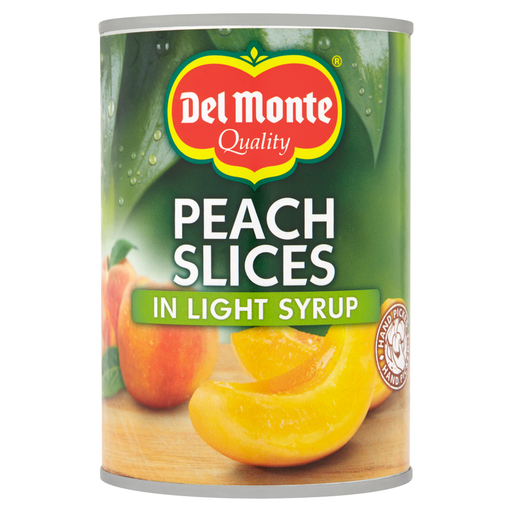
Peach slices can be spooned into a dessert where a sweeter packing liquid suits the recipe. The tin is labelled 420g; check its ingredients if added sugar affects your choice, and its drained weight for the amount of fruit.
 No image available
Peach halves suit individual plated portions when you want to keep the fruit intact. This 415g tin is packed in juice; use its drained weight to plan how many portions it provides.
 No image available
Pear halves offer another fruit for plated servings. This 415g tin is packed in juice; check the drained weight and the juice ingredients on the exact can when planning the dish.
 No image available
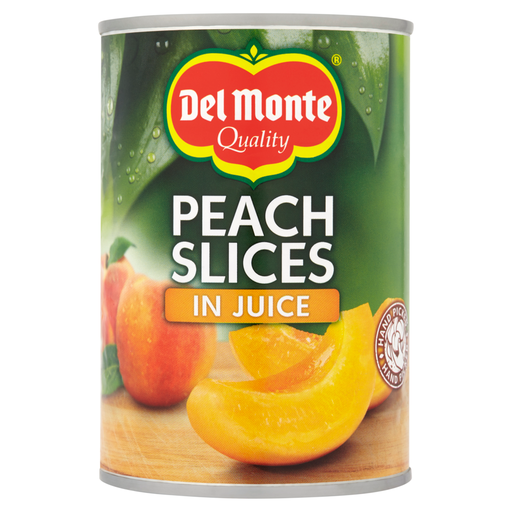
Peach slices are ready to spoon over or layer into a dessert. This 415g tin is packed in juice; check its labelled drained weight to plan the fruit quantity.
 No image available
Pineapple chunks suit a fruit salad or mixed dessert where pieces can be served without cutting. The 432g tin is packed with juice; check the drained weight for the quantity of pineapple and follow its opened-tin directions.
Use the labelled drained weight rather than the total tin weight, which includes liquid. For instance, Tesco Groceries lists 410g and 415g pear tins containing 225g and 230g of drained fruit respectively; check the figure on the variant you intend to serve.
Choose according to the dessert and its ingredients: syrup may suit a recipe that uses the sweet liquid, while the NHS advises fruit in juice rather than syrup when avoiding added sugar. Juice-packed fruit still contains sugars, so read the exact product’s ingredient list and nutrition panel.
Follow that tin’s container, refrigeration and use-by directions. Tesco Groceries lists two days for its own-label pears, three days for Princes pears and three to four days for Del Monte pears; those periods should not be applied to every product.