What should you check?
Start with the label of the exact tin, then check whether its packing liquid, fruit cut and usable quantity suit the dish you are making.
| Concern |
What to check |
Who this matters to |
| Salt on the exact tin |
Compare salt per 100g and read the ingredients list. Check the current pack when retailer declarations use different levels of precision. |
When salt is my main concern, I need a figure for the fruit I am actually buying, not an assumption based on its packing liquid. About 42% of consumers put that exact-tin salt check first. |
| Packing liquid and sugars |
Check for juice, water or syrup, and compare sugars for the portion you plan to serve. |
With other sweet Easter dishes on the table, I would rather check the liquid and portion information before choosing a tin. For about 33% of consumers, avoiding syrup and assessing sweetness is the primary need. |
| Recipe fit and usable fruit |
Choose the cut your dish needs; compare drained weight where stated and read the after-opening instructions. |
If I am assembling a trifle or fruit salad, the right cut and enough drained fruit matter more to me than the total weight of the tin. Recipe fit and usable quantity come first for about 25% of consumers. |
Tinned fruit on Joybuy
These juice-packed pineapple, pear, mixed-fruit and peach tins offer different cuts for Easter desserts and fruit salads. Choose the format your recipe needs, then confirm the current tin's salt declaration and usable fruit quantity.
 No image available
Del Monte Pineapple Slices in Juice 435g
Consider the slice format when you want pineapple for a layered dessert or garnish. This is a 435g tin packed in juice; check its current salt declaration and drained weight before deciding how many tins the recipe needs.
View on Joybuy
 No image available
Princes Pineapple Chunks With Juice 432g
Chunks suit a recipe that calls for ready-cut pineapple. The Joybuy listing for this 432g tin states 0.05g salt per 100g; confirm that figure on the current pack, along with its drained weight and after-opening instructions.
View on Joybuy
 No image available
Del Monte Pear Halves in Juice 415g
Choose pear halves if that fruit and cut fit your dessert or fruit salad. The tin is labelled 415g and packed in juice; compare its salt declaration and drained weight on the current pack if either decides your purchase.
View on Joybuy
 No image available
Del Monte Fruit Cocktail in Juice 415g
A mixed-fruit format may save preparation when the recipe calls for several fruits. This 415g tin is packed in juice; if minimising salt is the deciding factor, compare its exact per-100g label with the other tins rather than choosing it for the mixed format alone.
View on Joybuy
 No image available
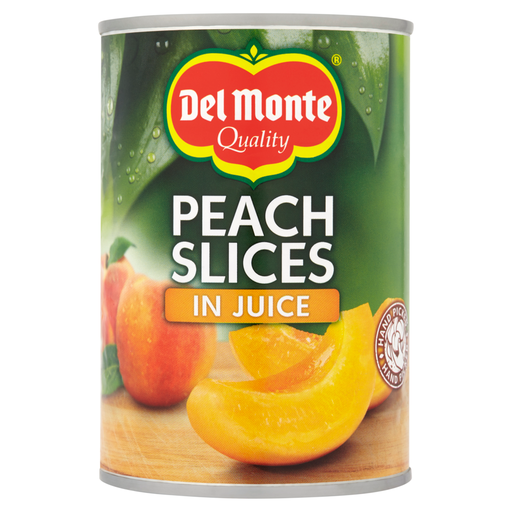
Del Monte Peach Slices in Juice 415g
Peach slices are an option when your dessert needs that fruit in a sliced format. This 415g tin is packed in juice; check the current salt and sugars information, drained weight and any product warnings before using it for a particular recipe.
View on Joybuy
Frequently asked questions
Does tinned fruit count towards 5 A Day?
Yes. The NHS says 80g of fresh, canned or frozen fruit and vegetables counts as one portion of 5 A Day. It advises choosing tinned fruit in natural juice or water with no added sugar or salt.
Does fruit packed in juice have no salt?
Not necessarily. Tesco lists 0g salt per 100g for Del Monte Pineapple Chunks in Juice 435g, while Princes lists 0.05g per 100g for its Pineapple Slices in Juice. Compare the declaration on the exact tin, keeping in mind that labels may use different levels of precision.
Should I choose juice or syrup for an Easter dessert?
If you want to avoid syrup, look for fruit in natural juice or water and check the ingredients and sugars information for your serving. Diabetes UK advises avoiding fruit tinned in syrup, including light syrup; a juice-packed tin still needs its own label check.
How should I store fruit left in an opened tin?
Follow the instructions on that product for moving leftovers to a suitable container, refrigerating them and using them within its stated period. For example, Sainsbury's listing for Princes Pineapple Chunks in Juice says to put leftovers in a sealed container in the fridge and use them within two days.


