People portioning one dessert
For one person who needs tender fruit in manageable pieces, an individual pot or smaller tin may be easier to portion than a large opened tin. The fruit itself still needs checking before serving.


Choose individual fruit pots if avoiding leftovers matters most, a smaller tin for one or two servings, or a standard tin when you can use several portions. None of these formats establishes easy-chew suitability: check the prepared fruit’s tenderness and pieces, and follow the eater’s individual instructions if they have a prescribed texture or swallowing plan.
For one person who needs tender fruit in manageable pieces, an individual pot or smaller tin may be easier to portion than a large opened tin. The fruit itself still needs checking before serving.
When preparing fruit for someone else, check each serving for tough or fibrous parts, seeds and pieces that need cutting. Cambridge University Hospitals NHS Foundation Trust advises that easy-to-chew food should break apart with the side of a fork or spoon.
If an opened tin will be used across several desserts, pack size, drained weight, fruit shape and packing medium are useful comparisons. Choose a quantity that can be used and stored according to its label.
Check whether the fruit can be prepared to the eater’s required texture before choosing between pots and tins. Pack size then helps determine how many servings you will need to portion or store.
| Concern | What to check | Who this matters to |
|---|---|---|
| Fruit texture | Inspect the prepared pieces for tenderness and tough, fibrous or seeded parts. Check that suitable pieces break apart with the side of a fork or spoon. | If I am serving someone who needs tender fruit, I need to assess the actual portion rather than trust the pack format; about 29% of consumers put texture and preparation first. |
| Portions and leftovers | Check the number and size of separate pots, or whether a smaller tin matches the servings needed. | When I need dessert for one person, I may prefer not to open a tin with fruit left over; about 29% of consumers make portioning their primary concern. |
| Packing medium and label | Compare the exact juice, syrup or other variant. Read its ingredients, nutrition information and any relevant storage instructions. | If the eater has a particular flavour preference or dietary instructions, I need to read the variant’s label; about 24% of consumers prioritise this check. |
| Several servings | Compare pack size and drained weight, then consider whether all the fruit can be prepared and used. | When I am making more than one dessert, a tin I can portion across servings may be practical; about 18% of consumers put multi-serve flexibility first. |
A tin can contain large pieces or tough, fibrous or seeded parts. Cambridge University Hospitals NHS Foundation Trust describes easy-to-chew food as food that can be cut or broken apart with the side of a fork or spoon.
Inspect and prepare a serving before offering it. Where a texture or swallowing plan applies, follow the instructions given for that person rather than relying on the product category.
More fruit in the container is not useful if some pieces cannot be prepared for the intended serving or the remaining fruit will not be used.
Decide how many servings you need, then check the fruit shapes and drained weight as well as the pack size.
Juice, syrup and other packing media describe different product variants; the wording alone does not establish that a fruit meets an individual dietary or texture requirement.
Read the exact variant’s ingredients and nutrition information, and check any individual dietary instructions separately.
A separately portioned pot can still contain pieces that need cutting or removing for the person eating them.
Use the pot to manage the serving quantity, then assess its contents and prepare the pieces as required.
Del Monte appears in UK supermarket tinned-fruit listings, including smaller peach products and standard tins.
Princes describes a canned-fruit range for cupboard use; supermarket examples include peach slices and pear halves.
Tesco Groceries lists an own-label Pear and Peach Pieces 4 x 120g format in its tinned and pot fruit range.
Sainsbury’s lists own-label peach slices in fruit juice in a 213g tin.
Marks & Spencer shows grapefruit segments and rhubarb chunks in its tinned-fruit category.
These products cover separate peach pots, a smaller tin of peach slices and standard tins of sliced fruit or peach halves. Choose a format for the portions you need, then check the prepared fruit against the eater’s texture requirements.
 No image available
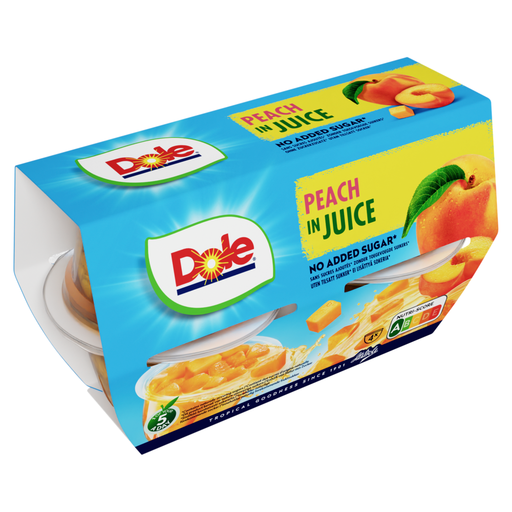
Four separate pots suit someone portioning individual peach desserts without opening a larger tin. Check the fruit pieces before serving; pot size does not establish easy-chew texture.
 No image available
This smaller tin offers peach slices to portion for a dessert. Product information warns that stone fragments may occasionally remain, so inspect the fruit and check its texture before serving.
 No image available
This standard tin offers pineapple slices to portion across several desserts. Inspect the slices for fibrous or tough parts and check the prepared pieces before serving.
 No image available
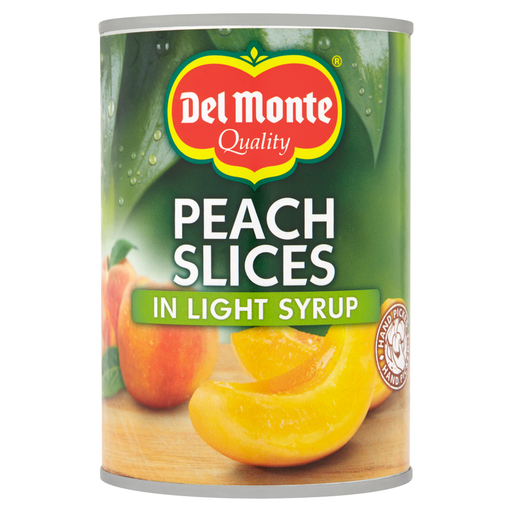
This standard tin can be portioned for several peach desserts. It is packed in light syrup; check the exact label for dietary requirements and assess the slices’ texture before serving.
 No image available
This standard tin offers peach halves for portioning at home. Halves may need cutting into manageable pieces, and the prepared fruit still needs a tenderness check.
No. Cambridge University Hospitals NHS Foundation Trust says easy-to-chew food should be tender enough to cut or break apart with the side of a fork or spoon. Assess the prepared serving, including any tough or fibrous parts, rather than relying on the fact that it is tinned.
Follow their individual instructions rather than choosing from a general product category. If you are unsure whether a particular fruit or preparation meets that plan, ask the responsible speech and language therapist or dietitian before serving it.
Choose the exact variant according to flavour preference and any individual dietary instructions. Read its ingredients and nutrition information; “in juice” alone does not establish texture or dietary suitability.
Check the ingredients, allergen information where applicable, date marking and storage instructions on the product you intend to serve. GOV.UK’s food-labelling guidance identifies ingredients, including allergens, and date marking as information on prepacked food. Drained weight is also useful when comparing the amount of fruit in liquid-packed products.
Consider a separate pot for an individual serving or a smaller tin if you expect to use one or two portions. A standard tin makes more sense when you can use several servings and follow its instructions for storing any opened contents.