What to check when choosing
Start with how the fruit will be served, then check its packing liquid and the quantity of drained fruit.
| Concern |
What to check |
Who this matters to |
| Dessert presentation |
Choose halves or slices for visible pieces, or a mixed format for a spoonable dessert. Check the fruit cut and drained weight. |
If I am plating fruit alongside dessert, I want pieces that suit the dish rather than a mix that needs arranging. About 36% of consumers put presentation and fruit format first. |
| Packing liquid |
Read the ingredients and nutrition panel to distinguish natural juice, juice from concentrate, light syrup and syrup. NHS guidance advises natural juice or water with no added sugar or salt. |
When I am choosing a dessert base, I want to know what liquid comes with the fruit before adding it to the dish. For about 36% of consumers, the juice-or-syrup choice is the primary concern. |
| Servings and leftovers |
Plan with drained weight, not just total tin weight, and follow the pack's instructions after opening. The NHS gives 80g as an adult fruit portion reference, not a fixed dessert serving. |
I need enough fruit for the table without leaving more than we can use after opening. Roughly 28% of consumers place usable quantity and leftover planning first. |
Joybuy fruit for family desserts
These tins offer visible halves or slices for plating, plus a fruit cocktail for a spoonable dessert. Choose by the format your dish needs, then check the pack for drained quantity and serving instructions.
 Image unavailable
Del Monte Pineapple Slices in Juice 435g
Consider the slices when pineapple will be visible on the dessert plate. Check the drained weight on the tin to plan the fruit quantity, and follow its instructions for leftovers.
View on Joybuy
 Image unavailable
Del Monte Peach Halves in Juice 415g
The halves offer larger pieces for a plated dessert or a visible trifle layer. Use the pack's drained weight when deciding how many tins the dish needs.
View on Joybuy
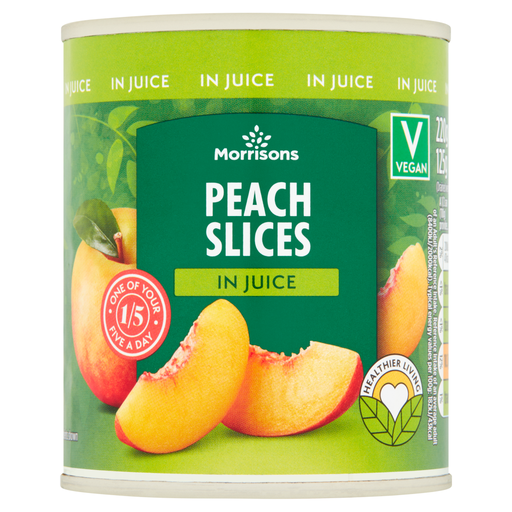 Image unavailable
Morrisons Peach Slices in Juice 220g
The sliced format is an option for layering or spooning over dessert. Check the current pack for its drained quantity and any warning about stone fragments; inspect the fruit while serving.
View on Joybuy
 Image unavailable
Del Monte Pear Halves in Juice 415g
Pear halves suit a dessert where each piece will be served visibly. Check the tin's drained weight before relying on its 415g total weight for portion planning.
View on Joybuy
 Image unavailable
Del Monte Fruit Cocktail in Juice 415g
Consider fruit cocktail when the dessert calls for a spoonable fruit mix rather than uniform halves or slices. Check its drained weight to plan the amount of fruit you can serve.
View on Joybuy
Common questions
Should I choose tinned fruit in juice or syrup for dessert?
Choose natural juice or water if you want to follow NHS guidance for canned fruit with no added sugar or salt. Syrup may have a role in a recipe that calls for its liquid; in either case, read the ingredients and nutrition panel of the particular tin.
How much tinned fruit do I need for a family dinner?
Plan from the drained weight and the role fruit plays in the dessert. The NHS uses 80g as an adult fruit portion reference, so 250g of drained fruit is roughly three such portions; it is not a fixed dessert serving for every adult or child.
How should I store fruit left after opening a tin?
Follow that product's label rather than using one rule for every tin. Sainsbury's peach slices specify a non-metallic container, refrigeration and use within one day; a Tesco-listed Nature's Finest mango product specifies refrigeration and use within three days.
Does tinned fruit count towards 5 A Day?
Yes. The NHS says 80g of canned fruit counts as one portion and advises choosing fruit canned in natural juice or water with no added sugar or salt.
What does a best-before date on tinned fruit mean?
GOV.UK distinguishes a best-before date, which relates to quality, from a use-by date, which relates to safety. Follow the tin's storage and safety information as well as its date marking, particularly if the packaging is damaged or the fruit has already been opened.


