For a shared dessert, choose chunks or pieces when guests need spoonable fruit with little cutting; choose slices when the recipe calls for even layers. Fruit cocktail needs its own ingredient and drained-weight check, while grapefruit or rhubarb suit recipes designed around their sharper flavour. Plan the amount from drained weight where it is given, follow the chosen tin’s instructions after opening, and check Food Standards Agency guidance if you intend to sell prepared portions.
Who is choosing the fruit?
Low-prep dessert hosts
If you are assembling a trifle, fruit cups or a self-serve topping bowl, pieces that can be drained and spooned save a cutting step. Sainsbury’s listing for Del Monte pineapple chunks and Princes’ page for pineapple slices show why the fruit’s shape matters.
Presentation-led bakers
If your tray dessert or cake needs a consistent fruit shape, slices may suit the arrangement better than chunks. Princes lists pineapple slices in juice; decide whether guests will also need those slices cut before serving.
Festival food sellers and organisers
Preparing portions for others makes opened-tin storage and the finished dessert’s ingredients important. If portions will be sold, check the Food Standards Agency’s guidance for the way you package and offer them.
What matters when buying?
Start with the dessert’s serving format, then check how much fruit the tin provides and how you will handle any leftovers.
| Concern |
What to check |
Who this matters to |
| Enough usable fruit |
Compare drained weight where shown, not just net weight; choose pieces or slices to suit the recipe. |
When making a bowl for a group, I need enough fruit to spoon out, not just a tin that looks large. About 36% of consumers put usable quantity and format first. |
| Flavour and recipe fit |
Check the fruit variety, whether it is packed in juice or syrup, and the ingredients of the exact tin. |
If the dessert calls for a particular fruit or packing liquid, swapping it could change the recipe I planned. For about 29% of consumers, that fit is the primary concern. |
| Handling and food information |
Read the post-opening storage instructions; if selling assembled portions, check the rules for their packaging and ingredients. |
When preparing fruit ahead for others, I need a workable way to store leftovers and provide the right information if I sell portions. About 21% of consumers place handling and service requirements first. |
| Flexible quantities |
Compare pack sizes for the format you need and plan how any opened fruit will be used within its stated open life. |
If attendance is uncertain, I would rather adjust the number of tins than leave opened fruit unused. Limiting leftovers comes first for about 14% of consumers. |
Avoid these serving mistakes
-
Treating the tin’s net weight as its fruit weight
Net weight includes packing liquid. Sainsbury’s lists Del Monte Pineapple Chunks in Juice at 435g net and 260g drained, a distinction that matters when filling a shared bowl.
Use the drained weight where it is published, then work out the number of tins from your recipe and planned portions.
-
Choosing slices for a spoonable dessert without planning to cut them
Slices can form neat layers, but a trifle or fruit cup may need smaller pieces for serving.
Choose chunks when minimal preparation matters, or allow time to cut slices if their shape benefits the dessert.
Cutting adds preparation time before the dessert can be served.
-
Leaving unused fruit in an opened tin
Health and Social Care Northern Ireland guidance advises following the manufacturer’s stated open life for tinned food.
Transfer unused fruit to a suitable container, cover and refrigerate it, and follow the exact product’s post-opening instructions.
-
Relying on the fruit tin’s label when selling a prepared dessert
Once fruit is combined with other ingredients and portions are packaged for sale, the finished dessert and the way it is sold determine which food-information requirements need checking.
Before preparing portions for sale, check Food Standards Agency guidance and record the ingredients used in the complete dessert.
Preparing ingredient information and labels can add work to the serving plan.
Brands and ranges to consider
Del Monte
Sainsbury’s lists Del Monte Pineapple Chunks in Juice in a 435g tin with 260g drained fruit, a reference for planning a spoonable pineapple dessert.
- The listed chunks are already cut, and the drained weight helps with quantity planning.
- Those figures describe this pineapple-chunks product, not every Del Monte tin.
Princes
Princes lists pineapple slices in juice in 432g and 227g sizes for desserts that call for slices.
- Two listed sizes give a choice when planning the recipe.
- Slices may need cutting for fruit cups, and pack weight alone does not establish the drained fruit quantity.
M&S
The M&S tinned-fruit range includes grapefruit segments and rhubarb chunks for recipes that call for a sharper fruit flavour.
- M&S presents its canned rhubarb as an option for pies and crumbles.
- Check the individual product and your selected store before planning portions around it.
Sainsbury’s
Sainsbury’s has documented its own-label pineapple pieces in juice in a 227g tin, a smaller format to consider when a recipe needs a top-up.
- Its product instructions say to move opened contents to a non-metallic container, refrigerate and use within three days.
- Check the current listing and the exact tin’s instructions before buying or serving.
Joybuy tinned-fruit selections
These tins cover pieces for spoonable sharing bowls and larger fruit shapes for desserts where you can arrange or cut the fruit. Check each format against your recipe before deciding how many tins to use.
 No image available
Princes Pineapple Chunks With Juice 432g
Chunks suit a dessert assembled from spoonable pineapple pieces with little cutting. The tin is labelled 432g; check its drained weight when planning how much fruit to serve.
View on Joybuy
 No image available
Del Monte Pineapple Slices in Juice 435g
Choose the slice format for a dessert that calls for arranged pineapple; cut the slices if guests will spoon fruit from a shared bowl. This 435g tin is a different product from Del Monte’s pineapple chunks, so check its own label for drained weight and storage directions.
View on Joybuy
 No image available
Del Monte Peach Halves In Juice 415g
Peach halves suit a dessert planned around larger pieces of fruit. For a spoonable sharing bowl, allow for cutting; use the exact tin’s drained weight, where shown, to plan the quantity.
View on Joybuy
 No image available
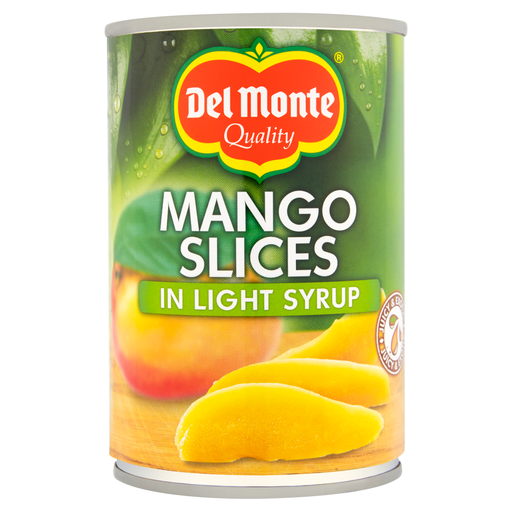
Del Monte Sliced Mango In Light Syrup 425g
Use the sliced mango format when the planned dessert calls for mango pieces or arranged slices. It is packed in light syrup rather than juice, so check the recipe and the exact product’s ingredients and nutrition panel if the packing liquid matters.
View on Joybuy
 No image available
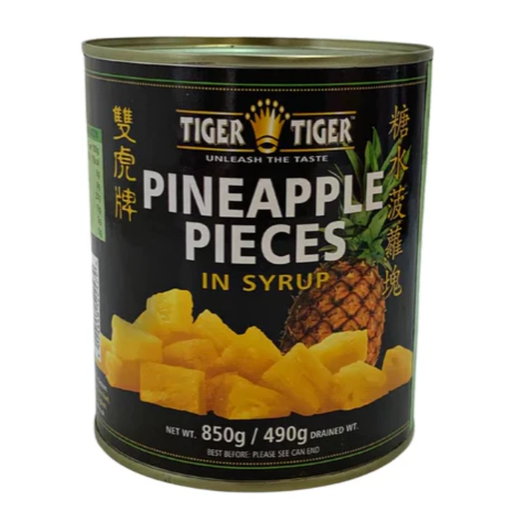
Tiger Tiger Canned Pineapple Pieces 830g
Pineapple pieces are a format to consider for a spoonable dessert when you want to avoid cutting slices. The tin is labelled 830g; check its drained weight and packing liquid before using that figure to plan fruit portions or recipe flavour.
View on Joybuy
Questions about sharing and serving
Should I use chunks or slices for a shared trifle?
Choose chunks or pieces if guests will spoon fruit from the trifle and you want less cutting. Choose slices if the dessert needs arranged layers, allowing time to cut them when smaller portions are needed.
Will one tin provide enough fruit for a group?
A tin’s net weight does not tell you how much drained fruit it provides. Sainsbury’s lists Del Monte Pineapple Chunks in Juice at 435g net and 260g drained; use the drained weight of your chosen product, where given, alongside your recipe and planned portions.
What should I do with fruit left after opening a tin?
Move unused fruit to a suitable container, cover and refrigerate it, then follow that product’s stated open life. Health and Social Care Northern Ireland advises following manufacturer instructions; Sainsbury’s directions for its pineapple pieces specify a non-metallic container and use within three days, which should not be assumed for other tins.
What if I sell prepared fruit desserts at a festival?
Check the Food Standards Agency’s UK guidance for the way the finished dessert is packaged and sold, particularly if portions are prepacked for direct sale. Assess the ingredients in the whole dessert rather than relying only on the fruit tin’s label.


