Planning a shared pudding
If several people will have fruit with custard or in a bake, the drained weight helps you judge whether one tin supplies enough pieces. Check the cut as well: halves and slices serve different recipes.


Choose tinned fruit for the dessert you plan to serve, then check the drained weight to see how much fruit the tin provides. Fruit in juice gives you more control over the finished sweetness; light syrup may suit a dessert where that added sweetness is wanted. The fruit cut, ingredients and instructions for storing leftovers also affect which tin will be useful.
If several people will have fruit with custard or in a bake, the drained weight helps you judge whether one tin supplies enough pieces. Check the cut as well: halves and slices serve different recipes.
Fruit in juice can work when you want to decide how sweet the finished dish will be. Check the exact ingredients and fruit format before choosing a tin for yoghurt, custard or baking.
For a cake, crumble or ice-cream topping, consider whether syrup belongs in the dish rather than treating it as liquid to discard. The fruit type and cut still need to suit the recipe.
Start with the dessert and the number of servings. Then compare tins by the fruit you can use, not just the weight printed prominently on the front.
| Concern | What to check | Who this matters to |
|---|---|---|
| Usable fruit | Compare drained weight and fruit cut for tins that could serve the same dish. | For a pudding shared around the table, I need enough actual fruit for each serving, rather than a tin that is mostly packing liquid. About 40% of consumers put usable-fruit quantity first. |
| Sweetness and flexibility | Read the packing-liquid description and ingredients; check the nutrition panel if sugars matter to your choice. | If the same tin might go with yoghurt one day and into a bake another, I want to decide how sweet each dish becomes. Sweetness control is the primary concern for about 30% of consumers. |
| Fit for the dessert | Choose the fruit type and cut needed for intact pieces, layers or a mixed-fruit dish. | When fruit will be visible in a cake or plated pudding, I care whether the pieces suit that particular recipe. About 20% of consumers chiefly want the right fruit and format. |
| Leftovers | Check the pack size and its instructions for storage after opening. | For a smaller dinner, I would rather choose a quantity I can use than leave an opened tin unfinished. Managing leftovers comes first for about 10% of consumers. |
Total weight includes the packing liquid. Tins of a similar size can leave you with different amounts of fruit for a pudding.
Compare drained weights when the tins could fill the same role, then check whether the pieces suit your planned servings.
The packing liquid changes how the fruit fits a dessert. Fruit in juice is not necessarily sugar-free: the fruit and juice contribute sugars, and ingredients vary between products.
Read the ingredients and nutrition panel on the exact tin, and decide whether you want the sweetness of syrup in the finished dish.
Storage directions after opening are product-specific. Tesco Groceries instructs buyers of its halved pears in juice to transfer unused contents to a non-metallic container, cover and refrigerate them, and consume them within two days.
Match the tin to your servings or plan another use for the fruit, and follow the instructions on the tin you buy.
Ingredients, allergen information and storage directions matter particularly when the dessert must meet a dietary requirement.
Check the current physical label before serving rather than assuming an earlier product description still applies.
These ranges offer different fruit cuts and packing liquids. Choose the product that fits your dessert rather than assuming a brand name determines its usefulness.
Del Monte has prepared-fruit lines that include pears in juice and peaches and other fruit formats.
Princes offers pear halves and peach slices with juice, alongside other fruit formats.
Tesco lists own-label tinned fruit in several cuts and packing liquids, including pears and peaches.
Sainsbury's lists own-label peaches and other tinned fruit in juice or syrup.
The M&S tinned-fruit range includes grapefruit segments and rhubarb chunks.
These tins offer peaches, mango or pineapple in juice or light syrup for a dessert or topping. Check the drained weight on the product you choose when the amount of fruit matters to your recipe.
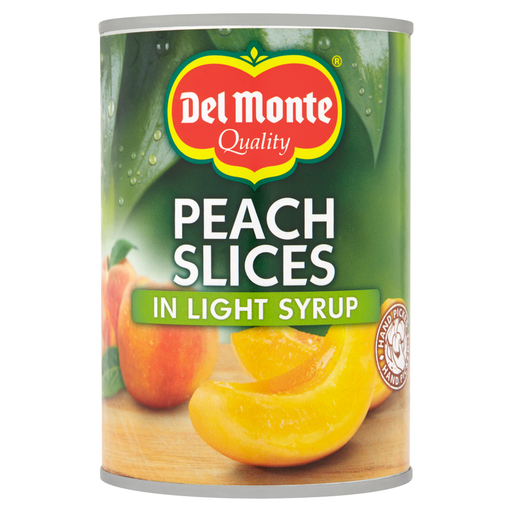 No image available
Consider these slices for a dessert where the sweetness of light syrup is wanted. Check the drained weight to decide how much fruit the tin will provide.
 No image available
The halves are an option when you want larger pieces for a plated dessert or bake, with juice rather than syrup as the packing liquid. Check the drained weight against the quantity your recipe calls for.
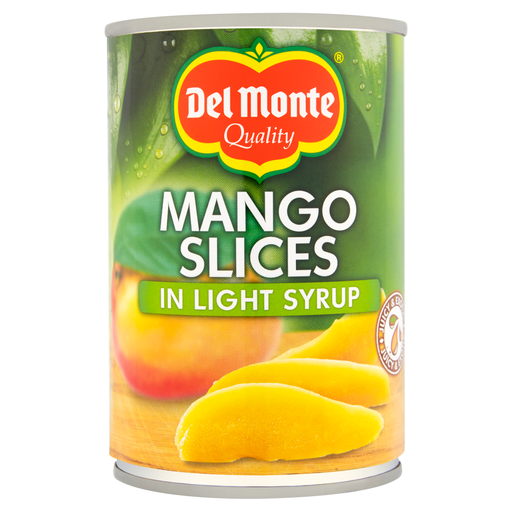 No image available
Choose sliced mango if that fruit suits your dessert and you want the sweetness of light syrup. Check the drained weight when planning the number of servings.
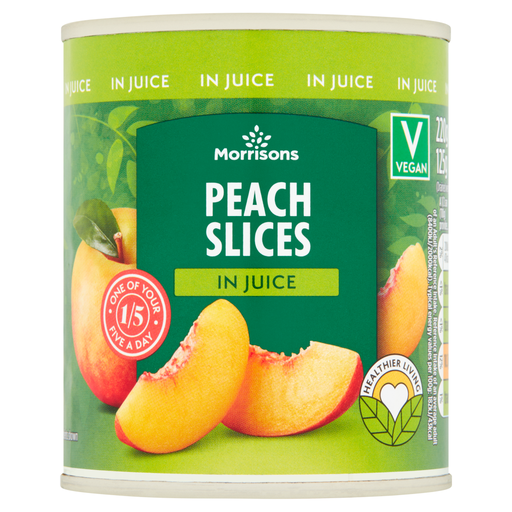 No image available
This smaller tin may fit a dessert needing fewer peach slices. Check its drained weight for the amount you can serve; the product information also warns that an occasional stone fragment may remain, so take care when serving.
 No image available
Consider pineapple chunks for a dessert or fruit salad that calls for pieces rather than slices or halves. Check the drained weight on the tin if the recipe needs a particular quantity of fruit.
Choose according to the dessert: juice gives you more control over added sweetness, while light syrup may suit a sweeter pudding or topping. Check the exact ingredients and fruit cut as well as the liquid.
Look for its drained weight, which describes the fruit after the packing liquid is removed. Compare that quantity with what your recipe needs, and check whether the pieces are halves, slices or chunks.
Follow the instructions on the tin you opened. For Tesco halved pears in juice, Tesco Groceries says to transfer unused contents to a non-metallic container, cover and refrigerate them, and consume them within two days; do not apply that period to every product.
GOV.UK describes best-before dates as relating to quality: food may not taste as good after the date. Check the pack's storage instructions and the food's condition; a use-by date has a different meaning and should not be treated as a best-before date.
Yes, particularly if ingredients or allergens affect your choice. Read the current pack label for its ingredient and allergen information rather than assuming that every fruit-in-juice product has the same contents.