Presentation-led breakfast hosts
If the fruit will have its own place on the table, recognisable halves, slices or segments are easier to arrange as a separate course than small mixed pieces.


For a fruit course alongside or after a Full English breakfast, choose pieces that can be drained and plated neatly, such as peach or pear halves, pineapple slices or grapefruit segments. Fruit in juice suits a less dessert-like accompaniment; light syrup makes more sense when you deliberately want a sweeter finish. Check the cut, ingredients, drained weight and storage instructions on the particular tin rather than relying on its brand or retailer.
If the fruit will have its own place on the table, recognisable halves, slices or segments are easier to arrange as a separate course than small mixed pieces.
If the packing medium matters to your choice, compare the ingredients as well as the front of the tin. The NHS advises choosing canned fruit in natural juice or water with no added sugar or salt.
If you are serving a particular number of people, drained weight helps you plan the usable fruit. Check the individual product’s instructions for any leftovers.
Decide whether the fruit is a neat side dish or a sweeter course after breakfast, then check the tin against that plan.
| Concern | What to check | Who this matters to |
|---|---|---|
| Fruit shape | Check whether the fruit comes as halves, slices, segments or small mixed pieces, and look at its drained weight. | If I want to plate fruit as a distinct course, intact pieces matter more than a spoonable mix. About 27% of consumers put presentation first. |
| Packing medium | Distinguish juice from light syrup on the ingredients list; compare the current nutrition information if sweetness is a priority. | Beside a savoury breakfast, I may want fruit without a syrup-led finish. Roughly 33% of consumers make packing medium and sweetness their primary concern. |
| Menu fit | Choose a principal fruit that suits the course: for example, grapefruit for a sharper contrast or peaches and pears for a softer fruit option. | If the rest of the menu is already set, I want the fruit’s flavour to have a clear role rather than choosing a mix by default. About 20% of consumers prioritise that fit. |
| Portions and leftovers | Compare drained rather than total tin weight, and read the instructions for storing fruit after opening. | When I am serving only a few people, I need enough usable fruit without opening more than we can use as directed. Around 20% of consumers put portion and leftover planning first. |
A familiar name does not tell you whether the fruit has the shape or packing medium you want for this breakfast.
Choose the cut and fruit type first, then compare the ingredients and drained weight of individual tins.
Light syrup gives the fruit a sweeter, more dessert-like role. For canned fruit, the NHS advises choosing natural juice or water with no added sugar or salt.
Choose juice-packed fruit if you want it beside the cooked breakfast; consider light syrup when a sweeter course afterwards is the intention.
Total weight includes the packing liquid, so it does not tell you how much drained fruit will reach the table.
Check the drained weight where stated and choose a quantity that suits the number of diners.
Storage directions and use-within periods are product-specific. Marks & Spencer, for example, directs shoppers to transfer its grapefruit segments to a non-metallic container, refrigerate them and eat them within two days.
Read the instructions on your tin before planning to keep leftovers.
A branded option when you want to compare recognisable fruit cuts and packing media. Tesco and Sainsbury’s list Del Monte peach products in juice.
A branded route for familiar canned-fruit formats, including peach slices and pineapple chunks in the retailer listings.
An own-label range to compare with branded tins when fruit type, cut and packing medium matter more than the name on the label.
An own-label option for comparing standard fruits in juice alongside branded products.
Worth considering if grapefruit segments would give the breakfast fruit course the sharper flavour you want.
These tins offer pineapple, peach or pear pieces for a plated breakfast fruit course, plus one light-syrup option for a deliberately sweeter finish. Choose by fruit cut, packing medium and the quantity you expect to serve.
 No image available
Choose this if you want pineapple slices to arrange as a separate fruit portion. The tin contains 260g drained fruit from a 435g net weight, with pineapple and pineapple juice listed as ingredients. After opening, transfer unused contents to a non-metallic container, refrigerate and use within 3–4 days.
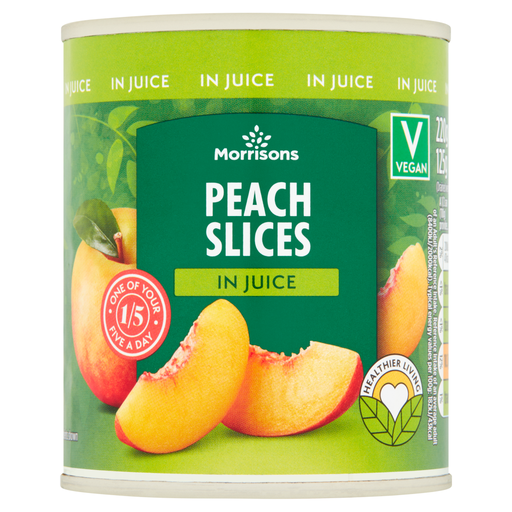 No image available
The smaller tin may suit a planned peach portion alongside breakfast. Its slices are packed in clarified grape juice, with approximately 125–130g drained fruit. The product description warns that occasional stone fragments may remain. Transfer leftovers to a non-metallic container, refrigerate and consume within two days.
 No image available
Peach halves give you larger pieces to plate as a distinct fruit course. This 415g tin states 235g drained fruit; its ingredients include peaches and clarified pineapple juice. Check the current tin for its instructions on how long to keep any leftovers.
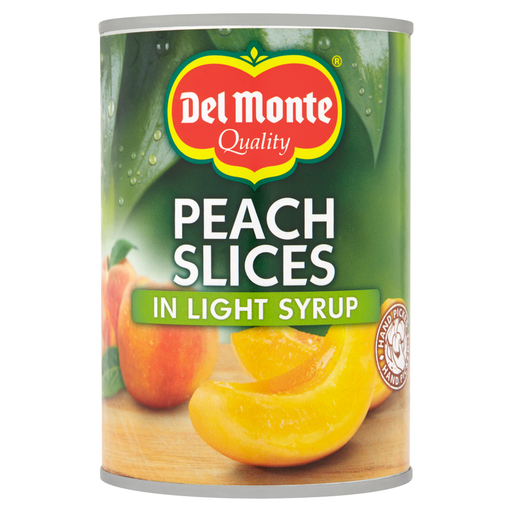 No image available
Choose these slices when the fruit is intended as a sweeter finish after the cooked breakfast rather than a juice-packed side. The 420g tin states 250g drained fruit. After opening, transfer unused contents to a non-metallic container, cover, refrigerate and use within 3–4 days.
 No image available
Pear halves offer another larger-piece option for a plated fruit course. This 415g tin lists clarified pineapple juice as its packing medium; check the label for drained weight when planning portions. After opening, transfer unused contents to a non-metallic container, cover, refrigerate and use within 3–4 days.
It can work as a separate fruit side or a course afterwards, rather than as part of the cooked plate. Drain and portion recognisable pieces if you want a composed serving; choose the fruit’s flavour according to whether you want a sharper contrast or a sweeter finish.
Choose by the role the fruit will play: juice-packed fruit for an accompaniment, or light syrup when a sweeter dessert-style course is intentional. The NHS advises choosing canned fruit in natural juice or water with no added sugar or salt; check the individual ingredients rather than relying only on the front description.
The NHS states that 80g of canned fruit or vegetables counts as one 5 A Day portion. When selecting canned fruit, it advises choosing natural juice or water with no added sugar or salt.
Follow the instructions for the particular product, as use-within periods differ. Marks & Spencer, for example, instructs shoppers to transfer its grapefruit segments to a non-metallic container, refrigerate them and eat them within two days.
Check the fruit name and cut, ingredients, packing medium, nutrition information, stated drained weight and storage instructions. These details tell you more about plating, portions and leftovers than the brand name alone.