Families serving breakfast together
If several people want fruit, compare the drained quantity and the cut before deciding whether one large tin or several smaller tins will be easier to serve.


Tinned fruit is an optional side to a full English breakfast, so choose a fruit cut and drained quantity that suit the people who will eat it. A larger tin can serve a group, while smaller tins let you open only what you need. If avoiding added sugar matters, compare fruit in natural juice or water and check the exact ingredients and nutrition label.
If several people want fruit, compare the drained quantity and the cut before deciding whether one large tin or several smaller tins will be easier to serve.
If you prefer to avoid added sugar, look at fruit packed in natural juice or water, then read the ingredients and nutrition information for the particular tin.
If only one or two people want fruit, a smaller tin may be easier to finish. Check how much fruit it contains and what the label says about storing any remainder.
Decide how much fruit you expect to serve, then compare the packing liquid and whether you can use an opened tin in time.
| Concern | What to check | Who this matters to |
|---|---|---|
| Enough fruit to serve | Compare drained weight where shown, rather than total tin weight. Choose a cut that is easy to divide between plates. | If several people want fruit alongside breakfast, I need enough pieces to go round without counting the juice as a serving; about 42% of consumers put usable fruit quantity first. |
| Packing liquid | Compare natural juice, water and syrup; read the ingredients and sugars information for the exact product. | If I want to avoid added sugar, the liquid matters as much as the fruit named on the front; about 33% of consumers make the packing liquid their primary concern. |
| Serving and leftovers | Choose slices or chunks to suit how you will serve them, and check the post-opening storage instructions. | When only one or two people will have fruit, I would rather open what we can finish; about 25% of consumers chiefly consider serving format and leftovers. |
The total weight on a tin includes juice or syrup, so it does not tell you how much fruit you can put on plates.
Use drained weight, where available, to compare tins for a shared serving.
The words “in juice” do not tell you everything about the ingredients or sugars information.
If avoiding added sugar is important, compare the current labels rather than relying on the packing-liquid description alone.
Post-opening storage instructions differ between products, which matters if fruit will remain after breakfast.
Consider a smaller tin or plan when you will use the rest, and follow the instructions on the pack.
The English Breakfast Society describes a full English around cooked components; tinned fruit need not determine whether the breakfast feels complete to your household.
Add it as a side if the people eating breakfast want it.
Tesco Groceries lists own-label pineapple chunks in juice in a 425g tin and peach slices in juice in a 410g tin.
Princes lists pineapple slices in juice in 227g and 432g tins.
Tesco Groceries lists Del Monte fruit cocktail and peach products among its tinned-fruit options.
M&S lists 540g grapefruit segments and 560g rhubarb chunks in its tinned-fruit range.
These juice-packed peach, pineapple and mixed-fruit options cover single tins and multi-can packs for serving fruit alongside breakfast. Compare the quantity you will open at once, not just the amount in the whole pack.
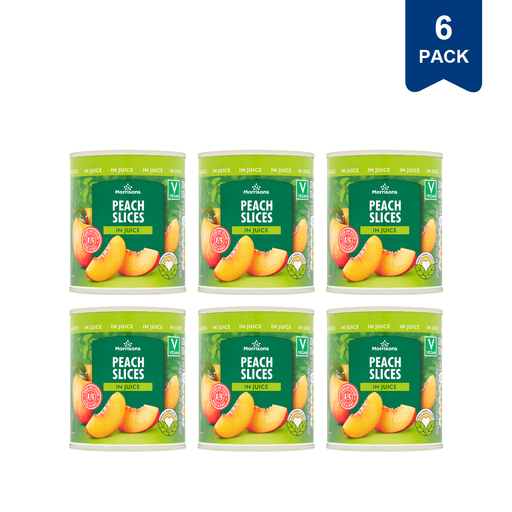 Image unavailable
Consider this pack if you want to open smaller tins as people ask for fruit. It contains six 220g tins of peach slices in juice. Check the pack when serving, as the product information warns that occasional stone fragments may remain.
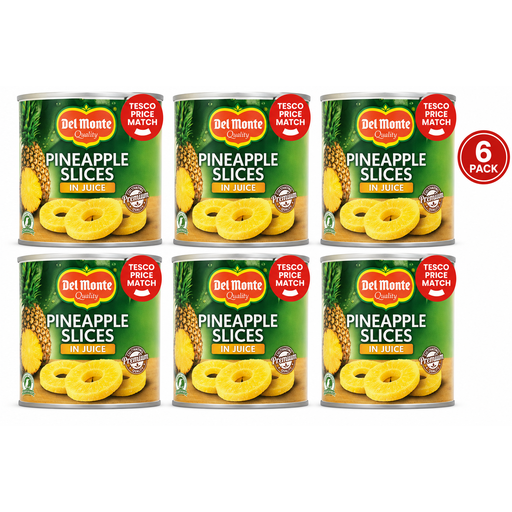 Image unavailable
The sliced format is an option if you want to plate pineapple beside breakfast. This pack contains six 435g tins in juice. Compare drained weight when deciding how many tins to open.
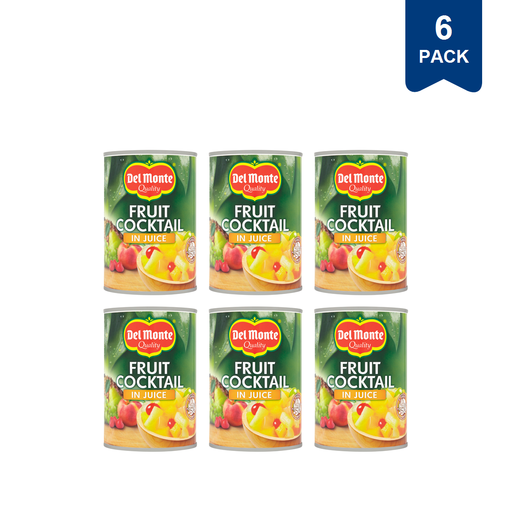 Image unavailable
Choose a mixed-fruit format if guests prefer a selection of pieces rather than one fruit. The pack contains six 415g tins in juice; check the drained weight before planning portions. Its listed ingredients include cherries with colour E127, so consult the current label if that matters to you.
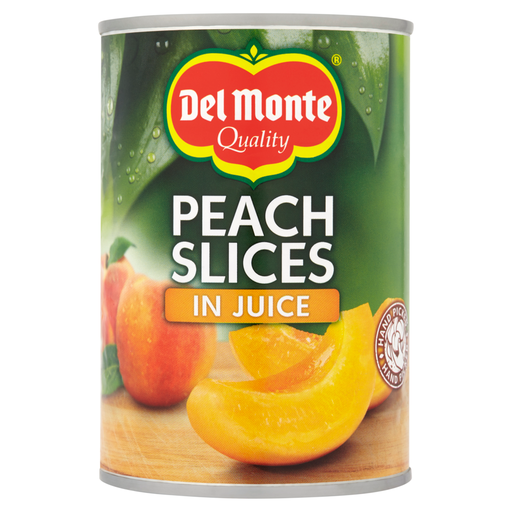 Image unavailable
This single tin suits a breakfast where peach slices can be served from one can. It is a 415g tin in juice; check its drained weight to judge how much fruit will reach the table.
 Image unavailable
Chunks are an option if you plan to spoon pineapple into a serving bowl. This is one 432g tin with juice; check the drained weight when working out portions. If any remains, follow the pack’s storage instructions.
No. The English Breakfast Society describes the meal around cooked components, so tinned fruit is an optional side to add if your household wants it.
Check its drained fruit weight where available: total tin weight includes the liquid. The NHS uses 80g of fruit as an adult 5 A Day portion reference, but you can choose a different amount for an optional breakfast side.
If avoiding added sugar is your priority, the NHS advises choosing canned fruit in natural juice or water with no added sugar or salt. Check the exact ingredients and nutrition label rather than assuming every tin described as “in juice” has the same recipe.
Follow that product’s instructions. Joybuy’s listing for Princes Pineapple Slices in Juice 227g says to put leftovers in a sealed container in the fridge and use them within two days; do not apply that time limit to every product.
Read the ingredients and highlighted allergens on the particular pack. GOV.UK guidance says packaged foods with two or more ingredients must list them and highlight allergens; check the current label if a recipe or pack has changed.