Weekly cupboard planners
Shoppers choosing tins for use across the week need to consider how many can stay sealed and how quickly an opened tin will be finished.


Choose several sealed tins or a multipack if one large opened tin would be difficult to finish within its product-specific open life. For routine use, start by comparing fruit in juice or water, in line with NHS guidance; syrup may suit a planned dessert. Check the packing liquid and drained weight of the exact product before choosing a format.
Shoppers choosing tins for use across the week need to consider how many can stay sealed and how quickly an opened tin will be finished.
For breakfasts, snacks or fruit salads, these shoppers check the packing liquid, ingredients and nutrition panel rather than assuming similarly named tins contain the same thing.
A planned trifle, pudding or bake may call for a particular fruit, cut or packing liquid, making the recipe more important than buying one format for every use.
Start with how the fruit will be used and when each tin will be opened. Then compare the packing liquid and, if the fruit will be drained, the quantity left after draining.
| Concern | What to check | Who this matters to |
|---|---|---|
| Pack size and leftovers | Check the number of sealed tins and the open-life instruction on the product you choose. | If I use fruit on different days, I need portions that can remain sealed until I want them. About 29% of consumers put managing opened tins first. |
| Juice or syrup | Read the packing liquid, ingredients and sugars per 100g on the exact variant; NHS guidance favours canned fruit in natural juice or water with no added sugar or salt. | For everyday breakfasts or snacks, I want to know what the fruit is packed in before choosing a tin. Choosing the packing liquid is the primary concern for about 29% of consumers. |
| Usable fruit quantity | Compare drained weight when you will discard the liquid. A Sainsbury's listing gives Del Monte Fruit Cocktail in Juice as 415g net and 250g drained. | When I am planning portions or a recipe, the amount of fruit after draining matters more than the front-of-tin weight. About 21% of consumers prioritise usable quantity. |
| Fruit for a recipe | Confirm the fruit variety, whether it comes as slices, halves or pieces, and whether the recipe calls for juice or syrup. | If a dessert calls for peach halves or a particular fruit mix, I need that form rather than any tin of fruit. Matching the recipe comes first for about 21% of consumers. |
Net weight includes the packing liquid. For example, Sainsbury's lists Del Monte Fruit Cocktail in Juice at 415g net but 250g drained.
If you will drain the tin for portions or a recipe, use its declared drained weight for the quantity comparison.
Princes declares 9.0g sugars per 100g for its Fruit Cocktail with Juice and 15.0g per 100g for its Fruit Cocktail in Light Syrup. Those figures apply to these variants, not to every tinned fruit.
Check the packing liquid, ingredients and nutrition panel of the tin you intend to buy.
Open-life instructions differ. A Sainsbury's listing for Del Monte Fruit Cocktail says to transfer and refrigerate leftovers and use them within 3–4 days; the cited M&S grapefruit tin says within 2 days.
If the fruit will be used on separate days, consider sealed individual tins or a multipack and follow each product's storage instructions once opened.
Its listed tinned fruits include cocktail, peaches and pineapple, with juice and syrup variants.
Its Fruit Cocktail comes in juice and light-syrup variants; Princes lists 410g and 220g sizes for the juice version.
Its own-label tinned-fruit listings include pear-and-peach pieces and pineapple pieces in 4 x 120g packs.
Its own-label listings include standard tins of peaches, apricots, pears and other fruits in juice.
Its cited tinned-fruit examples include grapefruit segments in juice and rhubarb chunks.
These choices cover sealed six-packs and individual tins for a weekly cupboard shop, including fruit in juice and one sliced-mango option in light syrup. Choose by the fruit and packing liquid you need, then check how each opened tin fits your plans.
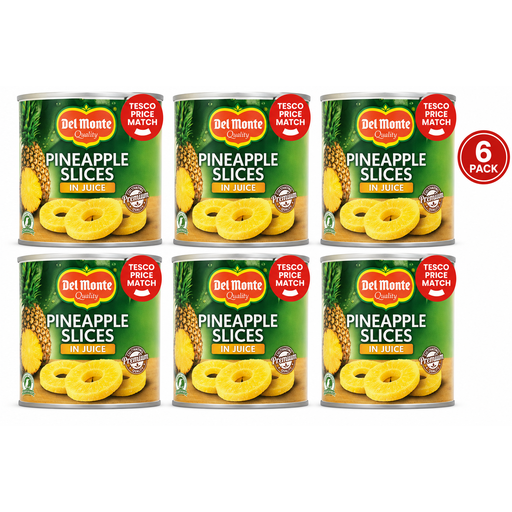 Image unavailable
The six-pack offers separate sealed tins when pineapple slices are planned for more than one day. Each tin is labelled 435g and packed in juice; check drained weight if your recipe uses the fruit without the liquid.
For leftovers, the product description instructs you to transfer unused fruit to a sealed container, refrigerate it and consume it within 3–4 days.
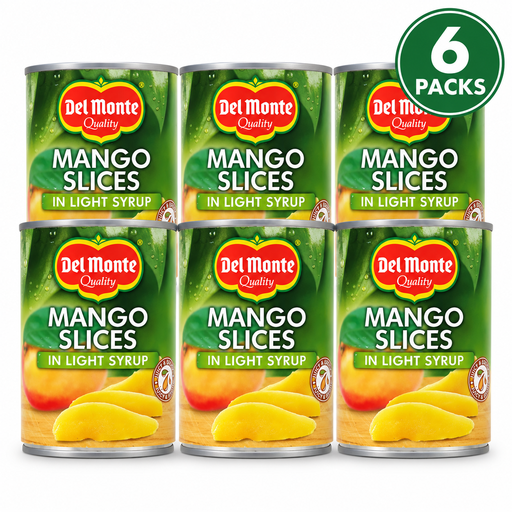 Image unavailable
This six-pack suits a plan that calls for sliced mango in light syrup rather than fruit in juice. Each tin is labelled 425g; check its nutrition panel if the packing liquid affects your choice.
The product description says to transfer unused fruit and syrup to a non-metallic airtight container, refrigerate and consume within 3–4 days.
 Image unavailable
Choose this individual tin when a meal or recipe calls for peach halves without committing to a multipack. It is labelled 415g and packed in juice; compare drained weight if you will discard the liquid.
The product description says to transfer unused contents to a suitable non-metallic container, cover, refrigerate and use within 3–4 days.
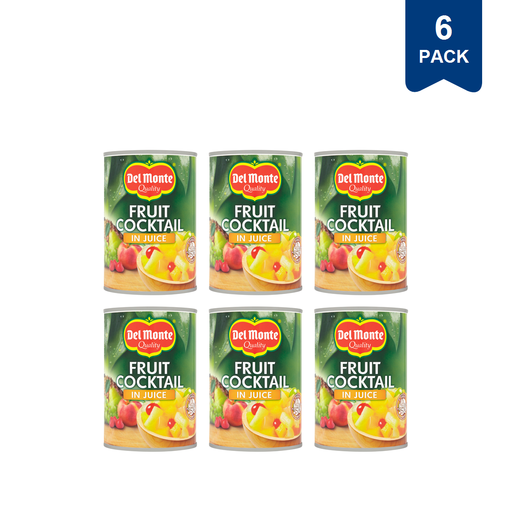 Image unavailable
The six-pack provides sealed tins of mixed fruit in juice for use on separate days. Each tin is labelled 415g; confirm its drained weight before planning a recipe around a particular quantity of fruit.
Once opened, the product description instructs you to transfer unused contents to a non-metallic container, refrigerate and use within 3–4 days.
 Image unavailable
This individual 415g tin suits a basket that needs pear halves rather than a larger quantity of mixed fruit. It is packed in juice; check drained weight if the amount of fruit matters for your recipe.
The product description instructs you to transfer unused contents to a suitable non-metallic container, cover, refrigerate and use within 3–4 days.
Yes. The NHS says 80g of fresh, canned or frozen fruit and vegetables counts as one portion of 5 A Day. Its guidance advises choosing canned fruit in natural juice or water with no added sugar or salt.
Start with juice or water if you want to follow NHS guidance for routine fruit choices; syrup may instead be the packing liquid you need for a dessert. Read the exact label: Princes declares 9.0g sugars per 100g for its Fruit Cocktail with Juice and 15.0g per 100g for its Fruit Cocktail in Light Syrup.
Not if you plan to drain away the liquid. Use the declared drained weight when available: Sainsbury's lists Del Monte Fruit Cocktail in Juice at 415g net and 250g drained.
Follow the instructions on the particular product, including how to transfer and refrigerate leftovers. The cited Del Monte Fruit Cocktail listing specifies use within 3–4 days, while the cited M&S grapefruit tin specifies 2 days. GOV.UK also advises following the manufacturer's open-life instructions.