Low-fat dessert planners
People choosing a ready-to-serve fruit component who need to check fat, saturates, sugars and the portion that will go into each meal.


Choose tinned fruit for a meals-on-wheels dessert by checking the individual tin’s fat, saturates and sugars for the portion you intend to serve. Fruit in juice can fit a low-fat brief, but its sugars still vary by product and serving; where a recipient has poor appetite, unintentional weight loss or an individual nutrition plan, do not let a low-fat choice displace the energy and protein that plan calls for.
People choosing a ready-to-serve fruit component who need to check fat, saturates, sugars and the portion that will go into each meal.
People planning desserts for recipients with reduced intake or unintentional weight loss. East Lancashire Hospitals NHS Trust’s dietetic guidance explains why adequate energy and protein matter when weight loss is a concern; the recipient’s individual plan should guide the dessert choice.
People serving one or a few recipients who need a tin size that suits the planned portions and a practical way to store any leftovers. Check the current pack for its opening and storage instructions.
Start with the recipient’s meal plan, then compare the nutrition for the portion to be served. A description such as “in juice” does not replace the figures on the tin.
| Concern | What to check | Who this matters to |
|---|---|---|
| Fat and saturates | Read both values per 100g and for the amount to be served; check the current label rather than relying on the packing description. | If the dessert has a low-fat brief, I need the actual tin to fit it. About 31% of consumers put checking fat and saturates first. |
| Fit with the meal plan | Check the planned dessert against any individual requirements for energy and protein, particularly where appetite or weight loss is a concern. | When someone is eating little, I do not want a fruit-only dessert to displace what their meal plan calls for. For about 31% of consumers, that nutritional fit is the primary concern. |
| Sugars and portion | Compare “of which sugars” for the intended serving, alongside the stated serving size or drained weight where available. | I need to know what the portion on the plate contributes, not just what appears on a per-100g panel. Portion and sugars come first for about 23% of consumers. |
| Leftovers and handling | Match tin size to the number of portions and follow that product’s instructions after opening. | If one tin will be shared across meals, I need to know how its leftovers will be stored and used. Roughly 15% of consumers make handling their main concern. |
Low fat and low sugars are different checks. Tesco lists 27.7g sugars for a can of its pineapple slices in juice, despite listing less than 0.1g fat.
Compare the “of which sugars” figure for the portion you will actually serve, as well as the fat figure.
A low-fat fruit portion may not fit a recipient whose meal plan prioritises energy and protein. East Lancashire Hospitals NHS Trust’s dietetic guidance identifies adequate energy and protein as important where weight loss is a concern.
Where poor intake, weight loss or a prescribed diet affects meal provision, follow the recipient’s care plan and seek appropriate dietetic guidance before changing their dessert.
The Tesco fruit listings reviewed give instructions for transferring unused contents to a non-metallic container and refrigerating them. Their stated use-after-opening period must be checked for the particular product.
Choose a tin that suits the planned portions, then follow its own storage instructions once opened.
A tin that cannot be used within its stated storage period can also leave fruit to discard.
Product details can change. Warnings also matter in service: Marks & Spencer’s grapefruit listing, for example, says the segments may contain pips.
Check the physical tin before serving, especially where an ingredient, allergen warning, pip or stone warning, or individual dietary requirement matters.
Compare the particular fruit and packing liquid, rather than assuming that one brand’s nutrition figures apply across its range.
Princes lists several types of tinned fruit, including products packed in juice and in light syrup.
Tesco’s own-label fruit-in-juice listings provide product-specific nutrition and storage details that can help with portion planning.
Tesco’s tinned-fruit search listings include Del Monte peach slices and fruit cocktail in juice.
Marks & Spencer provides product-specific nutrition and serving information for its grapefruit segments.
These fruit-in-juice tins offer different fruits, cuts and pack sizes for a meals-on-wheels dessert component. Compare the current label and planned portion before deciding which one fits the recipient’s meal.
 No image available
Consider this larger tin when pineapple chunks suit the planned dessert and more than one portion is needed. Check the sugars for each served portion and follow the tin’s instructions for any remainder.
 No image available
Slices may suit a dessert served as individual pieces. Decide how much of the 435g tin will be served, then check the current label’s nutrition for that amount and its directions for leftovers.
 No image available
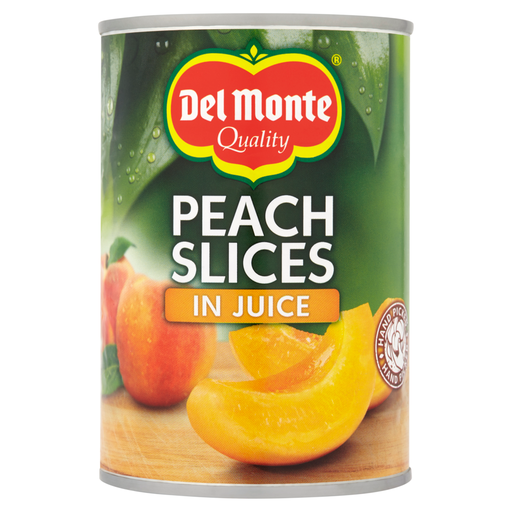
Choose peach slices if that fruit and cut fit the dessert menu. For a portion smaller than the tin, check its sugars and fat on the current label and plan how the remaining fruit will be stored.
 No image available
The 220g tin is worth considering when a smaller pack better matches the planned portions. If precise fat or saturates figures matter, check the current label; also check the product’s warning about possible stone fragments before serving.
 No image available
Pear halves offer another fruit and cut for the dessert menu. Set the portion before comparing its nutrition with other tins, and check how much fruit the 415g pack will yield for service.
No single dessert choice fits every recipient. Where poor appetite, unintentional weight loss or an individual nutrition plan is relevant, check that the whole meal meets that plan rather than using a low-fat fruit portion in place of needed energy and protein.
No. Tesco lists 27.7g sugars for a can of its pineapple slices in juice. Check “of which sugars” for the particular product and the portion you intend to serve; its fat figure and packing liquid do not answer that question.
Follow that tin’s storage instructions. The Tesco fruit listings reviewed direct users to transfer unused contents to a non-metallic container, refrigerate them and use them within the product’s stated period after opening.
Check the current pack’s energy, fat, saturates, carbohydrate, sugars, protein and salt figures, then relate them to the portion served. GOV.UK’s nutrition-labelling guidance for Northern Ireland says these nutrients are declared per 100g or 100ml when nutrition information is provided; the per-100g figure is a comparison starting point, not necessarily the amount in the dessert portion.