Parents planning a fruit course
If lunch ends with fruit, the packing liquid and ingredients matter alongside how you intend to serve it. A tin for a shared bowl calls for a different format from a portion each child can open.


For a school-holiday lunch, choose the fruit and serving format before deciding between juice and syrup: slices or mixed fruit work for a shared dessert, while individual pots avoid serving from a tin. Choose syrup-packed fruit when a sweeter dessert is the aim, and check the ingredients and portion size of the exact product rather than treating its presentation as a guide to what is inside.
If lunch ends with fruit, the packing liquid and ingredients matter alongside how you intend to serve it. A tin for a shared bowl calls for a different format from a portion each child can open.
If serving from a large tin would be awkward, individual fruit pots offer ready-to-eat portions. Check each pot’s stated size when planning how many to serve.
For a trifle, fruit salad or yoghurt topping, fruit type and cut can matter more than portability. Princes describes its fruit cocktail with juice as an option for trifle.
Start with how you will serve the fruit, then check its packing liquid, ingredients and pack size. The NHS states that 80g of canned fruit counts as one 5 A Day portion; use the product label to work out the portion you are serving.
| Concern | What to check | Who this matters to |
|---|---|---|
| Juice or syrup | Read the packing liquid in the ingredients and compare sugars per 100g on the products you are considering. | If I am serving fruit regularly at lunch, I want to know what is in the liquid rather than judge by the front of the tin. About 33% of consumers put that ingredient check first. |
| Fruit and presentation | Choose the fruit and cut for the dish: slices, halves, segments or a mixed-fruit cocktail. | For a dessert bowl or trifle, I want fruit that fits the way I plan to serve it. Fruit choice and presentation are the primary concern for about 25% of consumers. |
| Individual portions | Check the number of pots, the size of each portion and whether it is ready to eat. | When lunch needs portions that can be served separately, I would rather open pots than divide a tin. About 25% of consumers make that convenience their main priority. |
| Leftovers | Check the tin size and its instructions for storage after opening. | If only some of the fruit will be eaten at lunch, I need a plan for the rest. Avoiding waste and handling leftovers are the first concern for about 17% of consumers. |
Mango, pineapple slices and fruit cocktail offer different ways to serve dessert, but appearance does not tell you which liquid the fruit is packed in.
Pick the fruit and cut for your dish, then read the exact product’s ingredients and nutrition panel.
The phrase covers different formulations. Princes lists peaches, grape juice from concentrate and water in its Peach Slices with Juice.
Compare ingredient lists and sugars per 100g if the packing liquid is important to your choice.
A shared tin is useful for a bowl or dessert, but remaining fruit needs appropriate storage. M&S instructs buyers of its grapefruit segments to transfer leftovers to a non-metallic container, refrigerate them and eat them within 2 days.
Check the instructions on your tin and choose a pack size you can use within its stated open-life.
Unused fruit may be wasted if it cannot be eaten within that period.
Del Monte appears in retailer tinned-fruit listings with choices such as pineapple and fruit cocktail.
Princes offers peach slices with juice and a fruit cocktail that the brand suggests for trifle.
Tesco Groceries lists tinned fruit and fruit-pot formats in its fruit category.
Sainsbury's lists its own-label tinned fruit alongside branded options.
M&S lists grapefruit segments and rhubarb among its tinned-fruit options.
These tins cover mixed fruit and fruit halves or slices in juice, plus mango slices in light syrup for a dessert-style course. Choose the cut for your serving plan and check each tin’s label for ingredients and storage instructions.
 No image available
Choose this mixed-fruit tin for a shared bowl or as an ingredient in dessert. The fruit proportions can vary, so check the label if the amount of a particular fruit matters to your recipe.
 No image available
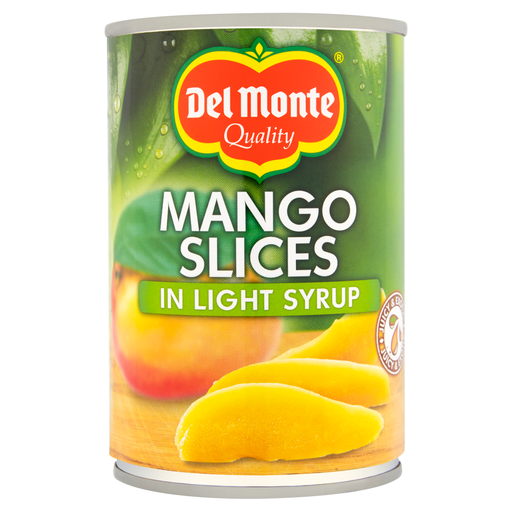
The sliced format suits a dessert topping or a fruit course you want to arrange on plates. This is a light-syrup product rather than fruit in juice; compare its ingredients and sugars per 100g if choosing between the two.
 No image available
Pineapple slices give you pieces to arrange on a plate or add to a dessert. If you need a particular amount of fruit rather than liquid, check the drained weight on the tin.
 No image available
Choose peach halves when the larger cut suits how you plan to serve lunch or dessert. Check the ingredients if the type of fruit juice used as the packing liquid matters to you.
 No image available
Pear halves are another larger-cut option for serving fruit as part of lunch or dessert. Check the current ingredient label for the precise juice used and the tin’s instructions for any leftovers.
Yes. The NHS states that 80g of canned fruit counts as one 5 A Day portion. Check how much fruit you serve from a tin or pot rather than assuming the whole container is one portion.
No. A fruit-in-juice product can contain juice from concentrate: Princes lists grape juice from concentrate in its Peach Slices with Juice. Read the ingredients of the exact product if the packing liquid affects your choice.
Consider pots when separate, ready-to-eat portions are easier to serve than fruit from a shared tin. Check the size of each pot so it fits your lunch plan.
Transfer it to a suitable container, refrigerate it and follow the product’s open-life instruction. For its grapefruit segments, M&S specifies a non-metallic container and consumption within 2 days of opening; use your own tin’s label for its particular limit.