Shoppers watching the basket total
If the immediate cost matters, compare similar fruit on the same unit-price basis. Also consider whether you will use the contents before any leftovers need discarding.


For a budget storecupboard shop, compare similar tins on the same unit-price basis and consider how much fruit you will use. Choose juice or light syrup by checking the exact ingredients and nutrition label, then pick a pack size you can finish within its post-opening instructions.
If the immediate cost matters, compare similar fruit on the same unit-price basis. Also consider whether you will use the contents before any leftovers need discarding.
If the choice is between juice and syrup, read the ingredients and sugars information for the particular tin rather than treating either description as a complete nutrition guide.
A smaller tin or a particular cut of fruit may fit a planned meal more closely. Check the pack's instructions for storing and using anything left after opening.
Start with the fruit and quantity you will use, then compare equivalent products on the same unit-price basis. Check the packing liquid and post-opening instructions before deciding between tins.
| Concern | What to check | Who this matters to |
|---|---|---|
| Basket cost and usable fruit | Compare similar fruit using the same unit-price basis; note when a listing uses drained weight. | If the grocery bill needs to stay down, I want to know what a tin contributes to the basket and how much fruit I will use. About 40% of consumers put cost and comparable value first. |
| Juice or syrup | Read the ingredients and compare sugars information on the same stated per-100g basis. | For breakfast or dessert, I want a packing liquid that suits the dish and an ingredient list I have checked. Choosing by ingredients and sweetness comes first for about 30% of consumers. |
| Leftovers and tin size | Check the pack size and its instructions for storing and using fruit after opening. | In a small household, I may not finish a large tin at once and would rather plan a use for what remains. Avoiding opened-tin waste is the main concern for about 20% of consumers. |
| Fruit and cut | Choose the fruit and form your meal needs, such as slices, pieces or halves. | When a recipe calls for a particular fruit or cut, I want to buy that form instead of adapting the dish around a mixed tin. About 10% of consumers put recipe fit first. |
Tesco Groceries displays tinned-fruit unit prices on different bases, including drained weight for some products. A smaller ticket price alone does not establish which comparable tin gives you more usable fruit.
Compare similar fruit and formats using the same unit basis, then choose a size you expect to finish.
ASDA Groceries lists sugars for Del Monte Peach Slices in Juice, while the Princes peach-in-juice nutrition panel also lists sugars. The words on the front do not replace the exact product's nutrition panel.
Read the ingredients and the stated per-100g basis when comparing tins; do not assume juice and syrup variants have identical ingredients.
The cited ASDA and Sainsbury's product instructions say to transfer unused fruit to a suitable non-metallic container, cover it and refrigerate it. Their use-within instructions apply after opening, not to an unopened tin in the cupboard.
Plan another use before opening a large tin and follow the storage period printed on the one you buy.
A tin that is too large for the planned meals can leave fruit to discard.
The fruit, packing liquid and ingredients that matter to your choice should be checked against the actual pack. Availability shown online can also change.
At purchase, check the tin's ingredients, nutrition panel, date mark and storage instructions.
These ranges provide examples of different fruit, liquids and pack formats; compare the particular tins available when you shop.
A branded range with peach slices in juice and other tinned-fruit formats.
A branded option with peach slices listed in juice and light syrup variants.
An own-label range spanning several fruits and cuts, including peaches and pineapple.
An own-label option that includes pineapple pieces in juice.
An own-label range that includes a Just Essentials peach-slices-in-light-syrup option.
A tinned-fruit range with formats including grapefruit segments and rhubarb chunks in the cited M&S listing.
These tins cover pineapple, peaches, pears and mixed fruit in juice, plus peach slices in light syrup. Choose by the fruit and liquid your meals need, then compare quantities and pack instructions for the specific products.
 Image unavailable
Consider the sliced format if a planned snack or recipe calls for pineapple in juice. The tin is 435g; compare drained quantities on the same basis when usable fruit amount matters, and follow the pack's instructions for leftovers.
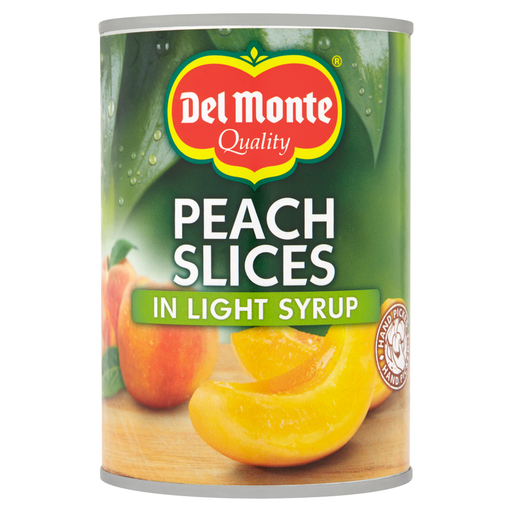 Image unavailable
The 420g tin offers peach slices in light syrup for a dish where that packing liquid suits the intended flavour. Check its ingredients and the basis of its sugars information before comparing it with a peach-in-juice tin.
 Image unavailable
The 220g tin is worth considering when a smaller quantity of peach slices fits a planned meal. Check the drained quantity and post-opening instructions on the pack. The product information also warns that occasional stone fragments may remain, so take care when eating.
 Image unavailable
Choose pear halves if that cut suits a planned dessert or salad. The tin is 415g; check its drained weight when comparing the usable fruit quantity with other tins, and follow its instructions after opening.
 Image unavailable
Consider this 415g mixed-fruit tin when a recipe calls for a mixture rather than one fruit. Check the ingredients if the cherry colour E127 matters to you, and read the physical label for post-opening storage instructions.
Choose the packing liquid that suits your intended dish, then check the exact product's ingredients and nutrition basis. ASDA Groceries lists sugar as an ingredient in its Just Essentials peach slices in light syrup, while its Del Monte peach-in-juice listing names peaches and juice. Those examples do not establish a rule for every fruit or brand.
Follow the instructions on the tin you opened. The cited ASDA and Sainsbury's listings direct shoppers to transfer leftovers to a suitable non-metallic container, cover and refrigerate them, and use them within 3 days; the cited Del Monte peach listing specifies 3–4 days. Check your pack rather than applying one product's period to another.
No: GOV.UK explains that a best-before date concerns quality rather than safety and that tinned foods may carry one. Food past that date is usually safe to eat but may have changed in quality; check its condition and storage instructions. This distinction does not apply to a use-by date.
Check the ingredients on the physical tin each time. GOV.UK says that, for prepacked food in the UK, any of the 14 regulated allergens present as ingredients must be clearly labelled in the ingredients list. Do not rely on an older online description when choosing a particular product.